


How Digital Substations Are Improving Grid Reliability
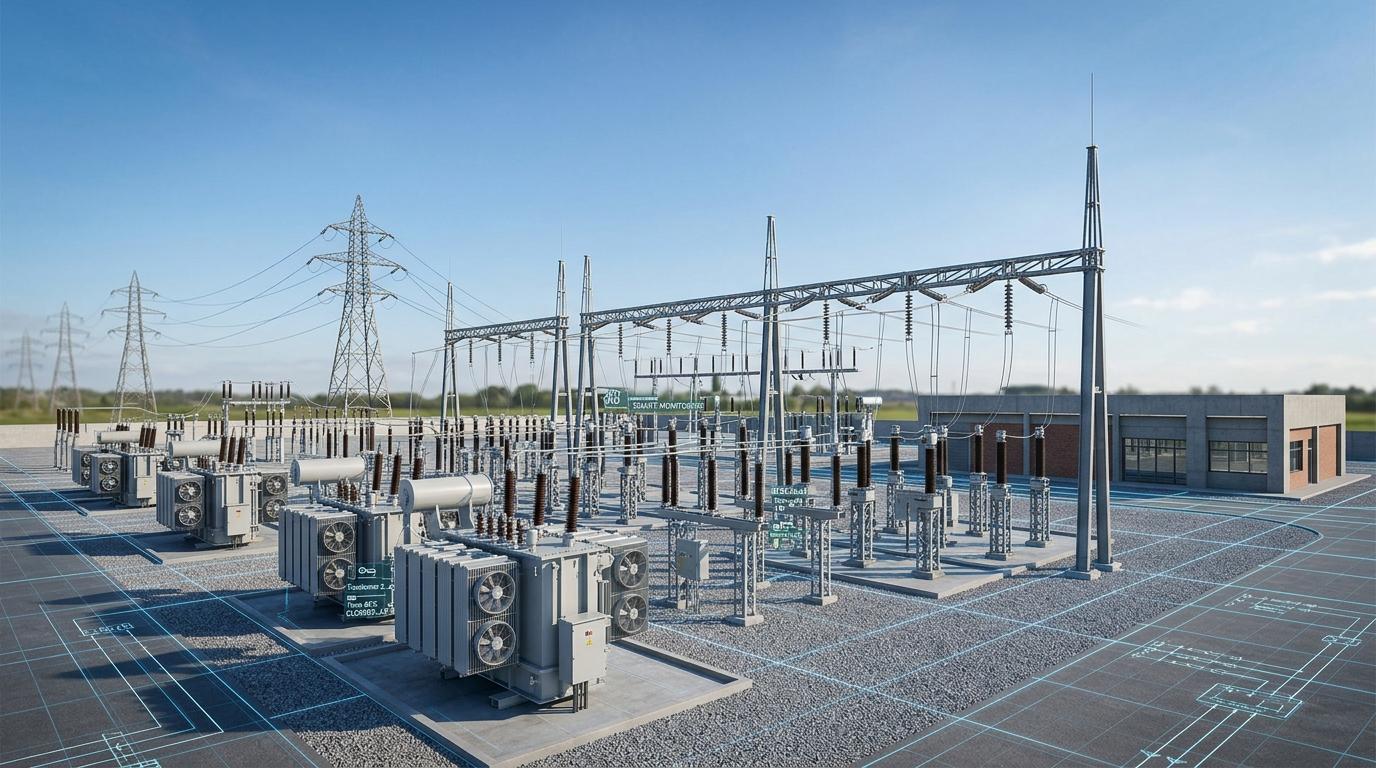
Modern power grids are becoming more complex. Utilities must manage increasing electricity demand, renewable generation, distributed energy resources, aging infrastructure, and stricter reliability requirements. Traditional substations can still perform essential switching and protection functions, but they often depend on separate systems, manual inspections, and limited real-time information.
Digital substations offer a smarter approach. By combining intelligent electronic devices (IEDs), communication networks, automation, advanced protection, and real-time monitoring, they allow utilities to see and manage substation conditions more effectively.
The result is not simply a more automated facility. A well-designed digital substation can help operators identify problems faster, reduce equipment downtime, improve operational decisions, and strengthen overall grid reliability.
What Makes a Substation Digital?
A digital substation uses modern communication and control technologies to exchange information between protection equipment, measurement devices, control systems, and operators.
Instead of relying heavily on traditional copper wiring and isolated equipment, digital systems can use high-speed communication networks to transmit measurements, status information, alarms, and control commands.
A typical digital substation may incorporate:
- Intelligent electronic devices for protection and control
- Digital communication networks
- Remote monitoring and control
- Automated fault detection
- Substation SCADA systems
- Digital relays and meters
- Time-synchronized measurements
- Automated event and disturbance recording
These technologies work together to create a more connected operating environment. Engineers and operators can obtain valuable information from equipment without depending entirely on physical inspections or manual data collection.
The Role of Substation Automation Solutions
One of the biggest advantages of digital substations is advanced automation. Substation automation solutions integrate protection, control, monitoring, and communication functions into a coordinated system.
Automation can help operators respond to abnormal conditions quickly. For example, when a fault occurs, intelligent protection equipment can detect the problem, initiate the appropriate protection action, and communicate important information to the control system.
Automation also supports routine operational tasks. Equipment status, breaker positions, alarms, measurements, and other parameters can be monitored continuously. This reduces dependence on manual processes and gives operators better visibility into the condition of the electrical network.
For utilities, this can translate into faster response times, improved operational efficiency, and reduced risk associated with delayed information.
How Substation SCADA Improves Visibility
Substation SCADA is another important component of modern digital infrastructure. Supervisory Control and Data Acquisition systems allow operators to monitor and control substation equipment from a centralized location.
Instead of waiting for field personnel to identify an issue, operators can receive real-time information about important operating conditions. SCADA can display parameters such as voltage, current, power flow, breaker status, transformer conditions, alarms, and other equipment data.
This improved visibility is particularly valuable during abnormal events.
When an unexpected condition occurs, operators can use real-time information to understand what happened and determine the appropriate response. Historical data and event records can also help engineers investigate disturbances and identify recurring problems.
In this way, SCADA does more than provide a screen of measurements—it becomes an important operational tool for maintaining a reliable electrical network.
Faster Fault Detection and Better Decision-Making
Grid reliability depends heavily on how quickly faults and abnormal operating conditions can be identified and addressed.
Digital substations support faster fault detection by collecting information from protection devices, sensors, meters, and other intelligent equipment. Advanced protection systems can analyze electrical conditions and respond within very short time intervals.
Digital event records can also provide engineers with valuable information after an incident. Instead of relying only on manual observations, engineers can review recorded measurements, alarms, protection operations, and system events.
This information helps answer important questions:
- What caused the disturbance?
- Which equipment operated?
- Did protection systems respond correctly?
- How did the network react?
- What improvements may be required?
Better information leads to better engineering decisions and can help utilities reduce the likelihood of similar problems occurring in the future.
Digital Substation Automation and Grid Integration
The modern electricity grid is changing rapidly because of renewable energy, battery storage, distributed generation, and increasingly dynamic power flows. These developments create new challenges for traditional grid infrastructure.
Digital substation automation solutions can provide the communication and monitoring capabilities needed to manage these changing conditions.
For example, renewable generation can introduce variations in power flow and voltage conditions. Advanced monitoring and control systems can help operators understand these changes in real time. Digital substations can also support integration with wider energy management and grid control systems.
This makes digital technology particularly valuable for utilities developing modern transmission and distribution networks.
Building More Reliable and Resilient Power Networks
Reliability is not achieved through one technology alone. It comes from combining sound electrical design, appropriate protection, dependable equipment, effective communication, and strong operational practices.
Digital substations bring these elements together in a more integrated environment. Continuous monitoring can improve situational awareness. Automation can reduce response times. SCADA can improve operational visibility. Digital records can support troubleshooting and maintenance planning.
Over time, these capabilities can contribute to improved asset management and reduced unplanned downtime.
However, successful implementation requires careful engineering. Communication architecture, cybersecurity, interoperability, protection coordination, redundancy, data management, and system testing must all be considered during the design stage.
The Future of Digital Substation Technology
Digital substations are becoming an important part of the transition toward smarter and more resilient power infrastructure. As utilities adopt more renewable generation, energy storage, advanced protection systems, and intelligent grid technologies, the need for reliable digital communication and automation will continue to grow.
The future will likely involve greater use of intelligent monitoring, advanced analytics, predictive maintenance, remote operations, and integrated control systems. These capabilities can help utilities move from reactive maintenance toward more proactive management of electrical assets.
For organizations planning new substations or modernizing existing facilities, investing in the right digital architecture can provide long-term operational benefits.
Keentel Engineering can support power infrastructure projects with engineering expertise focused on reliable, efficient, and modern electrical systems. By combining appropriate substation design practices with substation automation solutions, SCADA integration, protection, and control engineering, utilities can build substations prepared for the demands of tomorrow's power grid.

 English
 Arabic
 French
 Spanish
 Portuguese
 Deutsch
 Turkish
 Dutch
Dutch
 Italiano
 Russian
 Romaian
 Greek
Greek