


How Does Chendiao Aluminum Plate Cutting Circular Saw Machine Support Consistent Processing
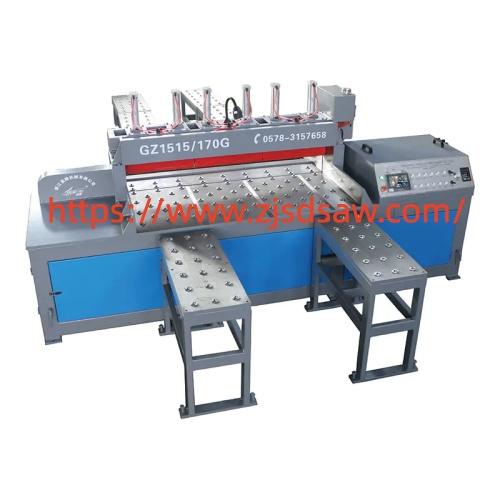
Aluminum Plate Cutting Circular Saw Machine selection should begin with the material you actually process, not simply the equipment price. Buyers need to review plate dimensions, thickness, alloy condition, required tolerance, production volume, and downstream requirements before discussing a specific configuration. These factors influence the structure, blade system, feeding method, clamping arrangement, and control functions that a workshop may need. Current industry guidance also recommends matching equipment specifications to material form, output volume, tolerance, and automation requirements rather than choosing by general machine category alone.
Workpiece size deserves careful attention. A workshop handling narrow blanks has different requirements from a facility processing wide sheets. Check the maximum working width, available table area, loading method, and usable travel. The equipment should provide enough working space for the largest planned workpiece while still fitting comfortably into the production area. Buyers should also consider how materials enter and leave the working zone. A convenient loading arrangement can reduce unnecessary handling between operations.
Material thickness and alloy type are equally important. Different aluminum grades and tempers can respond differently during processing because hardness, ductility, and thermal behavior vary. Buyers should provide the supplier with accurate material information rather than describing everything simply as aluminum. This allows the manufacturer to recommend a suitable blade specification, operating range, and support arrangement.
Blade compatibility deserves special attention because it directly influences edge condition and operating stability. Tooth geometry, tooth count, blade diameter, and blade material all need to match the intended application. Too few teeth can affect surface quality, while an unsuitable tooth arrangement may make chip removal more difficult. Aluminum can also create sticking problems when heat and friction are not properly controlled. Blade selection should therefore be considered together with feed rate, rotation speed, lubrication, and chip evacuation.
Clamping is another detail that should not be overlooked. A workpiece needs stable support during the complete processing cycle. Movement or vibration can affect dimensional consistency and edge condition. Ask whether the clamping arrangement suits the dimensions and thicknesses you normally handle. For repeat production, consistent positioning is particularly useful because operators can maintain a familiar workflow without repeatedly adjusting the setup.
Feed control also deserves attention. A controlled feeding system can help maintain a consistent processing rhythm, especially when the same dimensions are handled repeatedly. Buyers should ask how feed speed is adjusted, whether the system supports automatic operation, and how easily settings can be changed for different workpieces. The goal is not simply faster operation. A suitable setting should balance processing requirements, edge condition, tool wear, and material stability.
Cooling and chip management should be evaluated before purchase as well. Aluminum chips can accumulate around the working area and may interfere with smooth operation if they are not removed properly. Depending on the application, buyers may need lubrication, air assistance, or another chip management arrangement. The supplier should explain the recommended method for the intended material and production conditions.
The overall structure matters when equipment will operate for long production cycles. Buyers can ask about frame construction, spindle arrangement, guide systems, drive components, electrical controls, and access to service points. A well planned structure makes routine inspection easier and gives operators clearer access to components that require adjustment or replacement.
Automation should be selected according to actual workload. A small workshop with changing orders may prefer straightforward controls and flexible manual loading. A larger production line may benefit from automatic feeding, positioning, and coordinated handling. There is no need to add functions that will rarely be used. Instead, manufacturers should consider daily volume, labor availability, changeover frequency, and future production plans.
For buyers comparing different equipment categories, a Gantry Band Saw Machine may be relevant for certain material forms and production conditions, but the appropriate solution depends on workpiece geometry and processing goals. The important point is to compare equipment according to the material and workflow rather than selecting a model only because it appears similar to another option.
Service support should also be part of the purchasing discussion. Ask about spare parts, operating guidance, electrical support, maintenance recommendations, installation assistance, and response procedures. These details can influence long term operating convenience. It is also useful to request technical drawings, working dimensions, recommended consumables, and sample processing information before confirming an order.
Chendiao focuses on metal processing equipment and provides configurations designed around practical production requirements. Buyers can discuss material dimensions, processing conditions, automation preferences, and workflow needs with the manufacturer before selecting a suitable configuration. This approach allows the equipment proposal to reflect the real application instead of relying on a generic specification.
Before placing an order, prepare a short checklist covering workpiece dimensions, thickness range, material grades, expected production volume, tolerance requirements, blade specifications, clamping, feed control, cooling, automation, installation space, and service support. Sharing these details with Chendiao can make technical communication more direct and help both sides confirm whether the proposed configuration matches the intended application. Buyers can review available product information at https://www.zjsdsaw.com/product/ and continue evaluating the relevant equipment according to their production requirements.

 English
 Arabic
 French
 Spanish
 Deutsch
 Turkish
 Dutch
 Italiano
 Russian
 Romaian
 Portuguese (Brazil)
 Greek