


Why Should Buyers Review Gangnammould Trash Bin Mould Specifications Carefully
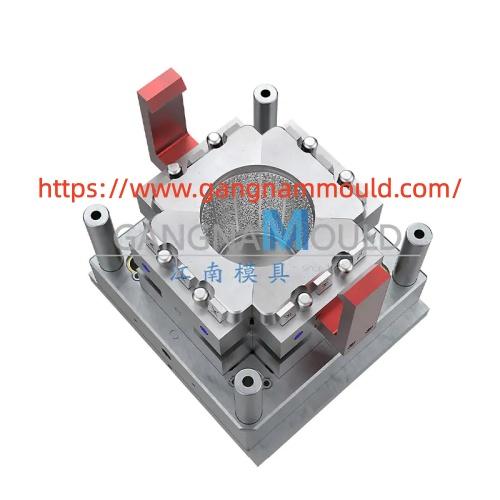
Trash Bin Mould projects require careful planning because the tooling has to handle large product dimensions, varying wall sections, material flow, cooling, and release during repeated injection cycles. Buyers should review more than a quotation before making a decision. Product drawings, resin type, container capacity, annual production volume, machine specifications, surface requirements, and expected automation should all be discussed at the beginning. A clear technical brief gives the manufacturer enough information to develop a suitable structure for the intended application.
Product size is one of the first practical points to consider. Small household containers and large outdoor waste containers can require very different tooling arrangements. Larger products may involve substantial cavity dimensions, higher injection machine requirements, reinforced sections, and more complex cooling layouts. Buyers should confirm the finished dimensions and weight together with the available machine information. This helps the manufacturer assess whether the proposed tooling structure is compatible with the production equipment.
Material selection also deserves attention. PP and HDPE are commonly used for waste containers, but the processing conditions can differ depending on the resin grade, additives, wall thickness, and product design. Buyers should provide the intended material before design work begins. The manufacturer can then consider shrinkage, flow behavior, cooling requirements, and release conditions during engineering. A material change made after tooling development may require additional technical adjustments, so early communication can help keep the project organized.
Cavity structure is another important purchasing point. A single cavity can be appropriate for certain large containers because the product itself may occupy substantial space inside the injection machine. Smaller products or projects with higher production requirements may allow different cavity arrangements. Buyers should not judge cavity quantity by itself. The more useful question is whether the chosen arrangement matches product dimensions, production volume, machine capacity, runner layout, cooling requirements, and project budget.
Cooling deserves particular attention for large plastic containers. Thick sections, corners, reinforced areas, and deep cavity regions may release heat at different rates. Uneven temperature control can contribute to shrinkage differences, deformation, surface variation, and unstable cycle conditions. A practical design should therefore consider the product geometry when positioning cooling channels. Buyers can request a cooling layout during the design review and discuss access for future cleaning or maintenance.
The injection system should also be evaluated before manufacturing begins. Gate position influences how molten material enters the cavity and fills different areas of the product. For large containers, the flow path needs to be considered together with wall thickness, product shape, material behavior, and appearance requirements. Buyers can ask whether a hot runner or cold runner arrangement is suitable for the project. The decision should consider production volume, resin usage, gate appearance, maintenance, and overall tooling requirements rather than focusing on one factor alone.
Ejection is another area that should not be overlooked. A large container needs controlled release from the cavity after cooling. Ejector plates, pins, stripper structures, slides, lifters, or other mechanisms may be selected according to the product shape. Their positions should avoid unnecessary marks on visible surfaces while providing adequate release force. If the container includes handles, wheels, hinges, ribs, or other structural details, the release strategy should be reviewed during the initial design stage.
Venting also has a role in the process. Air trapped inside a large cavity can interfere with material filling and may contribute to burn marks or incomplete areas. Proper venting should be considered around flow ends, ribs, corners, and other locations where air may become trapped. This is particularly useful when the product has a broad surface area or complicated internal structure. A tooling review that includes filling, venting, cooling, and ejection can provide a more complete picture of the proposed design.
Surface treatment should match the intended product appearance. Some waste containers use textured surfaces to support a practical appearance and help hide minor marks, while other designs may require smoother areas. Logo positions, labeling zones, lid contact areas, handles, and wheel mounting points should be included in the drawing review. These details can influence cavity machining and should be confirmed before steel processing starts.
Maintenance is another issue worth discussing with the manufacturer. Buyers should ask which components can be replaced separately, where spare parts are required, and how cooling circuits and moving mechanisms can be inspected. Standardized components may also simplify future service work. A clear spare parts list and tooling documentation can make production management easier when the equipment is operating at a different location from the original manufacturer.
Gangnammould works with customers on customized plastic tooling requirements, including household and industrial product applications. For waste container projects, the discussion can focus on product geometry, material selection, cavity structure, cooling, ejection, surface treatment, and production conditions. Sharing complete drawings and machine information allows the engineering team to evaluate the project from the beginning rather than making assumptions later in the manufacturing process.
Before approving an order, buyers can prepare a practical checklist covering product size, resin type, product weight, annual output, injection machine capacity, cavity arrangement, gate system, cooling layout, ejection method, surface finish, venting, inspection requirements, trial procedures, and spare parts. This approach makes communication between the buyer and manufacturer clearer and gives both sides a common technical reference.
A suitable tooling project begins with a clear understanding of the finished container and its production environment. Buyers who compare structure, materials, cooling, release, maintenance, and machine compatibility can make a more informed purchasing decision. Customers interested in customized plastic tooling can review Gangnammould product solutions at https://www.gangnammould.com/product/ and discuss their product drawings and production requirements for a suitable project plan.

 English
 Arabic
 French
 Spanish
 Portuguese
 Turkish
 Dutch
Dutch
 Italiano
 Russian
 Romaian
 Portuguese (Brazil)
 Greek
Greek