


Latest Advancements in LASIK Eye Surgery Technology
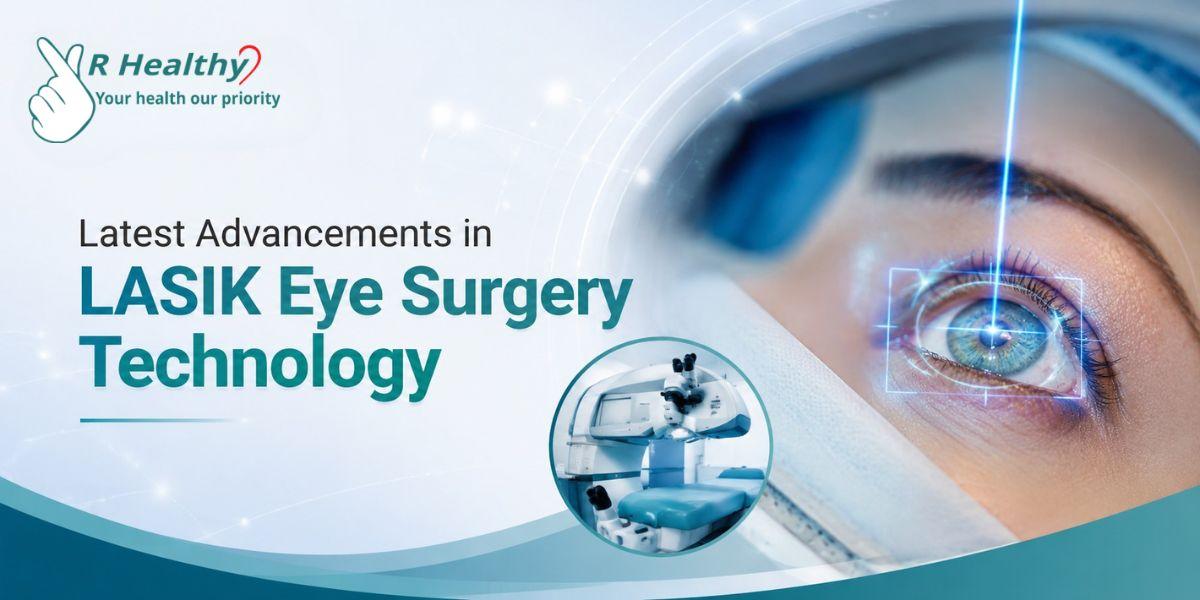
Advances in laser technology, imaging, corneal mapping and treatment planning make modern vision correction techniques significantly more precise and individualised. For individuals considering LASIK eye surgery treatment, knowledge about these advances will help them choose the most suitable treatment with the help of an eye specialist.
Conducting a thorough LASIK eye surgery consultation is a mandatory stage. An ophthalmologist analyses the condition of the eye, its structure, refractive error, etc., to decide if LASIK is necessary.
Wavefront-Guided LASIK
Wavefront technology enables measuring of light distribution in the eye and helps to determine optical errors. Information received from wavefront technology analysis can be included in a customised treatment plan.
Wavefront allows adapting the treatment performed with the laser to individual visual properties, rather than using only correction measurements.
Topography-Guided LASIK
Topography-guided LASIK uses the cornea's detailed mapping and creates an individual treatment profile. Cornea topography helps to know all peculiarities of its surface and curvature.
The technique may be helpful for certain patients when corneal characteristics necessitate an individualised treatment. The appropriateness should be determined by conducting a detailed examination.
Femtosecond Laser Technology
A femtosecond laser is one of the technologies used during many modern LASIK surgeries to cut the cornea's flap. Unlike mechanical technologies, the femtosecond laser makes it possible to cut a corneal flap by means of laser pulsations.
The dimensions and thickness of the flap can be planned according to the patient's corneal parameters.
Advanced Eye-Tracking Technology
The modern excimer laser systems allow the integration of advanced eye tracking technology. Eye tracking monitors the movement of the eye during the procedure and allows maintaining the proper alignment of the laser spot with the treatment area.
Eye tracking may be necessary since there may be small involuntary eye movements during the procedure.
Advanced Corneal Mapping
The advanced diagnostic tools allow creating detailed maps of the patient's cornea before the procedure. The data on the curvature, thickness, and surface properties will help the ophthalmologist determine if the patient is eligible for the procedure.
Detailed screening is very important since LASIK is not suitable for all patients. In some cases, other methods will be needed to correct the vision problem.
Personalized Treatment Approach
The main advantage of modern lasik eye surgery treatment compared to the older one is personalisation. Specialists are no longer using identical treatment profiles for all patients. They can take into account several parameters when planning the surgical intervention.
The following parameters may be considered by specialists: refractive error, the shape of the cornea, the thickness of the cornea, pupil characteristics, and eye health in general.
Advanced Excimer Lasers
The advancements in laser technology made the procedure faster and more precise. The advanced laser systems can deliver controlled laser pulses while performing the necessary tracking and processing.
The particular technology used in each clinic depends on the specific needs of the patient.
Importance of Advanced Diagnostics Prior to Lasik Eye Surgery
Technologies play an essential part prior to performing the procedure. As part of the lasik eye surgery consultation, the ophthalmologist can conduct numerous tests for visual acuity, cornea state, eye pressure, tear film, and other parameters.
This information helps to define whether LASIK eye surgery is needed and what type of treatment is appropriate.
Understanding of LASIK Eye Surgery Cost in India
The LASIK eye surgery cost in India varies due to several factors, including the nature of the procedure, applied technology, surgeon's experience, diagnostics, treatment centre, and many other aspects.
Standard LASIK and customised LASIK may have different costs. In addition, advanced diagnostics can affect the general cost as well.
It is necessary to define what is included into the price – diagnostics, the procedure itself, drugs, consultations, and others.
Is the Newest Technology the Best Choice?
The newest technology is not always the most appropriate option for every patient. The LASIK treatment has to be selected in accordance with the individual eye measurements, clinical appropriateness, the patient's lifestyle, and visual requirements.
A professional ophthalmologists can explain what treatment types, advantages, limitations, risks, recovery needs, and other aspects are associated with the procedure during consultation.
Why Is a LASIK Eye Surgery Consultation Important?
A detailed LASIK eye surgery consultation helps patients to get acquainted with treatment opportunities before making a decision. Ophthalmologists can evaluate diagnostic results, explain what procedure is recommended, discuss possible results, and give all the information about recovery and follow-ups.
In addition, patients can find out the lasik eye surgery cost in India, available technologies, and whether there is another vision correction procedure that can be better for a certain person.
Conclusion
Thanks to corneal mapping, wavefront analysis, femtosecond lasers, eye tracking, and personalized treatment, advanced LASIK treatment became much more flexible and diverse. Technologies can be useful for ophthalmologists in order to develop individualized treatment programs for eligible candidates.
Still, technology is only one component of successful LASIK treatment. Screening, clinical competence, proper patient selection, and postoperative care are still crucial aspects of lasik eye surgery treatment.
Everyone who wants to undergo LASIK has to visit lasik eye surgery consultation and consider all the aspects and lasik eye surgery cost in India.
Frequently Asked Questions
1. What are the new technologies used in LASIK treatment?
Among these technologies include wavefront guided procedures, topography-guided LASIK, femtosecond lasers, eye-tracking systems, corneal mapping, and customised treatment procedures.
2. What is wavefront-guided LASIK?
This procedure is based on precise measurements of optical features of your eye, which will be taken into account to produce a custom laser treatment profile.
3. What is topography-guided LASIK?
This technology involves corneal mapping and allows the ophthalmologist to design a custom treatment plan using the features and the shape of the cornea.
4. Why do you need a LASIK eye surgery consultation?
During this appointment, an ophthalmologist will evaluate your suitability for the LASIK eye surgery procedure through the assessment of eye health, corneal properties, refraction status, and other important aspects.
5. Do all people have access to LASIK treatment?
No. This procedure is available only to those patients who are considered clinically suitable for this treatment.
6. What are the factors that influence LASIK eye surgery cost in India?
The cost of this procedure in India may depend on the type of treatment, laser technology, skill level of the surgeon, the cost of diagnostics, the center that provides the service and many other factors.
7. Does femtosecond LASIK differ from traditional one?
Unlike traditional methods, when creating a corneal flap a surgeon uses a femtosecond laser during femtosecond LASIK. However, depending on the patient's suitability and the surgeon's recommendations, one of these methods is chosen.
8. Can LASIK provide perfect vision?
No. Despite the advances in technology, results of any vision correction procedure cannot be guaranteed to be perfect.
9. What happens during the LASIK consultation?
The ophthalmologist studies your medical and eye history, evaluates your vision and eye health, takes measurements of the cornea and other necessary tests, and recommends either LASIK treatment or some other procedure.
10. How can I choose the right LASIK procedure?
Take into account your clinical suitability, the surgeon's experience, the diagnostic facilities, the available technology, possible outcomes, aftercare, and total cost of the procedure.

 English
 Arabic
 Spanish
 Portuguese
 Deutsch
 Turkish
 Dutch
Dutch
 Italiano
 Russian
 Romaian
 Portuguese (Brazil)
 Greek
Greek