


How Technology Is Changing the Way Families Enjoy Entertainment
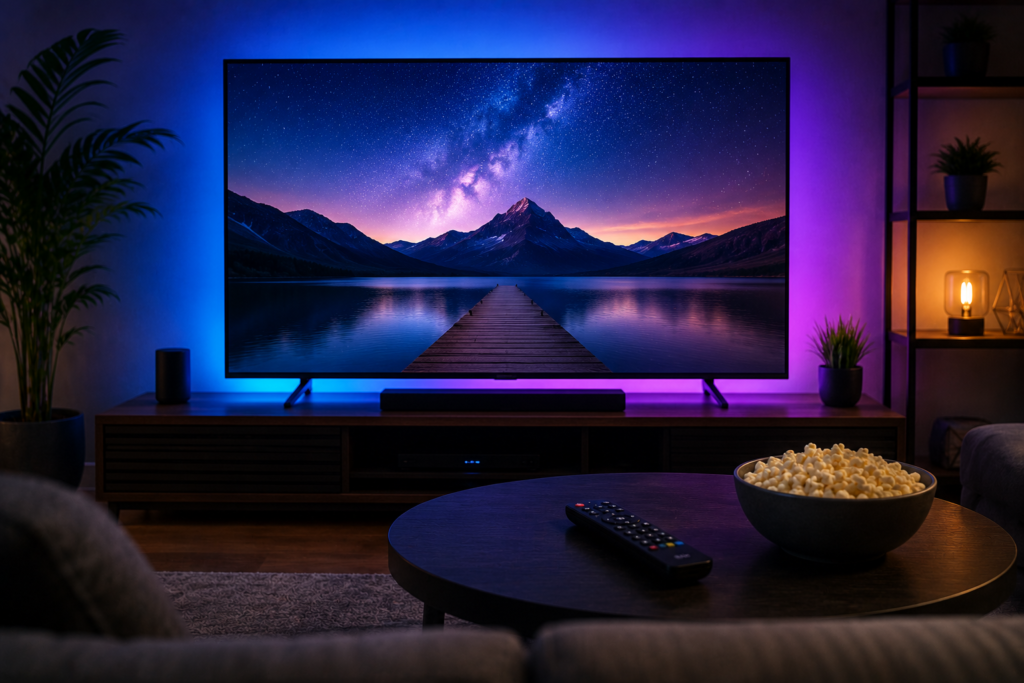
The television has always been more than a piece of electronics. For many families, it has been a place where people gather after work, school, and daily responsibilities. What has changed is the technology surrounding that experience.
A modern home may have a smart TV, several smartphones, tablets, laptops, gaming systems, and a fast internet connection. These devices have expanded the ways families can watch, play, and discover entertainment together.
At the same time, technology has changed individual viewing habits. Families can now combine shared entertainment with personal choices, creating a more flexible home environment.
The Living Room Is Becoming More Connected
A television used to operate largely on its own. Today, it can be connected to the internet and interact with a wide range of applications and devices.
Smart TVs have become an important gateway to digital entertainment. Recent research shows that smart-TV operating systems are increasingly influencing how viewers discover and access programming.
This means the television is no longer simply displaying a broadcast. It can act as a central hub for different types of entertainment.
Families Have More Ways to Watch
One of the biggest changes is the number of screens available inside a typical household.
A family might watch a movie together on a large television, while someone later uses a tablet to catch up on a program. Smartphones can provide another option when a viewer is away from the main screen.
This variety allows entertainment to fit different situations rather than forcing everyone to use the same device at the same time.
Streaming Has Expanded Content Choices
Technology has also changed the amount and variety of entertainment available to households.
Families can explore movies, series, sports, documentaries, children's programs, news, and international content through different digital services. Research from Inscape found that streaming accounted for 58.6% of TV viewing time in the first quarter of 2026, showing how central internet-based viewing has become.
The challenge is no longer simply finding something to watch. With so many options, families also need easy ways to discover and organize content.
Everyone Can Have Different Preferences
Family members don't always agree about entertainment. Parents may prefer news or sports, teenagers might want something completely different, and younger children may have their own favorite programs.
Modern technology can make these differences easier to manage. Compatible devices allow household members to enjoy separate content when necessary while keeping the main television available for shared viewing.
This creates a useful balance between personal entertainment and family time.
Technology Makes Discovery Easier
Finding suitable content used to involve scrolling through a limited number of channels. Today, search tools, recommendations, categories, program guides, and personalized interfaces can make discovery much faster.
Artificial intelligence is also beginning to influence how younger audiences discover entertainment. Nielsen's Gracenote research found that 49% of Gen Alpha respondents selected web and app-based AI chatbots as their preferred source for TV and movie recommendations, ahead of streaming or cable interfaces.
The technology may continue changing, but the underlying expectation is simple: viewers want to find relevant entertainment without wasting time.
Internet Quality Supports the Experience
Connected entertainment depends heavily on the home network. Multiple family members may be streaming video, playing online games, attending video calls, or using other internet-connected services simultaneously.
A reliable broadband connection and well-positioned router can help reduce interruptions. For stationary devices, a wired connection may also be useful where practical.
As entertainment becomes increasingly internet-based, network performance is becoming part of the overall viewing experience.
Shared Viewing Still Matters
Greater personalization doesn't mean families have stopped enjoying entertainment together.
Major sporting events, movies, special broadcasts, and favorite shows can still create opportunities for everyone to gather around one screen. In fact, research and commentary on family viewing continue to highlight the social value of watching together, particularly for creating shared experiences and conversations.
Technology simply gives families more choices about when to watch individually and when to watch as a group.
Smart Features Can Make Entertainment Simpler
Modern television technology includes features designed to reduce everyday friction. Voice search, content recommendations, screen casting, parental controls, electronic program guides, and device integration can all make entertainment easier to manage.
However, more technology isn't automatically better. Recent reporting has highlighted some viewers simplifying their smart TVs because excessive features can contribute to slower or more complicated experiences.
The most useful technology is usually the technology that solves a genuine problem without making basic tasks harder.
Building a Better Home Entertainment Routine
Families don't need to use every available feature. A better approach is to identify what actually improves their routine.
For some households, that may mean better device compatibility. Others may benefit from easier content discovery or reliable access to live programming. Families interested in useful information about modern television technology can start by considering which features genuinely fit their viewing habits.
The goal is not to create the most complicated entertainment setup. It is to create one that feels convenient and natural.
Final Thoughts
Technology is changing family entertainment by expanding access, improving content discovery, and giving household members more flexibility. Smart TVs, streaming services, connected devices, and better internet infrastructure have transformed television from a single-purpose appliance into part of a broader digital environment.
Yet the basic purpose hasn't changed. Families still want to relax, share experiences, and enjoy something together. The difference is that modern technology gives them more ways to make that happen.

 English
 Arabic
 French
 Spanish
 Portuguese
 Turkish
 Dutch
Dutch
 Italiano
 Russian
 Romaian
 Portuguese (Brazil)
 Greek
Greek