


Can jinglitools Power Wrenches Meet Your Workshop Fastening Needs?
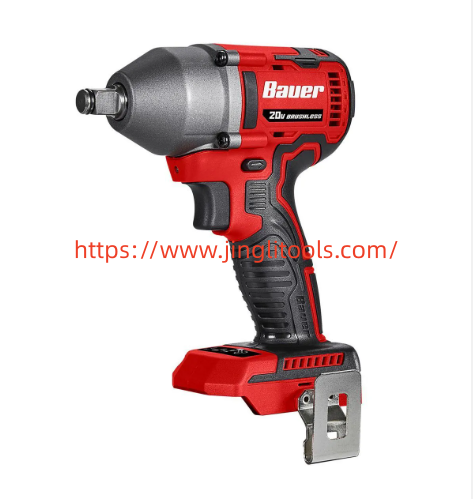
Power Wrenches can be useful for industrial fastening, equipment assembly, vehicle maintenance, machinery servicing, and workshop repair tasks. However, buyers should not select a model simply by looking at one specification. The actual fastener size, required torque, working frequency, available accessories, operating environment, and maintenance arrangements all deserve attention. A careful assessment before purchasing can help businesses choose equipment that fits their specific applications and daily workflow.
Identify the Fasteners Used in Your Workplace
Before comparing models, determine which types of bolts and nuts technicians handle regularly. Fastener diameter, thread type, material, and installation location can all affect equipment selection.
A workshop working mainly with smaller mechanical assemblies may have different requirements from a facility maintaining large machinery. Buyers should therefore create a basic list of commonly used fasteners and identify the tightening range associated with each task.
This information provides a practical starting point. Instead of selecting equipment based on a specification that may rarely be needed, companies can focus on models that correspond with their actual workload.
Examine the Required Torque Range
Torque is one of the key specifications to review. Buyers should consider both the normal operating range and the requirements of demanding fastening jobs.
A model with a suitable torque range can give operators greater flexibility across different tasks. However, selecting equipment solely because its maximum figure appears impressive may not be appropriate. Weight, size, control, and application conditions should also be considered.
For maintenance teams, it can be useful to compare the manufacturer's stated specifications with the requirements provided by equipment or vehicle manufacturers. This helps ensure that the selected unit is appropriate for the intended application.
Check Drive Size and Socket Compatibility
Drive size directly affects socket compatibility. Common configurations are available for different industrial fastening applications, so buyers should confirm which sizes are already used in their workshop.
If a facility has an existing collection of sockets, extensions, and related accessories, compatibility can simplify purchasing and daily operation. Buyers should also check whether the required metric or imperial accessories are readily available.
For distributors, accessory compatibility can influence inventory planning as well. A clear understanding of customer requirements can make it easier to prepare suitable product combinations.
Consider the Working Environment
The location where equipment will be used is another important factor. Technicians may work inside factories, maintenance areas, vehicle workshops, assembly stations, or outdoor service locations.
Some applications require long hoses, while others may benefit from a cordless configuration. Facilities with established compressed-air systems may have different purchasing priorities from teams that frequently move between workstations.
Buyers should consider available infrastructure, workspace size, operator movement, storage arrangements, and expected usage frequency before choosing a configuration.
Look at Handling and Ergonomic Design
Industrial fastening often involves repeated movements. For this reason, equipment weight, balance, grip design, trigger position, vibration, and overall dimensions should be reviewed.
A technician may need to work above shoulder height, inside narrow spaces, or around large assemblies. In these situations, handling characteristics can influence daily productivity and operator comfort.
When possible, buyers should arrange sample testing before larger purchases. Allowing technicians to handle the equipment can provide useful feedback that cannot always be obtained from a specification sheet.
Review Construction and Maintenance Needs
Industrial equipment may encounter dust, oil, vibration, temperature changes, and frequent use. Buyers should therefore examine the construction of the housing, switches, internal components, cooling arrangements, and other relevant features.
Maintenance is equally important. Ask about replacement parts, service procedures, warranty conditions, lubrication requirements, batteries and chargers where applicable, and technical support.
A clear maintenance process can make equipment management easier, particularly when several units are used across different production or maintenance areas.
Compare the Complete Purchasing Cost
The purchase price is only one part of the overall cost. Accessories, replacement components, maintenance, batteries, chargers, storage, and future service requirements may also affect the budget.
For bulk orders, buyers should request detailed specifications and packaging information. Sample evaluation can also help confirm whether the selected model matches actual working conditions before a larger quantity is ordered.
This approach is particularly useful for distributors and industrial procurement teams because it allows technical requirements and purchasing expectations to be discussed before the order is finalized.
Ask Clear Questions Before Ordering
A reliable purchasing discussion should cover more than price and delivery time. Buyers can ask about torque specifications, drive sizes, operating speed, accessories, inspection procedures, replacement parts, warranty arrangements, packaging, and customization options.
Clear communication can reduce the possibility of selecting unsuitable equipment and can help both sides establish realistic expectations.
For buyers considering jinglitools, the selection process can focus on matching equipment specifications with actual workshop requirements rather than relying on a single feature. This application-based approach can support more practical purchasing decisions for factories, maintenance teams, distributors, and industrial users.To review available equipment and related solutions, visit the https://www.jinglitools.com/product/ and compare products according to your fastening requirements, workplace conditions, accessory needs, and purchasing plans.

 English
 Arabic
 French
 Spanish
 Portuguese
 Deutsch
 Turkish
 Dutch
 Italiano
 Romaian
 Portuguese (Brazil)
 Greek