


TARUN Non-Woven Fiber Wheel Production Equipment: Satin Finish on Complex Surfaces
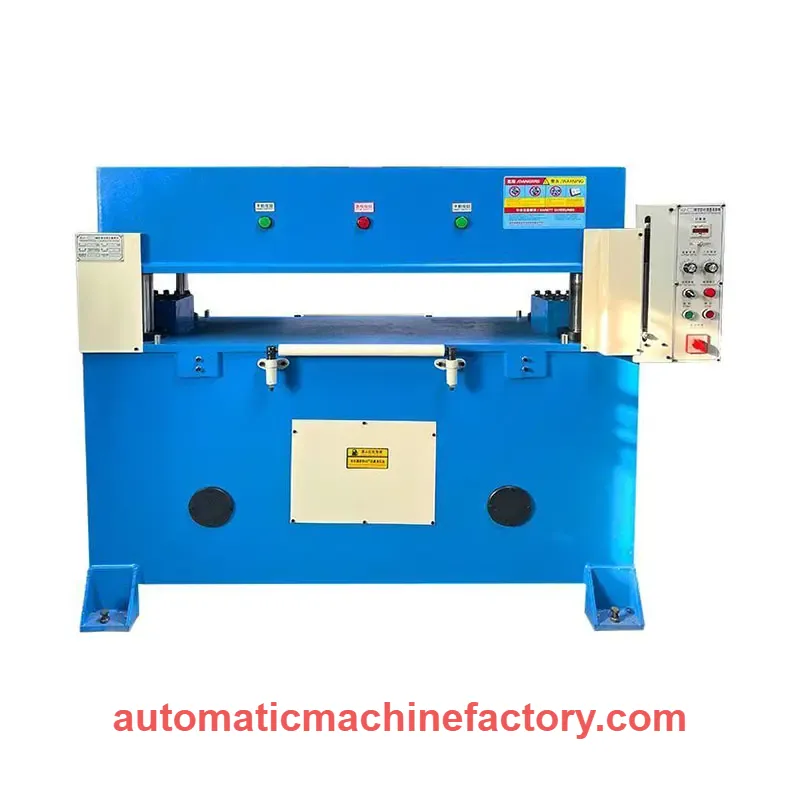
Every surface finishing operator recognises that challenge. A flat workpiece accepts a uniform satin finish without difficulty. However, when the part curves, the abrasive contact changes continuously.Non-Woven Fiber Wheel Production Equipment must produce wheels that conform to these contour variations while maintaining consistent scratch patterns. Automaticmachinefactory, operating under the TARUN brand, has observed this challenge across metalworking, automotive, and hardware finishing applications. The question remains: can a non-woven wheel truly deliver an even satin appearance across a curved surface?
The non-woven wheel's construction determines its ability to follow contours. Unlike coated abrasives with rigid backings, non-woven wheels consist of layered synthetic fibers bonded together in a three-dimensional web . This open structure permits the wheel to deflect as it contacts the workpiece. On a flat surface, the wheel face contacts uniformly. On a curve, the outer fibers compress while inner fibers maintain contact, creating a conformable surface that follows the part geometry . TARUN's production equipment controls fiber density and layering precisely, ensuring this conformability remains consistent throughout each wheel's structure.
The density grade selected for the wheel directly influences its contour-following capability. Dense wheels maintain aggressive cut but conform less readily to sharp curves. Open-density wheels flex easily, wrapping around radii while maintaining surface contact. The Non-Woven Fiber Wheel Production Equipment must control the compression force applied during formation. Higher compression produces denser wheels suitable for flat surfaces or gentle contours. Lower compression yields open wheels for complex geometries. Automaticmachinefactory's equipment includes adjustable compression stations that permit this density variation across production batches.
The satin finish result depends on the abrasive mineral embedded in the non-woven web. Silicon carbide and aluminum oxide perform differently on curved surfaces. Silicon carbide fractures sharply, producing consistent scratch patterns even when the wheel deforms . Aluminum oxide tends to round during use, potentially changing scratch depth as the wheel follows contours. The equipment's abrasive application system must distribute mineral uniformly through the web depth. Uneven abrasive distribution creates inconsistent finish, particularly noticeable on curves where contact pressure varies.
Wheel rotational speed interacts with contour contact to affect finish consistency. At certain speeds, the wheel's outer fibers deflect outward, increasing contact area on convex surfaces. This centrifugal effect changes the effective abrasive pressure, potentially altering scratch depth across the curve. The equipment's production parameters must account for the wheel's intended operating speed. TARUN's manufacturing process includes controlled conditioning steps that prepare the wheel surface for predictable performance across its speed range .
The workpiece feed rate influences how the non-woven wheel tracks curves. Faster feed reduces contact time on each surface point, requiring aggressive cut from the wheel. Slower feed allows the wheel's conformable structure to adapt to curvature changes gradually. The wheel's layered construction, produced by the Non-Woven Fiber Wheel Production Equipment, determines how quickly it responds to these feed variations. Wheels with uniform layer density maintain consistent contact pressure regardless of feed rate, contributing to uniform satin appearance across the entire workpiece .
Curve radius presents the ultimate test of non-woven wheel capability. Tight radii, such as those found on decorative trim, demand extreme wheel conformity. The wheel's fiber orientation, established during production, affects its ability to compress without tearing. TARUN's equipment orients fibers in multiple directions during the formation process, creating a web that compresses uniformly from any angle . This multi-directional orientation prevents the wheel from developing flat spots or preferential compression directions that would create visible finish variations.
The resin bonding system that holds the non-woven web together directly affects flex life. Rigid resins maintain wheel shape but limit conformity. Flexible resins permit extended contour following but may shed fibers prematurely. The production equipment must apply resin uniformly through the web, ensuring consistent flexibility throughout the wheel thickness. Automaticmachinefactory's resin application system includes precision metering that controls resin distribution across the entire wheel diameter.
Operator technique introduces variables that equipment alone cannot eliminate. The angle between wheel and workpiece changes as the operator follows a curve. Steeper angles reduce contact area, while shallow angles increase it. TARUN's production equipment includes training resources that help operators understand these angle effects, enabling them to adjust technique for consistent results. The equipment's role remains providing a wheel that responds predictably to these technique variations.
For workshops seeking consistent satin finishes on curved workpieces, the non-woven wheel offers distinct advantages over rigid abrasives. Its conformable structure, combined with uniform abrasive distribution and controlled density, produces finishes that remain visually consistent across contours. Automaticmachinefactory's Non-Woven Fiber Wheel Production Equipment provides the manufacturing foundation for these wheels, controlling the variables that determine performance. https://www.automaticmachinefactory.com/ presents equipment designed for this precision production. Does your current finishing process achieve the contour consistency your quality standards demand?

 English
 Arabic
 French
 Spanish
 Deutsch
 Turkish
 Dutch
Dutch
 Italiano
 Russian
 Romaian
 Portuguese (Brazil)
 Greek
Greek