


When Zjrctools Glass Drill Bit Fits Bottle and Mirror Work
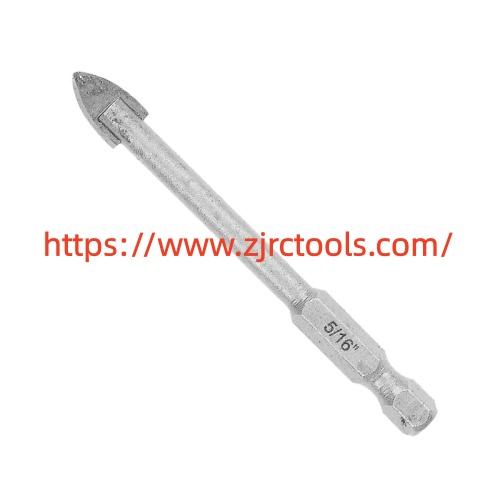
Glass Drill Bit selection depends on the surface and the opening size required for bottles mirrors and thin panes. Matching the tip material and shape to the job reduces stress on fragile sheets and helps produce even edges. Carbide spear points suit lighter tasks on thinner material while diamond coated cores handle thicker sections and curved forms more steadily.
Bottles often need openings for fixtures or decorative work. Start by securing the bottle on a stable base so it cannot roll. Mark the spot clearly then apply light pressure at a slow rotation rate. Keep moisture on the contact area the entire time to carry away heat and particles. A hollow core style removes a ring of material and leaves a smoother interior wall. Solid tips work for smaller openings under a quarter inch. Support the opposite side of the bottle with a soft pad to limit vibration that could cause fractures.
Mirrors present a flat yet delicate surface. Tape over the marked location helps the tip grip without skating. Hold the tool perpendicular to the face and begin at the lowest available speed setting. Continuous water flow or a small dam of putty filled with liquid keeps temperatures even across the pane. Once the tip breaks through reduce forward force so the exit side stays free of chips. For mounting clips a modest diameter usually suffices. Larger openings for hardware may call for a core style that grinds rather than cuts aggressively.
Thin panes share many of the same needs as mirrors yet demand even greater care because they flex more easily. Place a firm backing board under the pane with a cushioning layer between them. Work from both sides if the thickness allows by stopping halfway and completing the opening from the reverse face. This approach balances stress and limits edge damage. Always confirm the material is not tempered before beginning any work since heat treated sheets cannot accept openings safely.
Speed control remains central across all three surfaces. High rotation builds friction quickly and creates thermal differences that lead to cracks. Aim for a range well below typical wood or metal settings so the abrasive action stays gradual. Pressure should stay light and constant letting the tip do the work instead of forcing progress. Pause occasionally to clear debris and refresh the cooling liquid.
Tip life extends when the tool stays wet and free of excessive force. After each session rinse the tip and store it dry to protect the coating or carbide edge. Size choice matters as well. Select a diameter slightly smaller than the final need then enlarge carefully if required. Pilot openings help guide larger cores and reduce wandering on smooth faces.
Zjrctools designs its range with these practical needs in mind so users can match tip style to bottles mirrors or thin panes without guesswork. The collection covers common diameters and both carbide and diamond options for varied project scales.
Proper preparation and steady technique turn potentially difficult tasks into manageable steps. Secure the workpiece mark accurately maintain moisture and respect low speeds. These habits produce usable openings while protecting the surrounding material. When ready to select tools suited to these applications visit https://www.zjrctools.com/product/ for the available sizes and styles.

 English
 Arabic
 French
 Spanish
 Portuguese
 Deutsch
 Turkish
 Dutch
Dutch
 Russian
 Romaian
 Portuguese (Brazil)
 Greek
Greek