


Industrial Hose Market Share, Demand & Growth by 2035
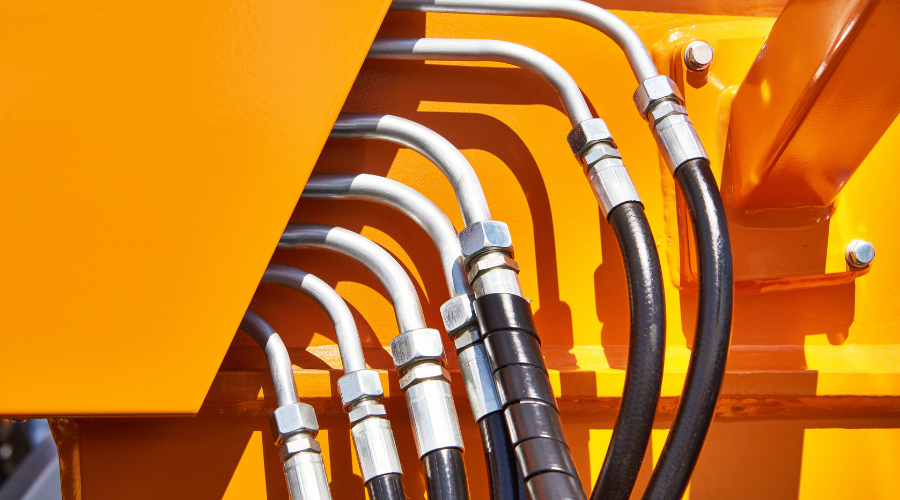
Industrial hoses are critical but often overlooked components of modern industrial infrastructure. They transport liquids, gases, chemicals, slurries, powders, and other materials between equipment, storage systems, processing units, and distribution points. From factories and refineries to mines, farms, construction sites, food-processing plants, and wastewater facilities, hose systems provide the flexibility that rigid piping cannot always deliver.
The global industrial hose market was valued at USD 14.56 billion in 2025 and is expected to grow at a CAGR of 3.90% between 2026 and 2035, reaching approximately USD 21.35 billion by 2035. The market's development is being supported by industrial expansion, infrastructure investment, chemical and pharmaceutical production, energy activity, water-management requirements, and the replacement of ageing equipment.
What makes the industry particularly important is that hose selection is rarely a simple purchasing decision. A hose must withstand the pressure, temperature, chemical composition, abrasion, flexibility requirements, and operating environment of its application. Failure can result in leakage, production downtime, environmental damage, contamination, or serious safety incidents. As a result, industrial hose manufacturers increasingly compete on engineered performance, certification, reliability, and lifecycle value rather than price alone.
Market Growth and Key Demand Drivers
The industrial hose market is expanding alongside global manufacturing, infrastructure development, energy production, water treatment, and specialised processing industries. Replacement demand is equally important because hoses are wear components that require periodic inspection and replacement even when the surrounding equipment remains operational.
Industrialisation in emerging economies is creating new demand for fluid-transfer equipment. New chemical plants, factories, mines, food-processing facilities, water-treatment plants, and construction projects require extensive systems for moving liquids, gases, powders, and bulk materials.
Infrastructure investment adds another layer. Construction equipment relies heavily on hydraulic and material-handling systems, while municipal projects require hoses for water, sewage, drainage, and maintenance operations. As cities expand, the need for water and wastewater infrastructure creates recurring demand for flexible fluid-transfer products.
Maintenance and replacement are also fundamental to the market. Industrial hoses operate under mechanical stress, pressure cycles, temperature fluctuations, chemical exposure, vibration, and abrasion. Even high-quality hoses eventually experience wear. This produces a recurring aftermarket in which reliability and service life become major purchasing considerations.
The increasing sophistication of industrial processes is also influencing product design. A hose used to transfer aggressive chemicals requires different construction from one carrying potable water, food products, compressed air, or abrasive mining slurry. Manufacturers therefore offer increasingly specialised products rather than treating the hose as a generic commodity.
Materials and Performance Characteristics
Synthetic rubber remains a major material because it can provide a useful combination of flexibility, durability, temperature resistance, and chemical compatibility. PVC, natural rubber, silicone, polyurethane, and other engineered materials occupy important niches where specific operating requirements determine the most appropriate construction.
Synthetic rubber is widely used because different formulations can be engineered for oil resistance, abrasion resistance, heat exposure, weathering, and flexibility. This versatility makes synthetic-rubber hoses relevant across automotive, oil and gas, chemical, construction, and general industrial applications.
PVC hoses are attractive in applications where cost, flexibility, corrosion resistance, and chemical compatibility are important. They are widely used in water handling, agriculture, food processing, material transfer, and general industrial environments. Reinforcement can increase pressure capability while retaining the flexibility that makes PVC products practical.
Natural rubber retains advantages in applications requiring high elasticity and abrasion resistance. Mining is a particularly relevant example because slurry and bulk-material handling can subject hoses to severe mechanical wear. In such environments, material selection can directly affect service intervals and operating costs.
Silicone is valuable in applications where temperature performance, flexibility, and cleanliness are important. Food and beverage processing, pharmaceutical manufacturing, and specialised industrial applications can require silicone hoses that meet specific hygienic or regulatory requirements.
Polyurethane offers strong abrasion resistance and flexibility and is particularly relevant to applications involving abrasive materials, powders, granules, and particulate transfer. The choice between materials is ultimately driven by the media being transported and the physical conditions surrounding the hose.
A hose's material, however, is only one part of its construction. Reinforcement layers, textile or wire structures, inner tubes, covers, fittings, and coupling systems determine how the finished product performs under pressure and mechanical stress.
Media Handling and Application Requirements
The media being transported is one of the most important factors in industrial hose selection. Air and gas, oil, water and steam, chemicals, and food and beverage products each impose different requirements for pressure resistance, temperature tolerance, chemical compatibility, cleanliness, and flexibility.
Air and gas hoses are common in manufacturing plants, workshops, construction, and pneumatic systems. They must withstand operating pressure while remaining flexible enough for repeated movement. In compressed-air environments, the quality of fittings and connections is just as important as the hose itself because leaks can reduce system efficiency.
Oil hoses are used extensively in automotive, machinery, hydraulic, energy, and industrial applications. They need resistance to petroleum-based fluids and, depending on the application, elevated temperatures and pressure. Hydraulic systems are particularly demanding because hose failures can occur under very high pressures and may create both safety and operational risks.
Water and steam hoses cover an enormous range of applications. Low-pressure water transfer is relatively straightforward, whereas steam service requires materials and constructions capable of handling elevated temperatures and pressure. Industrial users must therefore select hoses according to actual service conditions rather than relying solely on the appearance or nominal size of the product.
Chemical hoses require especially careful engineering. Chemical compatibility must account not only for the transported substance but also for concentration, temperature, pressure, exposure duration, and potential permeation. A hose that appears physically suitable can still fail if its inner tube is chemically incompatible with the media.
Food and beverage hoses introduce additional requirements. Materials may need to comply with applicable food-contact standards, resist cleaning chemicals, and maintain hygienic internal surfaces. Pharmaceutical and biotechnology facilities can impose even more stringent requirements around cleanliness, sterilisation, traceability, and contamination control.
Industrial Applications Across Major Sectors
Industrial hoses are used across automotive manufacturing, chemical and pharmaceutical production, infrastructure, oil and gas, food processing, water and wastewater, mining, and agriculture. Their role varies significantly by industry, but the common requirement is reliable and controlled material transfer.
In automotive manufacturing, hoses support fuel, coolant, air, hydraulic fluids, chemicals, paint, and other process requirements. Vehicle production lines depend on predictable material delivery, so hose reliability can contribute directly to production uptime.
Chemical and pharmaceutical plants represent some of the most technically demanding applications. Chemical facilities may handle corrosive, toxic, volatile, or high-temperature substances, while pharmaceutical manufacturing places strong emphasis on contamination control. Hose assemblies may need to meet strict material, cleanliness, and certification requirements.
The oil and gas industry uses industrial hoses for fuel transfer, drilling-related applications, loading and unloading, water handling, and other fluid-transfer operations. The operating environment can be harsh, making resistance to pressure, chemicals, temperature, weathering, and mechanical damage particularly important.
Mining creates perhaps one of the most demanding environments for hose products. Hoses can be exposed to abrasive slurries, heavy machinery, vibration, impact, and difficult field conditions. A longer-lasting hose can reduce maintenance frequency and costly equipment downtime, making lifecycle performance more important than the lowest purchase price.
Agriculture is another significant application area. Irrigation, fertiliser transfer, spraying, water management, and agricultural machinery all depend on flexible fluid-transfer products. Seasonal operating conditions and exposure to sunlight, chemicals, mud, and physical handling influence product selection.
Water and wastewater infrastructure provides a stable source of demand. Treatment facilities, pumping operations, municipal systems, and construction projects require hoses for transferring water, chemicals, sludge, and other fluids. As water scarcity and infrastructure renewal become more important globally, this segment should remain strategically significant.
Regional Market Trends and Growth Opportunities
North America and Europe benefit from mature industrial bases and sophisticated aftermarket demand, while Asia Pacific represents a major growth centre because of manufacturing expansion, infrastructure development, construction, mining, and increasing chemical-processing capacity.
North America has a well-established industrial hose ecosystem supported by automotive manufacturing, oil and gas, chemicals, food processing, construction, agriculture, and water infrastructure. Demand is driven by both new equipment and replacement requirements, while customers increasingly emphasise safety, certification, and total cost of ownership.
Europe's market is influenced by advanced manufacturing, environmental regulation, process industries, automotive production, food and pharmaceutical manufacturing, and infrastructure investment. European customers often place strong emphasis on material traceability, product compliance, energy efficiency, and sustainable manufacturing.
Asia Pacific represents one of the most important long-term opportunities. China, India, Japan, South Korea, and Southeast Asian economies have substantial manufacturing and industrial-processing activity. Expansion of factories, chemical plants, mining operations, infrastructure, and water-treatment capacity can generate demand for both standard and specialised hose systems.
India's infrastructure and manufacturing development is particularly relevant to the market. Industrial corridors, construction, automotive production, pharmaceuticals, food processing, and water-management projects can all support hose consumption. The country's expanding industrial base also creates opportunities for domestic manufacturers and international suppliers with local distribution capabilities.
Latin America benefits from mining, agriculture, oil and gas, food processing, and infrastructure activity. Brazil, Mexico, Chile, and other major industrial economies can generate demand for application-specific hoses suited to harsh operating environments.
The Middle East and Africa offer opportunities linked to oil and gas, desalination, construction, mining, agriculture, and industrial development. In these markets, durability and resistance to heat, UV exposure, abrasion, and demanding operating conditions can be particularly valuable.
Technology, Safety and Product Innovation
The industrial hose industry is increasingly focused on longer service life, safer connections, lightweight construction, improved flexibility, smart monitoring, and specialised materials. Product innovation is shifting from simply increasing pressure ratings toward improving reliability across the entire hose assembly.
One important development is the use of advanced reinforcement technologies. High-strength textile and steel-wire reinforcement can allow hoses to withstand demanding pressure conditions without becoming excessively heavy or inflexible. The optimal design depends on whether the priority is high pressure, repeated flexing, abrasion resistance, chemical exposure, or a combination of these factors.
Couplings are equally important. A high-performance hose can still fail if the connection is improperly selected, assembled, installed, or maintained. Manufacturers increasingly provide complete hose assemblies and technical guidance rather than selling hose tubes alone.
Safety is another central concern. Industry standards and testing requirements help establish performance expectations for different applications. Users need to consider pressure ratings, temperature limits, chemical compatibility, bend radius, electrical properties where relevant, and inspection intervals before putting a hose into service.
Predictive maintenance could become increasingly valuable in large industrial facilities. Sensors and connected systems can potentially monitor pressure, temperature, flex cycles, or other operating conditions, allowing operators to identify deterioration before a failure occurs. Although smart hoses remain a developing niche, the broader industrial shift toward connected maintenance creates a logical pathway for their adoption.
Sustainability is also influencing product development. Manufacturers are examining longer-life materials, recyclable components, lower-impact production processes, and designs that reduce replacement frequency. A hose that lasts longer can reduce material consumption and maintenance-related waste, although end-of-life recycling remains technically challenging for multi-material reinforced assemblies.
Competitive Landscape and Leading Companies
The industrial hose market is highly competitive and includes global fluid-management companies, specialised hose manufacturers, and regional suppliers. Competition increasingly centres on application expertise, product reliability, technical support, certifications, distribution reach, and the ability to supply complete assemblies.
The companies identified in the market landscape include Eaton Corporation plc, Gates Industrial Corporation plc, Parker-Hannifin Corporation, Transfer Oil S.p.A, Kurt Manufacturing Company, Piranha Hose Products, Inc., NORRES Schlauchtechnik GmbH, Colex International Ltd., Kuriyama Holdings Corporation, ALMAPlast S.r.l., Griflex Limited, REHAU Industries SE & Co. KG, Danfoss A/S, RR Italia SPA, and Alfaflex NV, alongside other participants.
Eaton and Parker Hannifin compete across broad fluid-management markets where hose assemblies form part of larger hydraulic, pneumatic, and motion-control solutions. Their scale allows them to serve demanding industrial customers while integrating hoses with fittings, valves, filtration, and other components.
Gates has a strong position in power transmission and fluid-power applications and emphasises hose products designed for demanding mobile and industrial environments. Danfoss similarly operates across hydraulic and fluid-management technologies, providing opportunities to integrate hose systems with broader equipment architectures.
REHAU and NORRES demonstrate the importance of specialised polymer-based hose technologies, particularly in industrial air, material handling, chemical, food, and other specialised applications.
Kuriyama, Transfer Oil, Piranha Hose Products, Colex, ALMAPlast, Griflex, RR Italia, and Alfaflex contribute additional specialist and regional capabilities. Their presence illustrates why the market remains fragmented despite the scale of the largest global manufacturers.
For customers, supplier selection is increasingly about more than catalogue availability. Technical assistance, onsite support, hose assembly capabilities, documentation, inventory management, and rapid replacement can all be decisive, particularly in industries where downtime carries a high financial cost.
Market Challenges and Long-Term Outlook
The market faces pressure from raw-material volatility, demanding safety requirements, supply-chain disruptions, competition from rigid piping and alternative fluid-transfer systems, and the need to balance higher performance with affordability.
Rubber, polymers, reinforcement materials, metals, and specialty compounds can all experience price fluctuations. Manufacturers must manage these input costs while maintaining consistent product quality. This is especially challenging for customers operating under long-term contracts or strict cost targets.
Another challenge is application complexity. A hose that works effectively in one environment may be unsuitable in another because of differences in temperature, pressure, media, movement, or installation. This creates a technical-sales requirement: manufacturers and distributors must help customers select the correct product rather than simply competing on unit price.
Installation and maintenance remain important sources of risk. Excessive bending, incorrect coupling, twisting, inadequate support, incompatible fluids, and operation beyond rated conditions can dramatically shorten hose life. Educating users and providing assembly expertise can therefore become a competitive advantage.
Despite these constraints, the outlook remains positive. The market's projected increase from USD 14.56 billion in 2025 to USD 21.35 billion by 2035 reflects continued demand across a broad range of industries. Because industrial hoses are consumable components within many systems, replacement demand should provide resilience even when new industrial-equipment investment slows.
Market Outlook Through 2035
The industrial hose market is expected to expand steadily through 2035 as industrial production, infrastructure development, water management, energy activity, and specialised manufacturing create sustained requirements for reliable fluid and material transfer.
The strongest opportunities are likely to emerge where hoses operate under demanding conditions. High-pressure hydraulic systems, chemical processing, mining slurry transfer, food and pharmaceutical production, and oil and gas applications require specialised products where technical performance can justify premium pricing.
Asia Pacific should remain a major engine of volume growth because of its expanding manufacturing and infrastructure base. North America and Europe will continue to provide important premium and aftermarket opportunities, particularly for advanced, certified, and application-specific hose assemblies.
The market is also moving toward a more integrated approach to fluid management. Instead of purchasing a generic hose and sourcing fittings separately, industrial customers increasingly want complete, tested assemblies supported by documentation, installation guidance, inspection programmes, and replacement services.
Key Takeaways for the Industrial Hose Industry
Industrial hoses may be relatively small components compared with the equipment they serve, but their reliability can have an outsized impact on industrial productivity and safety. They enable flexible movement of fluids, gases, chemicals, food products, slurries, and other materials across applications ranging from automotive manufacturing to mining and water treatment.
The industry's projected growth reflects a combination of new industrial investment and recurring replacement demand. At the same time, the market is becoming more technically sophisticated as users demand longer service life, stronger safety performance, improved chemical resistance, lighter construction, and increasingly connected maintenance capabilities.
For manufacturers, the winning strategy will increasingly involve application engineering rather than simple product volume. For buyers, the most economical hose is not necessarily the one with the lowest purchase price; service life, failure risk, downtime, installation quality, and maintenance requirements can have a much larger impact on total cost.
As global industry becomes more automated, interconnected, and resource-conscious, dependable fluid-transfer infrastructure will remain essential. Industrial hose manufacturers that combine material science, engineering expertise, reliable distribution, and strong technical support will be best positioned to capture the market's next phase of growth.

 Arabic
 French
 Spanish
 Portuguese
 Deutsch
 Turkish
 Dutch
Dutch
 Italiano
 Russian
 Romaian
 Portuguese (Brazil)
 Greek
Greek