


USA Study Visa for Indian Students
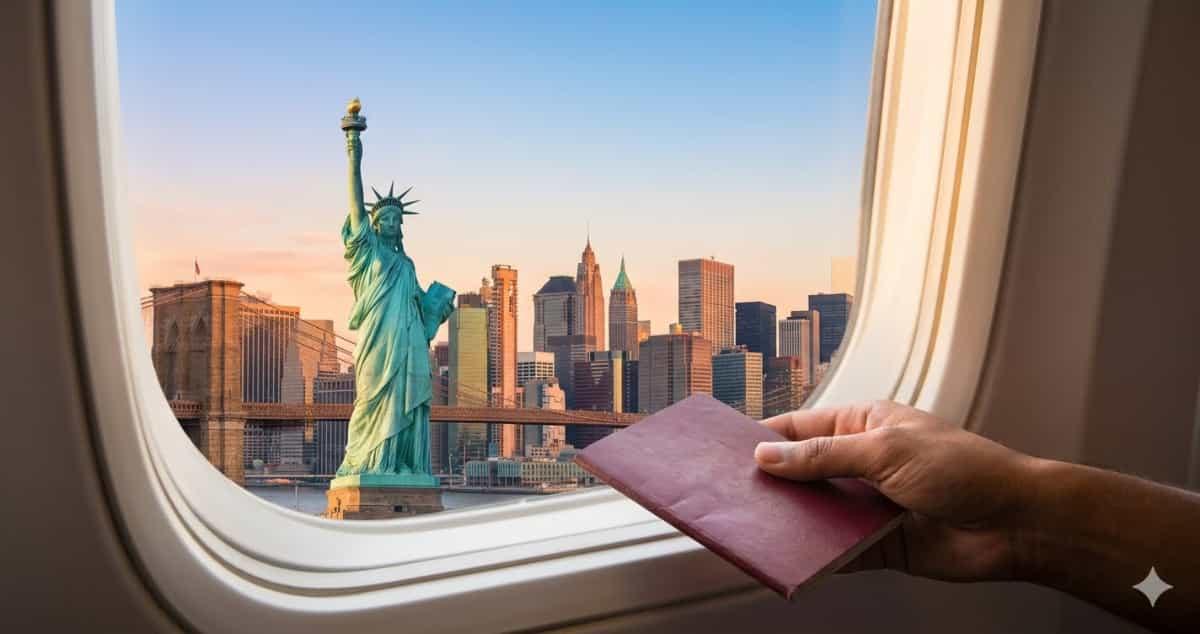
he United States of America is the most popular destination in the world for higher education, receiving more than one million international students every year. The US academic network is peerless with its Ivy League status, world-leading STEM research ecosystems and game-changing Optional Practical Training (OPT) career prospects.
A USA Student Visa is a golden key which opens the doors of the premier institutions across the nation for Indian students.
But the US immigration process is notoriously difficult, with exhaustive online forms and a mandatory high stakes interview in person. This operational master blueprint has been developed to help you pass this procedure seamlessly with the exact student visa USA requirements including cost breakdowns, step by step application steps and strategic guidance to get your visa approval.
USA Study Visa
If you plan to study full time at an accredited US college, university, or English language institute, you will almost certainly need an F-1 USA Student Visa. This nonimmigrant category was established solely for academic coursework.
The First Steps That Count: SEVP and the I-20
You can't start the USA Study visa application process on your own. It is well embedded in a framework of institutional sponsorship.
SEVP Certification
The school needs to be certified by the Student and Exchange Visitor Program (SEVP) and you need to apply for, and be accepted for, admission.
The I-20 Document
Once you have accepted the offer of admission and provided initial financial verification to the institution, the university's Designated School Official (DSO) will generate your Form I-20 (Certificate of Eligibility for Nonimmigrant Student Status).
The I-20 is the very foundation of your entire profile. This will include:
-
SEVIS ID number
-
Program start and end date
-
Estimated yearly expenses
-
Funding sources
You cannot schedule a visa interview without having a real, physical Form I-20 in your hand.
What's the Acceptance Rate of US Student Visas?
The acceptance rates depend on the season and the way a person presents his profile, as the US visa process is so much about face-to-face assessment by a consular officer.
The student visa USA from India pipeline has a good success rate of 80% to 88% for the present intake cycles, which is reflective of the strong diplomatic and educational ties between the two countries.
┌────────────────────────────────────────────────────────┐
│ USA STUDENT VISA SUCCESS RATE (2026) │
├────────────────────────────────────────────────────────┤
│ 🟢 F-1 Applications Approved: 80% – 88% │
│ 🔴 Refused Under Section 214(b): 12% – 20% │
└────────────────────────────────────────────────────────┘
The most frequent reason for denial of an F-1 visa application is under Section 214(b) of the Immigration and Nationality Act.
Consular staff cite the clause when an applicant is unable to show:
-
Strong ties to their native country
-
Clear financial viability
The Main Reasons for Refusal
-
Intent of Prospective Immigrant: In the short time allowed for the interview you will not be able to convince the officer that you will return to India or pursue legal immigration options after your graduation.
-
Unclear Source of Funds: Vague financial documentation or sponsors with no clear ties to the applicant.
-
Not Showing Academic Readiness: Not stating your academic reasons, reasons for choosing your University or your professional ambitions during the live interview.
Average Processing Time for US Student Visa
The USA student visa processing time is a balancing act between two different components:
-
Finding an appointment window for an open interview.
-
Administrative processing of your passport afterwards.
Timeline
📅 Step 1: Get Visa Appointment Slots
2 Weeks to 3 Months (Highly Seasonal)
📅 Step 2: Passport Delivery After Interview
3 to 7 Working Days
Appointment Waiting Windows
Your two required appointments:
-
Visa Application Center (VAC) for biometrics
-
Consular Component for your live interview
can take anywhere from 15 days (off-peak) to 90+ days (May–August peak season).
Embassy Decision and Passport Delivery
The consular officer will inform you of their decision at the end of your interview.
If successful, your passport will normally be:
-
Updated
-
Visa stamped
-
Ready for collection or courier delivery
within 3 to 7 working days.
Because slots are very competitive, you may apply for your visa up to 365 days before the official program start date on your Form I-20.
Cost Breakdown – USA Student Visa In Depth
You have to budget for the cost of an American degree.
The student visa USA cost includes:
-
Non-refundable US government processing fees
-
Logistics costs
-
Obligatory living capital reserves
Government Fees and Visa Processing
You have to pay two separate government charges before you travel for your biometric appointments.
They sum up to the total USA student visa fees.
|
Fee Element |
USD Value |
Approx. Cost (INR) |
Target Payments Platform |
|
I-901 SEVIS Government Fee |
USD $350 |
₹29,400 |
FMJfee.com Portal |
|
MRV Consular Visa Application Fee |
USD $185 |
₹15,540 |
USvisascheduling.com |
|
VFS Document Logistics / Courier Services |
— |
₹1,000 – ₹2,500 |
VFS Global Centre |
Financial Solvency Documents for I-20
The most important part of your preparation is to demonstrate you have the money to pay off your tuition debt and living expenses.
Basic USA Student Visa Requirements
Evidence of liquid funds to cover at least the first 12 months of expenses as indicated on your Form I-20.
This first-year demand is usually between:
-
$40,000 and $75,000
-
Approx. ₹33.6 Lakhs to ₹63 Lakhs
for a normal mid-tier to top-tier US University.
Valid Proofs of Funding
-
Bank Fixed Deposits
-
Liquid Savings Balances
-
Official Scholarship Awards
-
Bank Education Loan Sanction Letters
Your Complete Guide to the USA Student Visa Checklist
You need to have all your papers in order when you go for your interview at the embassy.
The ultimate USA Student Visa Checklist for the US F-1 track.
Organize your portfolio folder with the following documents:
1. Application Documents and Principal Identity
Valid International Travel Document
Your original passport must be valid for at least six months beyond your period of intended stay in the US.
DS-160 Confirmation Page
The printout confirmation page with your unique application bar code generated from the online CEAC site.
Appointment Confirmation Sheet
A printout of the time slots that you have validated for:
-
Visa Application Center (VAC)
-
Consular Interview
from the scheduling system.
Payment Receipts
Printed PDF receipts showing you paid:
-
$185 MRV Fee
-
$350 SEVIS Fee
2. Academic and Institutional Documents
Original Form I-20
Signed and dated by you and your university DSO.
Official US Campus Acceptance Letter
Official notification of your acceptance from your host US campus.
Standardized Exam Scorecards
Official scorecards of:
-
GRE
-
GMAT
-
SAT
-
IELTS
-
TOEFL
-
PTE
(as per the admission requirement of the institute.)
Past Academic Records
-
Original High School / Undergraduate Transcripts
-
Semester Mark Sheets
-
Degree Diplomas
3. Records of Financial Stability
Liquid Capital Statements
Bank account statements/passbook or fixed deposit certificates for the last 6 months.
Sponsorship Verification
Salary slips of your main financial sponsors and Income Tax Returns (ITR) for the last 2 to 3 years.
Loan Documentation
Formal letter of sanction of loan duly signed by an accredited banking institution.
Step-by-Step USA Student Visa Process
Here's a step-by-step road map to a seamless multi-tier application architecture.
Step 1: Get Accepted and Obtain Your I-20
Apply to SEVP-approved U.S. schools.
Once approved, send financial proofs to the international office of the institution and you will get your official Form I-20.
Step 2: Pay I-901 SEVIS Fee
Visit the official SEVIS fee portal (fmjfee.com) with your unique SEVIS ID number on your I-20.
-
Pay the $350 SEVIS Fee
-
Print the payment confirmation receipt
Step 3: Complete the DS-160 Application Form
Complete the online DS-160 Nonimmigrant Visa Application on the CEAC website.
Ensure all information is accurate, including:
-
Personal details
-
Family information
-
Educational background
-
University information
Save your unique DS-160 Confirmation Barcode.
Step 4: Make Appointments and Pay Your MRV Fee
Create a profile on the consolidated U.S. Visa Scheduling Website.
Pay the $185 Visa Fee in Indian Rupees through authorized banking channels.
Then schedule both appointments:
-
Biometrics Appointment (VAC)
-
U.S. Embassy / Consulate Interview
Step 5: Attend Your Biometrics & Visa Interview
First complete:
-
Facial photograph
-
Fingerprint scan
at the Visa Application Center (VAC).
Next, attend your in-person interview at the U.S. Embassy or Consulate.
Carry every document listed in your checklist inside a clear plastic folder.
Step 6: Obtain Your Passport & Prepare for Travel
If your visa is approved, the consular officer will retain your passport for visa stamping.
Track your passport online and either:
-
Collect it from your selected VFS center, or
-
Receive it through courier delivery.
Note: You cannot enter the United States more than 30 days before the start date mentioned on your Form I-20.
Frequently Asked Questions (FAQs)
1. Can I get an F-1 Student Visa with a Low GPA or Backlogs?
Yes.Good academic performance is preferred, but a lower GPA or previous backlogs do not automatically result in visa rejection.You have already satisfied the admission requirements of a U.S. university by receiving an unconditional Form I-20.
Be prepared to explain:
-
Your previous academic challenges
-
What you learned from them
-
How the chosen program supports your long-term career goals
2. Can I Use Multiple Sponsors for US Visa Financial Proof?
Yes.You may have multiple immediate family members (such as parents or siblings) as financial sponsors. However, one strong sponsor or a sanctioned education loan usually creates a cleaner financial profile.
If multiple sponsors are involved, each sponsor should provide:
-
Affidavit of Support
-
Income Tax Returns
-
Bank Statements
3. How are the SEVIS Fee and the Visa Application Fee Different?
The $350 SEVIS Fee is paid directly to the U.S. Department of Homeland Security to maintain your student record. The $185 MRV Visa Fee is paid to the U.S. Department of State to process your visa application and schedule your embassy interview.
Both fees are:
-
Mandatory
-
Non-refundable
4. How Long Can International Students Stay in the U.S. After Graduation?
After completing your degree, you have 60 days on your F-1 status to:
-
Leave the United States
-
Transfer to another university
-
Change your visa status
If you apply for Optional Practical Training (OPT), you can stay and work full-time for 12 months. Students graduating with eligible STEM degrees may qualify for an additional 24-month STEM OPT Extension, allowing up to 3 years of work experience after graduation.
Conclusion
Getting a student visa for the USA is a feasible accomplishment based on rigorous preparations, clear financial records and a strong interview presentation.
Early coordination of your institution information, detailed planning of your checklist, and explicit presentation of your academic goals to the consular officer can help you successfully navigate the procedure.
Plan your timeline very carefully, be careful with your papers and enjoy your great educational trip in the USA.

 English
 Arabic
 French
 Spanish
 Portuguese
 Deutsch
 Turkish
 Dutch
Dutch
 Italiano
 Romaian
 Portuguese (Brazil)
 Greek
Greek