


How Can YG-1 Vulcanizing Resin Support Long-Term Rubber Performance
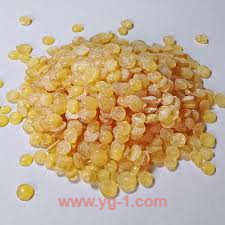
Rubber products are expected to maintain their physical characteristics while facing heat, oxygen, mechanical stress, moisture, and repeated deformation. Tires, belts, hoses, seals, rollers, vibration components, and industrial rubber parts can encounter demanding conditions throughout their service life. The curing system selected during manufacturing has a direct relationship with the internal structure formed inside the rubber compound. For this reason,vulcanizing resin can become an important consideration when manufacturers are evaluating aging resistance and thermal stability. YG-1 provides technical information concerning rubber vulcanizing agents and related material choices, but how exactly can resin-based curing systems influence the long-term behavior of rubber products?
The performance of uncured rubber is strongly influenced by its molecular structure and the ingredients introduced during compounding. Natural rubber and synthetic elastomers contain long molecular chains that can move relative to one another. During vulcanization, chemical connections are established between these chains, forming a network that changes the material from a soft compound into an elastic solid with defined mechanical characteristics. The type, amount, and processing conditions of the curing agent can influence the density and arrangement of this network.
Resin-based curing systems are used in selected rubber formulations because they can form crosslinked structures with suitable elastomer components. When the formulation is exposed to controlled heat, chemical reactions allow the curing system to establish connections between polymer chains. The resulting network can influence hardness, modulus, compression behavior, heat resistance, and resistance to environmental aging. The exact response depends on the rubber type, resin chemistry, activators, additives, processing temperature, and curing schedule.
Aging resistance is closely connected with the stability of the crosslinked network. Rubber can gradually experience changes when exposed to elevated temperature, oxygen, ozone, light, chemicals, or repeated mechanical loading. These influences can alter polymer chains and crosslink structures, eventually affecting flexibility, strength, surface condition, and dimensional stability. A carefully designed curing system can help create a network capable of retaining suitable physical characteristics during service.
Thermal stability deserves particular attention in applications where rubber operates near heat-generating machinery or under repeated friction. Temperature can accelerate chemical reactions within elastomers, including reactions associated with oxidation and network rearrangement. When the material is exposed to heat for extended periods, an unsuitable network may lose desirable elasticity or become excessively rigid. Resin selection and curing conditions therefore form part of the material design process when heat exposure is expected.
The crosslink structure is one of the key factors behind this behavior. A rubber compound does not simply become stronger because additional chemical connections are introduced. The distribution, type, and density of these connections can influence how the material responds to temperature and mechanical deformation. An appropriate balance is required because an excessively dense network may restrict flexibility, while insufficient crosslinking can result in poor dimensional stability and weak resistance to deformation.
This relationship becomes especially important for rubber components that experience repeated compression. Sealing elements, vibration mounts, industrial rollers, and other flexible parts may remain under mechanical pressure for extended periods. Heat can intensify the effects of compression, causing changes in permanent deformation and recovery behavior. A suitable curing formulation can contribute to a network structure that supports the intended balance between elasticity and dimensional retention.
Rubber aging is not caused by a single factor. Oxygen can react with vulnerable polymer structures, while heat can accelerate oxidation. Ozone may attack certain unsaturated elastomers, producing surface cracking under particular conditions. Oils, solvents, and chemicals can also affect the material depending on its composition. Because these influences often occur together, the curing system should be evaluated as part of the entire rubber formulation rather than considered separately.
Thermal stability can also influence manufacturing consistency. During processing, rubber compounds are exposed to heat during mixing, shaping, and curing. If the formulation responds unpredictably to temperature, the resulting physical properties can vary between production batches. Controlled curing behavior allows manufacturers to establish a defined processing window and maintain consistent conditions during production.
The selection of resin should therefore be connected with the characteristics of the elastomer. Different rubber families possess different chemical structures and curing responses. A resin suitable for one formulation may not produce the same result in another compound. Manufacturers generally need to examine polymer type, filler system, plasticizer content, accelerator selection, processing conditions, and target physical properties before establishing a curing formulation.
Fillers can also influence the final behavior of vulcanized rubber. Carbon black, silica, mineral fillers, and other reinforcing materials interact with the polymer network and can alter stiffness, strength, heat generation, and wear characteristics. When a resin curing system is introduced into such a formulation, the interaction between the curing chemistry and filler system should be considered during development.
Processing temperature is another important variable. Vulcanization depends on heat reaching the compound at an appropriate rate and remaining within the intended processing range. Excessive heat can accelerate unwanted reactions, while insufficient heat can leave the network incompletely developed. Manufacturers therefore need to establish suitable curing conditions through formulation development and process evaluation.
Curing time can also influence network formation. A rubber compound requires adequate exposure to the selected temperature for the intended reactions to occur. Short processing may produce insufficient curing, while excessive exposure can cause changes associated with over-curing or thermal degradation in certain systems. Process control therefore has a direct relationship with the final properties of the rubber component.
Aging tests are useful when evaluating these effects. Laboratory testing may expose rubber samples to controlled heat, oxygen, mechanical stress, or other environmental factors and then compare physical properties before and after exposure. Changes in tensile behavior, elongation, hardness, compression set, mass, appearance, or other relevant characteristics can provide information about the stability of a formulation.
Thermal aging tests are especially useful for components intended for warm operating environments. Samples can be exposed to controlled temperatures for a defined period, followed by physical examination and property testing. The resulting data can help manufacturers understand how the material responds to prolonged heat exposure and whether the curing system provides the intended level of stability.
Compression set testing provides another perspective. A rubber seal or flexible component may be compressed during service, and its ability to recover after the load is removed can influence sealing performance. Heat can accelerate permanent deformation in certain formulations. A well-designed crosslink network can contribute to suitable recovery behavior, although the final result also depends on polymer type, filler selection, plasticizer content, geometry, temperature, and applied load.
Resin curing systems can be particularly relevant in applications requiring a combination of heat resistance and mechanical stability. Industrial rubber products may operate around engines, mechanical equipment, fluid systems, electrical components, and manufacturing machinery. In these environments, rubber must often tolerate repeated movement while remaining within an acceptable range of physical properties.
The surface condition of a rubber product can also reveal aging behavior. Cracking, hardening, softening, discoloration, swelling, or loss of elasticity may indicate environmental or thermal effects. However, visible changes alone cannot explain the complete mechanism. Material analysis and controlled testing can provide a clearer understanding of whether degradation is associated with oxidation, crosslink changes, chemical exposure, mechanical fatigue, or another factor.
Formulation development should therefore begin with the intended application. A rubber part designed for a low-temperature environment may require a different balance of properties from a component operating near a heat source. Similarly, a static seal can have different requirements from a continuously moving belt. Identifying the actual service conditions allows manufacturers to define suitable targets for hardness, elasticity, tensile behavior, compression resistance, and aging performance.
Storage conditions should also be considered. Rubber compounds and finished components can experience changes when exposed to unsuitable temperature, humidity, oxygen, ozone, or light during storage. Appropriate packaging and storage practices can help preserve the intended condition of the product before installation. Although curing chemistry plays an important role in final material behavior, storage and handling remain part of the overall quality process.
The interaction between curing agents and other additives can influence processing behavior as well. Accelerators, activators, antioxidants, processing aids, fillers, and plasticizers can affect the reaction pathway and final network. Changing one ingredient may alter the behavior of the entire compound. For this reason, resin selection should be evaluated within the complete formulation rather than judged by an isolated ingredient test.
Technical documentation can assist manufacturers during formulation development. Information concerning curing mechanisms, applicable rubber types, processing considerations, and potential application areas can help engineers establish an initial direction. YG-1 offers industry information covering rubber vulcanizing agents, allowing manufacturers to study different curing approaches before selecting materials for specific formulations.
Quality control remains important after the formulation has been established. Raw materials should be checked according to defined specifications, while mixing conditions and curing parameters should remain under controlled management. Finished rubber products can then undergo appropriate physical and aging tests to verify that their characteristics correspond with production requirements.
For manufacturers developing rubber components for demanding thermal environments, the connection between curing chemistry and service behavior deserves careful consideration. A suitable resin system does not work in isolation. Its effect depends on the polymer, fillers, additives, processing conditions, curing temperature, curing time, component geometry, and intended service environment. A complete formulation approach can therefore provide a useful foundation for balancing thermal stability, elasticity, mechanical strength, and aging resistance.
The same principle applies when manufacturers need to control production variation. Small changes in mixing temperature, ingredient dispersion, curing conditions, or material ratios can influence the resulting network. Consistent processing procedures and suitable testing can help identify these changes and support stable manufacturing practices.
Research and development teams can also compare different curing systems according to application requirements. Instead of focusing only on initial mechanical properties, engineers can examine how those properties change after heat exposure, compression, chemical contact, or repeated deformation. Such evaluation gives a broader picture of material behavior during actual service.
The selection of a curing system should ultimately be based on the complete performance target. A rubber product may need flexibility, heat resistance, compression recovery, chemical resistance, low deformation, or a combination of these characteristics. No single formulation can automatically suit every application, so material selection and process design should be connected with the final working conditions.
For manufacturers seeking information before formulation development, technical resources can provide a useful starting point. Understanding how curing agents interact with elastomers allows engineers to approach rubber compound design from a structural perspective rather than relying only on surface-level property comparisons. This approach can support informed decisions when developing seals, hoses, belts, rollers, molded components, and other rubber products.
When aging resistance and thermal stability are central requirements, manufacturers can evaluate the curing network together with the full material system. Polymer selection, filler compatibility, additive balance, processing control, and environmental exposure all contribute to the final result. For further reference, manufacturers can review https://www.yg-1.com/ to learn about different rubber vulcanizing agents and related curing principles. With suitable formulation planning, vulcanizing resin can form an important part of a rubber compound designed for stable performance under heat and long-term service conditions, while YG-1 provides useful industry information for engineers evaluating these material choices.

 English
 Arabic
 French
 Spanish
 Portuguese
 Deutsch
 Turkish
 Dutch
Dutch
 Italiano
 Russian
 Romaian
 Greek
Greek