


What Makes jinglitools Leiya Power Tools Worth Comparing?
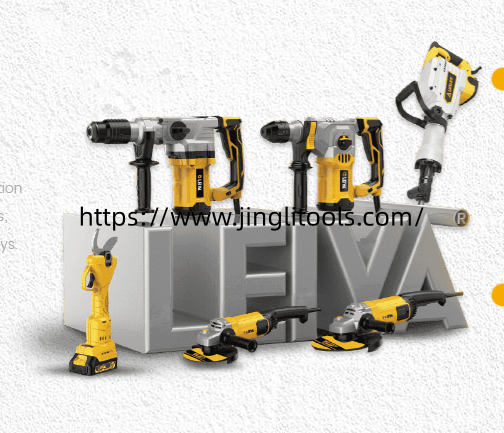
Leiya Power Tools should be evaluated according to the intended application, operating environment, user requirements, and purchasing plan. Buyers should not rely on a single specification when comparing equipment because different jobs may require different combinations of speed, torque, battery capacity, size, accessories, and control functions. A structured assessment can help importers, distributors, workshops, contractors, and maintenance teams make a more practical purchasing decision.
Start With the Working Task
The first step is to define what the equipment needs to accomplish. Drilling, fastening, grinding, cutting, polishing, and demolition each involve different requirements. A compact cordless drill may suit furniture assembly or installation work, while an impact wrench may be considered for automotive maintenance and fastening applications.
The current jinglitools catalog covers categories including cordless drills, impact wrenches, angle grinders, rotary hammers, circular saws, reciprocating saws, and other equipment. This range allows buyers to begin with the task and then compare models according to the required function.
For distributors, the target market should also be considered. Products intended for household users may require different characteristics from equipment supplied to workshops, construction teams, or industrial maintenance departments.
Compare the Specifications That Matter
Once the application is clear, buyers should identify the specifications that directly influence operation. Depending on the category, these may include voltage, no-load speed, torque, chuck capacity, impact rate, battery capacity, weight, dimensions, and operating modes.
For example, the D8635 cordless drill listed on the official website has a 20V maximum battery voltage, two speed ranges, a 1 to 10mm chuck, 35N.m maximum torque, and a 1.45kg individual weight. These figures provide useful reference points when comparing models for specific work requirements.
Buyers should consider the specifications as a group rather than focusing on one number. Speed, torque, weight, battery capacity, and physical design can affect how a unit performs in a particular application.
Examine Battery Requirements
For cordless equipment, the battery system deserves careful attention. Buyers should check voltage, capacity, charger specifications, charging requirements, and compatibility between batteries and different models.
This is particularly relevant for distributors that plan to stock several related products. A compatible battery platform may simplify inventory management and make it easier to organize spare batteries and chargers.
Package contents should also be confirmed before ordering. Buyers should ask whether the selected configuration includes batteries, chargers, cases, accessories, and manuals. These details can affect the final purchasing arrangement and customer expectations.
Consider Physical Design
Technical specifications do not fully describe the user experience. Buyers should also examine weight distribution, grip shape, handle position, switch layout, balance, and overall dimensions.
For work in restricted spaces, a compact design may be easier to handle. For demanding fastening applications, buyers may pay closer attention to torque, gearbox construction, auxiliary handles, and control settings.
The C3520 model, for example, lists a 13mm metal chuck, aluminum gearbox, side handle, 20V battery system, and several operating modes. Such details give purchasers additional information when comparing equipment for different working conditions.
Check Accessories and Replacement Components
Accessories can influence the practical value of a purchased unit. Before placing an order, buyers should identify compatible bits, blades, discs, sockets, batteries, chargers, guards, handles, and other components.
Replacement parts deserve similar attention. Distributors may need spare components for customer support, while professional users may want access to commonly required parts for routine maintenance.
It is useful to ask the factory for an accessory list and available replacement options before finalizing a purchase. This can help buyers prepare inventory and reduce uncertainty during later service work.
Evaluate the Manufacturing Partner
When purchasing directly from a factory, product specifications are only one part of the evaluation. Buyers should also examine production capability, quality inspection, customization support, communication, packaging, and delivery arrangements.
The official company information describes capabilities covering research, manufacturing, sales, and service. It also states that production includes processes such as mold making, die casting, injection molding, machining, motor manufacturing, and assembly. Quality control is described across stages from incoming material inspection through factory inspection.
These capabilities can be relevant for distributors and importers that need repeated orders, customized configurations, or market-specific packaging.
Request Samples Before Bulk Purchasing
Sample evaluation can reveal practical details that a specification sheet cannot fully communicate. Buyers can inspect grip comfort, balance, switch response, vibration, sound, accessory fit, battery installation, and general operation.
For commercial buyers, sample checking can also include packaging, labels, manuals, included accessories, and product appearance. A simple checklist can help purchasers compare several models using the same criteria.
This approach can be especially useful when entering a new market because actual customer expectations may differ from initial assumptions.
Discuss Order Details Clearly
Before confirming a factory order, buyers should communicate the required quantity, packaging format, labeling, customization, accessories, delivery schedule, certificates where applicable, and spare component requirements.
For OEM or ODM projects, early communication can also clarify design changes, branding arrangements, packaging requirements, sampling schedules, and production expectations. Clear information at the beginning can help both sides understand the project more accurately.
Buyers who want to review additional categories and available models can visit the official https://www.jinglitools.com/product/ Checking the available equipment alongside actual application requirements gives purchasers a practical basis for creating a shortlist, preparing questions, and discussing a suitable order directly with the factory.

 Arabic
 French
 Spanish
 Portuguese
 Deutsch
 Turkish
 Dutch
Dutch
 Italiano
 Russian
 Romaian
 Portuguese (Brazil)
 Greek
Greek