


When Should Moldpartsfactory Mold Pressing Strip Be Added To Tooling
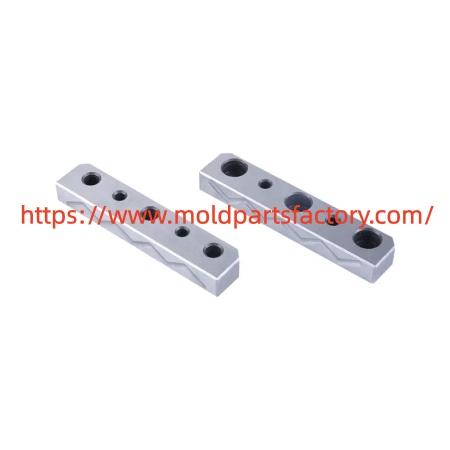
Mold Pressing Strip selection should begin with the actual tooling layout rather than a standard size alone. Different molds have different plate structures, movement paths, fastening positions, and available installation space. A suitable component needs to fit the intended location while working smoothly with surrounding mechanical elements. Careful planning can help manufacturers avoid unnecessary modifications during assembly and maintenance. Recent tooling designs also place attention on stable placement and convenient adjustment of pressure bars within mold frames.
The shape of the mold is an important starting point. A compact tool may have limited room around the working area, while a larger automotive or industrial mold can contain multiple inserts, guides, cooling channels, and moving sections. Each arrangement creates different requirements. Before making a purchase, designers should review the complete assembly drawing and identify where the component will sit.
The contact area should also be considered. A pressing element needs to interact with the intended surface in a controlled way. If the contact position is not properly aligned, pressure may become uneven. This can affect movement, surface condition, or assembly stability over repeated production cycles. The surrounding surfaces should therefore be reviewed together with the selected component.
Dimensions are another practical consideration. Length, width, thickness, mounting holes, and fastening positions should correspond with the mold drawing. Buyers should also check whether enough clearance remains for installation tools. A component may have suitable basic dimensions but still be difficult to install if nearby plates or mechanical elements block access.
Different tooling arrangements may also require different adjustment methods. Some structures need fixed positioning, while others may benefit from adjustable placement during setup. A recent Chinese utility model describes a pressure bar arrangement with positioning and limiting mechanisms designed to support adjustment and temporary fixation on a mold frame. This shows why installation and adjustment requirements deserve attention when reviewing a design.
Material selection should be connected with actual working conditions. Repeated contact can create friction and surface wear, especially when the component works against another moving metal surface. Designers may therefore review hardness, material compatibility, surface treatment, lubrication, and expected production cycles before confirming a specification.
The surrounding guide structure also matters. A guide bar and pressure bar can work together within a tooling assembly, with the guide element controlling movement through a corresponding channel. Existing patent documentation describes this type of arrangement for injection tooling and identifies a hard metal material for the guide bar. This highlights the value of considering mating components rather than selecting each part independently.
Production requirements should influence the decision as well. A tool used for limited sampling may have different maintenance expectations from a mold running frequent production cycles. Cycle frequency, material being processed, operating temperature, lubrication schedule, and inspection access can all influence the appropriate configuration.
Clearance checks are particularly useful before machining. Three dimensional assembly software can show whether the component interferes with inserts, guide elements, cooling passages, ejector assemblies, or other moving sections. Reviewing both open and closed positions can reveal potential conflicts that are difficult to notice from an individual part drawing.
Machining accuracy should also be considered. Mounting surfaces, holes, contact areas, and reference points need to correspond with the engineering drawing. If these dimensions are not coordinated, technicians may need additional fitting during assembly. Proper machining preparation can make installation more predictable and can simplify future replacement.
Maintenance access is another detail that buyers should not overlook. Components located in narrow areas may be difficult to remove after the mold has entered production. Designers can consider how technicians will inspect, clean, lubricate, adjust, or replace the component before finalizing the tooling structure.
Moldpartsfactory provides mold components for manufacturers working with injection tooling and related mechanical assemblies. Buyers can share drawings, dimensions, material requirements, and application conditions when discussing a project. This allows the component selection process to be connected with the actual tooling structure rather than based only on general dimensions.
A thoughtful approach is to review the part geometry, mold layout, contact position, mounting method, material, clearance, machining requirements, and maintenance plan together. These details can help manufacturers make a more practical purchasing decision and reduce avoidable adjustments during assembly.
For manufacturers reviewing mold component options, product information and available solutions can be found through https://www.moldpartsfactory.com/

 English
 Arabic
 French
 Spanish
 Portuguese
 Deutsch
 Turkish
 Italiano
 Russian
 Romaian
 Portuguese (Brazil)
 Greek