


Auto Lens for Welding Hood: A Practical Choice for Arc Welding
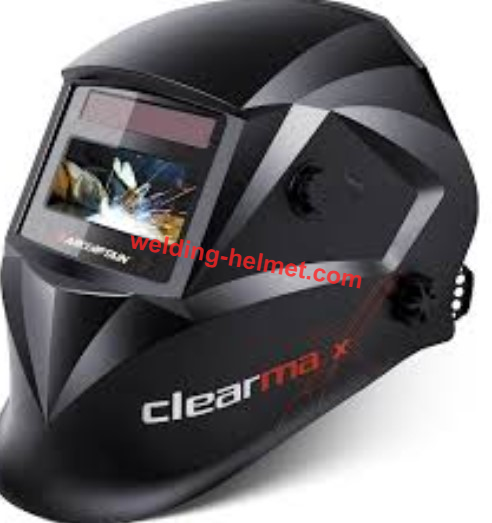
Welding often involves rapidly changing light conditions, especially when an arc is struck and the work area shifts between preparation and active welding. An auto lens for welding hood can respond to these changes without requiring the operator to manually adjust the viewing shade, creating a practical experience for routine fabrication and repair tasks. As a manufacturer-focused platform, welding-helmet provides information and product solutions related to welding helmets and lens technology, raising an important question: can an auto-darkening lens provide consistent eye protection during real welding work?
The basic principle behind an auto-darkening lens is relatively straightforward. Sensors detect the intense light produced by the welding arc and trigger the lens to change from a lighter state to a darker shade. Once the arc disappears, the lens returns to its lighter condition. This automatic transition allows the operator to keep the helmet in place while moving between different stages of a task.
Traditional passive lenses require a fixed shade throughout the welding process. That arrangement can work well for applications with stable conditions, but it may make positioning and inspection less convenient. An automatic system allows the viewing window to remain available before and after welding while providing a darkened state during arc exposure.
Consistency, however, depends on several factors rather than the automatic function alone. Sensor sensitivity, lens response, shade range, optical quality, battery condition, and overall helmet construction can all influence practical performance. A suitable lens needs to respond appropriately to the welding arc while maintaining a clear view of the working area when the arc is inactive.
Optical clarity deserves particular attention. Welders need to identify joints, edges, gaps, filler material, and surrounding components during preparation. If the viewing area appears distorted, uneven, or excessively dark, positioning can become difficult. A well-designed lens should provide a stable visual field that allows the operator to observe the workpiece without unnecessary visual distraction.
The working environment also influences lens behavior. Outdoor fabrication, workshop production, maintenance operations, and confined workspaces may present different lighting conditions. Ambient brightness can affect how easily sensors detect an arc, while the position of the welding helmet may influence sensor exposure. For this reason, lens sensitivity and operating settings should match the intended application.
Another consideration is shade selection. Different welding processes generate different levels of visible and ultraviolet or infrared radiation. The appropriate shade should therefore be selected according to the welding process, current range, manufacturer instructions, and applicable safety requirements. Automatic adjustment does not remove the need for correct shade selection.
Helmet design works together with lens performance. A quality lens cannot compensate for an unsuitable helmet fit, damaged components, poor sealing, or incorrect adjustment. Headgear should remain stable during movement, while the viewing area should provide a useful field of vision. Comfortable adjustment can also help operators maintain proper positioning during extended fabrication work.
Durability is equally relevant in demanding workshops. Welding helmets can encounter sparks, dust, heat, repeated movement, and frequent handling. Lens covers can become scratched or contaminated, potentially affecting visibility. Regular inspection and appropriate cleaning can help maintain the condition of the viewing system. Damaged protective components should be replaced according to the manufacturer's recommendations.
For manufacturers and distributors, customization can also be important. Different users may require specific lens configurations, helmet structures, optical characteristics, or control settings depending on their market and application. A supplier with experience in welding protection equipment can provide useful options for companies developing private-label products or specialized helmet ranges.
This is where the product information available through welding-helmet becomes relevant for buyers comparing different welding protection solutions. Instead of viewing a lens as an isolated component, it is useful to consider the relationship between optical performance, sensor operation, helmet construction, user comfort, and intended welding process.
Consistent protection is ultimately a combination of suitable equipment and correct working practices. Operators should follow applicable welding safety standards, select an appropriate shade, inspect the helmet before use, and keep the viewing system in proper condition. Auto-darkening technology can simplify the transition between viewing and welding, but it should function as part of a complete protective system.
For companies exploring welding equipment solutions, the choice of an Auto Lens for Welding Hood should therefore involve practical evaluation rather than relying on a single feature. Lens response, optical clarity, adjustment options, durability, helmet compatibility, and application requirements all deserve attention. Product information at https://www.welding-helmet.com/product can provide a useful starting point when comparing welding-helmet solutions and selecting an Auto Lens for Welding Hood suited to specific working conditions.

 English
 Arabic
 French
 Spanish
 Portuguese
 Turkish
 Dutch
Dutch
 Italiano
 Russian
 Romaian
 Portuguese (Brazil)
 Greek
Greek