


Real Estate Tokenization Development: Designing Digital Marketplaces for Income-Producing Properties
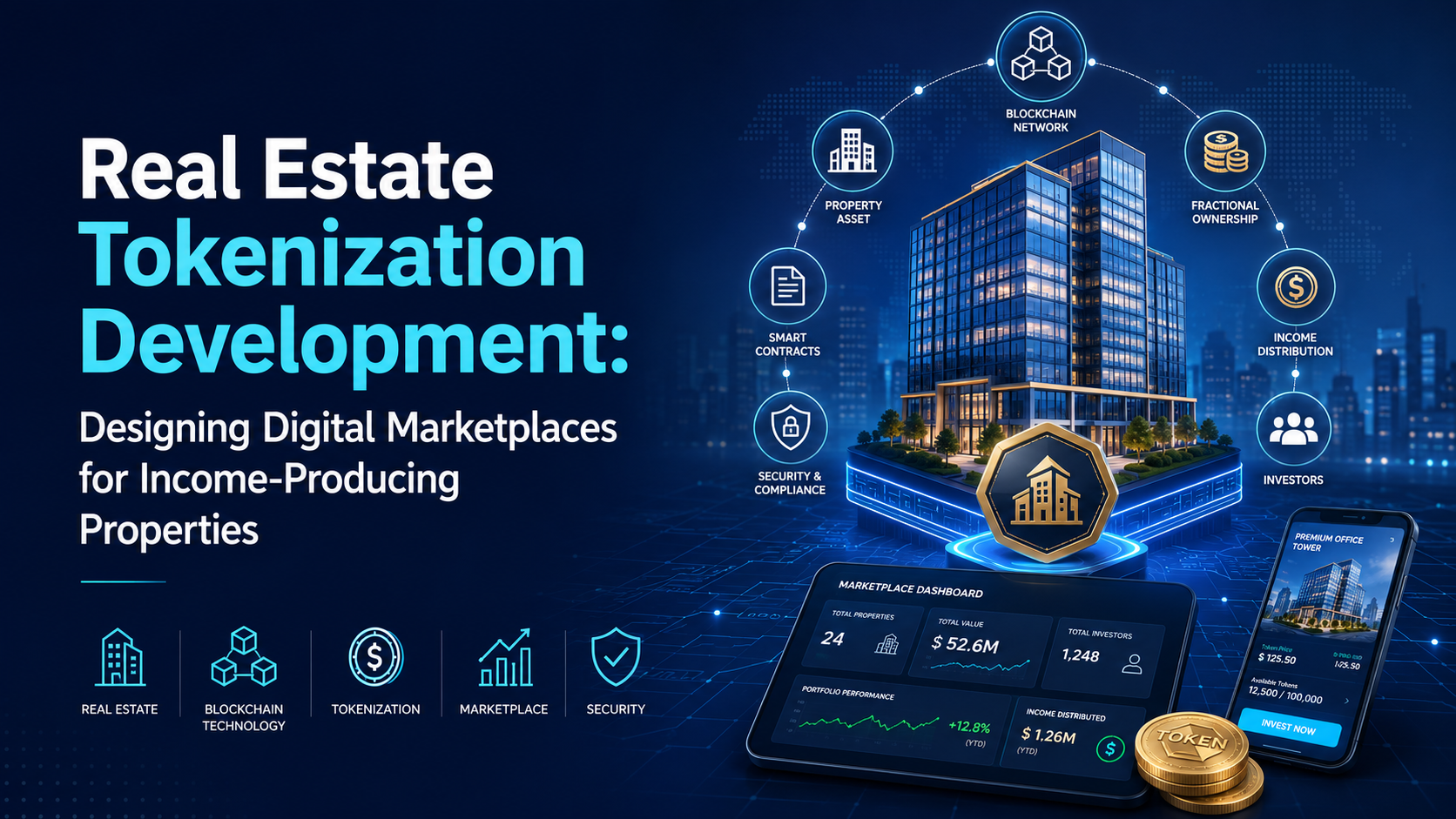
Income-producing real estate has traditionally required substantial capital, lengthy paperwork, professional intermediaries, and a relatively small pool of eligible investors. Office buildings, shopping centers, rental apartments, hotels, warehouses, and other commercial properties can generate recurring income, but access to these assets has often remained limited. Real estate tokenization development introduces a different approach by representing ownership interests or economic rights through blockchain-based tokens and offering those tokens through digital marketplaces.
A marketplace for tokenized property is more than a website where investors purchase digital assets. It requires property onboarding, legal structuring, token issuance, investor verification, payment processing, ownership records, income distribution, trading functions, and reporting. When these components operate together, property owners can present investment opportunities to a wider audience while investors receive a digital method for accessing selected real estate interests.
What Is Real Estate Tokenization?
Real estate tokenization refers to representing an ownership interest, beneficial interest, debt claim, revenue right, or other legally defined property-related interest through blockchain tokens. The underlying property remains connected to a legal entity or structure that holds the real estate, while the tokens represent rights established by the offering documents.
For income-producing properties, the model can be particularly relevant because investors may receive rental income, lease payments, interest, or proceeds from a property sale depending on the structure. For example, a commercial building generating monthly rent could be placed within a special purpose vehicle. Eligible investors could purchase tokens representing defined interests in that vehicle, with distributions handled according to the legal agreements.
The technology does not replace property law or investment regulations. Instead, it provides a digital record and transaction layer that can work alongside established legal structures.
Why Income-Producing Properties Fit Digital Marketplaces
Income-producing properties have an important characteristic: they can generate recurring cash flows. Rental apartments may produce monthly rent, office buildings may generate lease income, and warehouses may receive payments from long-term tenants. These cash flows give tokenized real estate a practical use case beyond simply representing property ownership.
A digital marketplace can display information about a property, its financial performance, token supply, pricing structure, distribution schedule, holding period, and investor eligibility. Instead of handling every transaction through physical paperwork and multiple disconnected systems, the marketplace can coordinate several activities through one digital environment.
For property owners, this model can provide another route for raising capital. For investors, it can provide access to specific real estate opportunities without necessarily purchasing an entire property. The actual rights attached to each token depend on the legal arrangement behind the offering.
Designing the Marketplace Around Property Assets
A successful marketplace begins with the property rather than the token. The platform needs a process for bringing real estate assets into the system and collecting the information investors need before making decisions.
Property onboarding can include ownership records, valuation reports, lease agreements, occupancy information, property expenses, insurance details, tax records, maintenance history, and projected cash flows. Documents can be stored within a controlled repository, while selected information can be presented through the marketplace interface.
The platform may also classify assets according to property type, location, income profile, investment period, and risk characteristics. This makes it easier for investors to compare opportunities according to their preferred criteria.
For a real estate tokenization company, the marketplace design should therefore connect asset administration with investor-facing functions rather than treating token issuance as an isolated feature.
Legal Structuring Before Token Issuance
Legal structuring is one of the most important stages in real estate tokenization. A token may represent direct ownership, shares in a legal entity, partnership interests, debt, revenue participation, or another contractual right. Each model can create different regulatory and reporting obligations.
A property owner may establish a special purpose vehicle that owns the underlying property. Investors then receive tokens associated with defined interests in that entity. Another structure may involve debt tokens where investors receive scheduled payments rather than property equity.
The appropriate arrangement depends on jurisdiction, investor category, property type, taxation, securities regulations, and the rights being offered. Legal counsel, compliance specialists, tax professionals, and property experts should participate before tokens are issued.
A real estate asset tokenization company working on marketplace projects must therefore consider legal architecture alongside the technical architecture.
Token Design for Rental and Commercial Properties
Token design determines how the digital asset behaves within the marketplace. The platform may issue a fixed token supply representing a defined percentage of an investment vehicle or a specific financial claim.
For income-producing properties, the token model can include information such as ownership percentage, distribution rights, voting rights, redemption conditions, transfer restrictions, and holding requirements. These details should correspond with legally enforceable agreements.
Smart contracts can manage functions such as token issuance, transfers, investor eligibility checks, distribution calculations, and restricted transfers. However, automated logic should reflect the legal terms rather than replace them.
Real estate token development should therefore begin with a detailed definition of investor rights and property economics. Once those rules are established, developers can translate suitable processes into smart contract logic.
Investor Onboarding and Compliance
A marketplace handling tokenized real estate requires more than wallet connectivity. Investors may need to complete identity verification, know-your-customer procedures, accreditation checks, suitability assessments, and jurisdiction screening before purchasing certain assets.
The onboarding workflow can collect required information and route it through compliance checks. Approved investors can then receive access to properties that match their eligibility status.
Different properties may have different investor restrictions. A commercial property offering available only to accredited investors should not be presented in the same manner as an offering intended for a broader investor group. The marketplace should account for these differences at the account and asset levels.
Compliance records should also be maintained for audits, regulatory reporting, and future transaction reviews.
Marketplace Features for Tokenized Properties
A digital marketplace for income-producing real estate can include several functional areas.
The property marketplace can display available offerings with information such as property category, location, valuation, token price, expected income, occupancy, lease information, offering period, and investment conditions.
An investor dashboard can provide portfolio balances, token holdings, transaction history, income distributions, property updates, and relevant documents.
A trading module can manage eligible secondary transactions where regulations and offering terms permit them. Transfer restrictions should be incorporated into the transaction process so that tokens cannot be moved to ineligible participants.
The platform can also include notifications for distribution dates, property reports, corporate actions, and important updates. These features give investors a central place to monitor their holdings.
Income Distribution and Property Servicing
Income distribution is particularly important for tokenized rental properties. Investors need to know how property income is calculated, when distributions occur, what expenses are deducted, and how their individual share is determined.
Suppose a property generates rental revenue each month. The property manager may first deduct approved operating expenses, taxes, maintenance costs, management fees, and other applicable charges. The remaining distributable income can then be allocated according to the legal ownership structure.
A marketplace can record these calculations and distribute eligible amounts through supported payment or digital asset mechanisms. Depending on the jurisdiction and platform structure, distributions may occur through bank payments, stablecoins, or other approved methods.
Property servicing also includes rent collection, maintenance updates, tenant information, valuation reports, insurance documentation, and financial statements. These operational activities should remain connected to the investor reporting layer.
Secondary Trading and Liquidity Considerations
One of the frequently discussed benefits of tokenized real estate is the possibility of secondary trading. Traditional property transactions can take weeks or months because ownership changes require extensive legal and administrative work.
A tokenized marketplace can provide a digital environment for eligible buyers and sellers to interact. However, tokenization does not automatically create liquidity. A secondary market requires buyers, sellers, regulatory permission, suitable pricing mechanisms, transfer rules, and sufficient trading activity.
Some properties may have limited trading demand even after tokenization. Marketplace operators therefore need to set realistic expectations and develop trading mechanisms that reflect the legal and economic characteristics of the underlying property.
Technology Architecture for Real Estate Marketplaces
A real estate tokenization platform development project generally includes several technology layers. The blockchain layer manages token records and smart contracts. The backend handles property data, investor accounts, compliance workflows, payment processes, and marketplace operations.
The application layer provides dashboards for investors, property owners, administrators, compliance teams, and property managers. APIs can connect the platform with identity verification services, payment providers, accounting systems, property management software, valuation data, and other external services.
Security should be considered throughout the architecture. Smart contract testing, access controls, wallet security, encryption, audit logs, transaction monitoring, and permission management can reduce operational risks.
A real estate tokenization platform development company may also design different blockchain networks and token standards according to the project's jurisdiction, transaction requirements, asset structure, and operational model.
Role of Property Data and Valuation
Investors need reliable information to evaluate tokenized property offerings. Property valuation data can include purchase price, estimated market value, rental income, occupancy, operating expenses, debt obligations, and projected returns.
Data sources can include property managers, independent valuers, accounting systems, financial statements, government records, and approved data providers. Where blockchain-based data feeds are used, oracle systems can connect external information with smart contracts.
The marketplace should distinguish between historical results and forecasts. A property that generated a certain rental income in the previous year does not necessarily produce the same amount in the future. Presenting this distinction helps investors assess opportunities based on appropriate information.
Choosing a Development Partner
Selecting a development partner requires more than reviewing a portfolio of blockchain projects. Businesses should assess experience with property workflows, token standards, compliance systems, smart contracts, payment integrations, investor dashboards, and marketplace architecture.
When comparing the Top real estate tokenization companies or Best real estate tokenization companies, businesses can examine previous implementations, technical capabilities, security practices, post-launch support, and knowledge of real estate investment structures.
A real estate tokenization development company should also understand that the platform is connected to physical assets, legal agreements, financial operations, and investor servicing. Technology alone does not determine whether a marketplace will work effectively.
Future Direction of Digital Property Marketplaces
Digital marketplaces for income-producing properties are likely to develop around more detailed asset data, regulated secondary markets, automated reporting, digital investor onboarding, and integration with traditional financial infrastructure.
Real estate tokenization may also support portfolios containing multiple properties instead of individual buildings. Investors could potentially hold interests across residential, commercial, hospitality, logistics, or other property categories through a single account, depending on the legal and regulatory model.
The market will continue to depend on regulation, investor demand, property quality, custody arrangements, servicing systems, and market participation. The most useful platforms will be those that connect blockchain records with the operational realities of property investment.
Conclusion
Real Estate tokenization development is creating a digital approach to presenting and administering income-producing property investments. By combining property onboarding, legal structures, token issuance, compliance, investor management, income distribution, reporting, and permitted secondary trading within one marketplace, businesses can create a more organized digital environment for real estate investment. The technology can support apartments, offices, warehouses, hotels, retail properties, and other assets that generate recurring income, although the rights represented by each token must remain connected to valid legal agreements and applicable regulations. As the sector develops, marketplace operators will need to focus on property data, investor protection, servicing, security, and regulatory requirements rather than token issuance alone. Blockchain App Factory provides Real estate tokenization development services for businesses planning digital property marketplaces, token issuance systems, investor portals, and related blockchain infrastructure.
FAQs
1. What is real estate tokenization development?
Real estate tokenization development involves creating blockchain-based systems that represent legally defined interests in real estate through digital tokens. It can include token issuance, investor onboarding, compliance, property management, income distribution, and marketplace functions.
2. How can tokenization work for income-producing properties?
A property can be placed within an appropriate legal structure, with tokens representing defined ownership or financial rights. Investors may receive rental income or other proceeds according to the offering terms.
3. What properties can be tokenized?
Potential assets include rental apartments, office buildings, hotels, warehouses, retail centers, industrial properties, student housing, and other real estate assets with legally transferable interests.
4. Does tokenization automatically make real estate liquid?
No. Tokenization creates a digital representation of an interest, but liquidity depends on investor demand, legal restrictions, trading infrastructure, market participation, and applicable regulations.
5. What is included in real estate token development?
Real estate token development can include smart contracts, token standards, property-linked rights, transfer rules, investor eligibility controls, wallet integration, transaction management, and distribution logic.
6. How does a real estate tokenization platform work?
A platform can connect property owners, investors, administrators, compliance systems, payment services, blockchain networks, and property data within one digital environment. Its exact workflow depends on the asset and legal structure.
7. What should businesses consider when choosing a real estate tokenization company?
Businesses should evaluate blockchain expertise, smart contract development, compliance workflows, property investment knowledge, security practices, marketplace experience, integrations, and ongoing technical support.
8. Can investors receive rental income through tokenized real estate?
They may receive rental income when the token's legal rights include participation in property-generated income. The distribution method and frequency depend on the offering structure and applicable regulations.

 English
 Arabic
 French
 Spanish
 Portuguese
 Deutsch
 Turkish
 Dutch
Dutch
 Russian
 Romaian
 Portuguese (Brazil)
 Greek
Greek