


How Are Suspicious Moles Assessed Before Removal in Dubai?
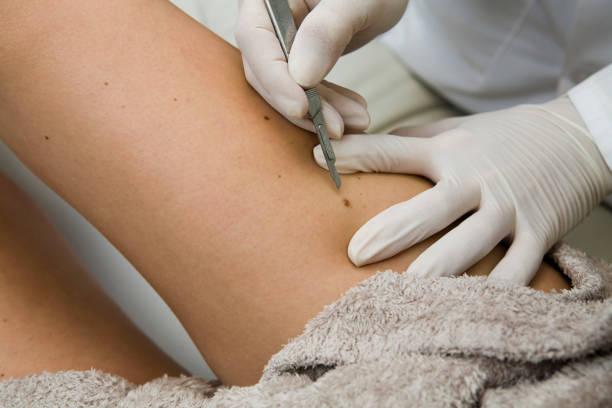
Before Mole Removal in Dubai, a suspicious or changing mole should be medically assessed rather than immediately treated as a cosmetic concern. The examination helps determine whether the lesion appears benign, requires monitoring, or needs biopsy and histopathological evaluation.
This distinction is important because removing a mole is not always the same as diagnosing it. When a lesion has concerning features, establishing what it is should take priority over improving its appearance.
Why Assessment Comes Before Mole Removal in Dubai
A mole may look harmless but still require professional evaluation if it changes over time.
Dermatologists consider the mole's clinical appearance, evolution, location, and relationship to the patient's other lesions. A mole that is noticeably different from surrounding moles may warrant closer examination.
Assessment is particularly important when a patient reports:
- A recent change in size
- A change in shape
- Uneven or new pigmentation
- Irregular borders
- Persistent itching
- Bleeding or crusting
- New or unusual growth
- A lesion that looks different from other moles
The objective is not to assume that a changing mole is cancerous. It is to identify which lesions require further investigation.
What Does a Dermatologist Look for?
The first assessment is usually visual and clinical.
The dermatologist evaluates the lesion's symmetry, borders, colors, diameter, and evolution. The ABCDE framework is commonly used as a practical way to identify features that may require additional assessment.
Asymmetry
A benign mole is often relatively symmetrical. If one half looks substantially different from the other, further evaluation may be appropriate.
Border
Irregular, uneven, blurred, or poorly defined borders can be concerning, particularly when combined with other changes.
Color
Multiple shades within the same lesion, uneven pigmentation, or a new color change may warrant examination.
Diameter
Size can provide context, but it should not be used as a standalone diagnostic rule. Suspicious lesions can be smaller than traditional size thresholds.
Evolution
Change over time is particularly important.
A mole that is becoming larger, darker, irregular, raised, itchy, or otherwise different from its previous appearance should be assessed.
Mole Removal in Dubai and the Importance of Dermoscopy
A dermatologist may use dermoscopy to examine a pigmented lesion more closely.
Dermoscopy is a non-invasive examination technique that uses magnification and specialized illumination to reveal structures and pigment patterns that may not be obvious to the naked eye.
This can help the clinician decide whether a lesion appears suitable for observation or whether additional investigation is warranted.
Dermoscopy does not replace histopathology when tissue diagnosis is required.
Instead, it can help guide the clinical decision about what should happen next.
When Is a Mole Biopsy Considered?
A biopsy may be recommended when the clinician cannot confidently classify a lesion as benign or when its features raise concern.
The purpose is to obtain tissue for microscopic examination.
Depending on the lesion, the clinician may choose an appropriate biopsy or excision technique. The method is determined by factors such as the lesion's size, depth, location, and clinical appearance.
The patient should understand whether the procedure is primarily intended for diagnosis, complete removal, or both.
What Is Histopathology?
Histopathology is the microscopic examination of tissue by a pathologist.
When a mole or other skin lesion is submitted for histopathological assessment, the tissue is processed and examined for cellular and structural characteristics.
This can provide information that cannot be obtained through visual inspection alone.
For a suspicious lesion, histopathology can therefore play an important role in determining the diagnosis and guiding subsequent management.
Mole Removal in Dubai: Cosmetic vs Medical Decision
There are two very different reasons a patient may seek mole removal.
A cosmetic patient may dislike the appearance of a benign mole. A medical patient may have a lesion that requires investigation because of its clinical characteristics.
These situations can overlap.
For example, a patient may dislike a facial mole that has recently changed. The fact that the mole is cosmetically unwanted does not eliminate the need for medical assessment.
The safest approach is to establish whether the lesion is appropriate for cosmetic treatment before focusing on aesthetic results.
What Happens if the Mole Looks Benign?
A mole that appears clinically benign may not require immediate removal.
Depending on its characteristics and the patient's circumstances, the dermatologist may recommend:
- Leaving it untreated
- Monitoring it over time
- Photographing it for comparison
- Removing it for irritation or cosmetic reasons
- Performing further examination if it changes
Not every mole needs intervention.
A medically appropriate decision may sometimes be observation rather than removal.
What Happens if the Mole Looks Suspicious?
If a lesion has concerning features, the clinician may recommend tissue sampling or complete excision.
The appropriate approach depends on the lesion and clinical circumstances.
Patients should avoid treating a suspicious mole themselves or using online chemical products designed to burn or remove skin lesions.
A DIY approach can create scarring, infection, bleeding, and potentially delay appropriate diagnosis.
Mole Removal in Dubai: Why Location Matters
The anatomical location of a mole influences treatment planning.
A lesion near the eyelid, nose, lips, ears, or another cosmetically sensitive area requires careful consideration because even a small procedure can create a visible mark.
Facial skin also has important aesthetic landmarks and differences in tissue tension.
The clinician should therefore consider both the medical characteristics of the lesion and the expected cosmetic outcome when selecting an appropriate procedure.
How Skin Type Can Affect Assessment and Healing
Skin type can influence the appearance of a healing wound and the risk of post-inflammatory pigmentation.
This is particularly relevant in Dubai, where patients have diverse skin tones and may have different tendencies toward pigmentation after skin injury.
The assessment should therefore consider:
- Baseline skin pigmentation
- Previous scar behavior
- History of hyperpigmentation
- Lesion location
- Expected wound size
- Sun exposure
- Individual healing characteristics
A personalized approach is preferable to applying one removal method to every mole.
Why Dubai's Sun Exposure Matters
Dubai's strong sunlight makes UV protection especially important after a skin procedure.
Healing skin can be more vulnerable to pigmentation changes when exposed to intense sunlight. Patients should follow their clinician's instructions regarding sun avoidance and protective measures.
Outdoor activities, beach visits, sports, and prolonged exposure during Dubai's hotter months may need to be planned around the healing period.
Strong indoor air conditioning can also dry the surrounding skin, making appropriate wound-care instructions important.
How Can You Prepare for a Mole Assessment?
Preparation is generally straightforward.
Before the appointment, note when you first noticed the mole and whether it has changed.
It can also be helpful to know whether:
- The mole has previously been injured
- It has bled
- It repeatedly becomes irritated
- You have other changing moles
- You have had previous skin biopsies
- A close relative has had melanoma or another skin cancer
- You have previously experienced unusual scarring or pigmentation
Bring an accurate list of medications and relevant medical information to the consultation.
What Should You Ask Before Mole Removal in Dubai?
Does this mole look clinically benign?
Ask the clinician to explain the features observed during the examination.
Does it need dermoscopy?
Dermoscopy may provide additional information when assessing pigmented lesions.
Should the mole be biopsied?
If there are concerning characteristics, ask whether tissue examination is recommended.
Will the removed tissue undergo histopathology?
If tissue is removed, ask whether microscopic examination is appropriate for the specific lesion.
Is the procedure cosmetic or diagnostic?
Understanding the purpose of the procedure helps set realistic expectations.
What will happen if the pathology result is abnormal?
Ask what follow-up or additional treatment would be considered if the laboratory findings require further management.
When Should You Avoid Cosmetic Removal?
Cosmetic treatment should not be rushed when a mole is:
- Rapidly changing
- Bleeding without an obvious cause
- Developing multiple colors
- Becoming significantly asymmetrical
- Developing irregular borders
- Persistently itching
- Growing unexpectedly
- Visibly different from the patient's other moles
These signs do not automatically mean melanoma, but they justify professional assessment before cosmetic removal.
How Can Patients Reduce Unnecessary Treatment?
The goal of assessment is not simply to find reasons to remove a mole.
It is also to prevent unnecessary procedures.
A benign mole that causes no symptoms and has no concerning characteristics may not need treatment at all.
Conversely, a lesion that requires investigation should not be treated as a routine cosmetic imperfection.
This medical distinction creates a more appropriate decision-making process.
The Strategic Investment
A responsible approach to Mole Removal in Dubai begins with identifying what the lesion represents before deciding how it should be removed. Clinical examination, dermoscopy when appropriate, and histopathological evaluation when indicated can help separate routine cosmetic concerns from lesions requiring medical investigation.
For patients considering mole assessment or removal in Dubai, Tajmeels Clinic can be considered when discussing lesion suitability, treatment options, diagnostic considerations, healing expectations, and appropriate follow-up with a qualified medical professional.

 Arabic
 French
 Spanish
 Portuguese
 Deutsch
 Turkish
 Dutch
Dutch
 Italiano
 Russian
 Romaian
 Portuguese (Brazil)
 Greek
Greek