


Dermal Fillers injection in Dubai When Volume Loss Is Uneven
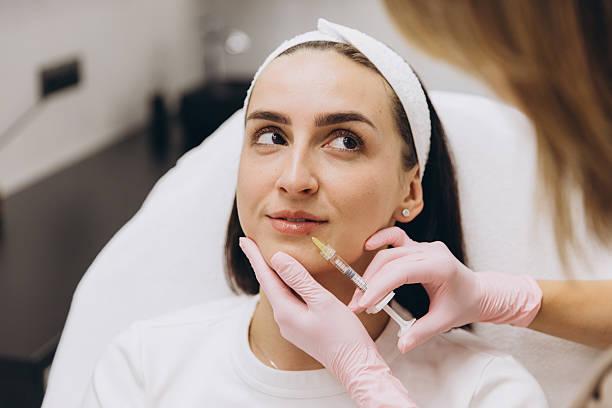
Dermal Fillers injection in Dubai can restore selected areas where facial volume has reduced unevenly, helping improve proportions without replacing every millimetre of lost tissue. The most effective approach is usually based on identifying where volume has changed, understanding the surrounding anatomy, and correcting only the areas that materially affect facial balance.
Uneven volume loss is common with aging, weight changes, dehydration, genetics, and differences in facial anatomy. One cheek may appear flatter, one temple may look more hollow, or one side of the lower face may lose definition faster than the other.
The challenge is determining whether the visible difference actually comes from volume deficiency and, if it does, how much correction is appropriate.
Why Facial Volume Does Not Always Disappear Evenly
Facial aging is not a perfectly symmetrical process.
Fat compartments can change at different rates, while skin elasticity, bone structure, muscle activity, and inherited facial characteristics also influence the final appearance.
This means two sides of the face can show different degrees of:
- Cheek deflation
- Temple hollowing
- Under-eye volume change
- Lower-face volume reduction
- Lip volume loss
- Jawline softening
- Midface flattening
A filler treatment should account for these differences rather than assuming both sides require identical amounts.
Dermal Fillers injection in Dubai for Uneven Cheek Volume
The cheeks are particularly important because relatively small changes in midface volume can affect the appearance of several surrounding areas.
Reduced cheek volume can alter the transition between the lower eyelid, cheekbone, midface, and lower face. When the loss is uneven, treating both sides with the same volume may produce an unnecessarily heavy result on the side that has retained more natural volume.
A practitioner may instead determine whether one side needs more structural support and whether the other requires little or no filler.
The objective is visual balance, not identical syringe placement.
How Aging Creates Uneven Facial Volume
Aging affects more than the surface of the skin.
Over time, changes can occur in:
- Facial fat distribution
- Collagen and elastin
- Bone structure
- Skin thickness
- Soft-tissue support
- Muscle activity
Some patients therefore notice hollowing rather than simply wrinkles.
When volume loss is the dominant issue, restoring selected soft-tissue support may create a more meaningful improvement than treating every visible line individually.
Uneven Volume Loss After Weight Reduction
Rapid or significant weight reduction can make previously subtle facial differences more noticeable.
As facial fat decreases, the underlying contours may become more visible. Because natural facial anatomy is not perfectly symmetrical, one side may appear more hollow than the other.
Patients considering filler after weight loss should ideally have relatively stable weight before undergoing extensive facial volume restoration.
Otherwise, continued weight changes may alter the appearance again and make it difficult to judge the appropriate correction.
Dermal Fillers injection in Dubai for Temple Volume Differences
Temple hollowing can affect the perceived width and contour of the upper face.
When one temple appears more hollow than the other, the difference may become especially noticeable in frontal photographs or under overhead lighting.
Temple filler requires careful anatomical planning because this region contains important vessels and nerves. The treatment should therefore be performed only by an appropriately qualified medical professional familiar with the anatomy and potential complications of the area.
A conservative correction may be preferable when the asymmetry is mild.
When Uneven Volume Loss Is Actually Skin Laxity
Not every hollow-looking area needs filler.
Skin laxity can create shadows and folds that resemble volume deficiency. Adding filler when the primary problem is laxity may increase fullness without producing the desired improvement.
During assessment, the practitioner may distinguish between:
- True soft-tissue volume loss
- Skin laxity
- Structural skeletal differences
- Muscle-related asymmetry
- Changes in facial fat distribution
This distinction helps prevent unnecessary filler placement.
The Importance of Facial Proportion
The eye does not evaluate each facial feature independently.
A small change in one area can alter how another area is perceived. For example, restoring cheek projection may influence the apparent depth of the under-eye region, while improving chin projection can affect the perceived balance of the lips and lower face.
This is why uneven volume loss should be considered within the context of the entire face.
The treatment objective should be proportion rather than simply filling the deepest hollow.
Why Equal Filler Amounts May Produce Unequal Results
Using the same amount of filler on both sides does not guarantee symmetry.
Several factors can change how filler appears:
- Existing tissue volume
- Skin thickness
- Fat distribution
- Facial bone structure
- Injection depth
- Product characteristics
- Tissue elasticity
- Degree of existing volume deficiency
For this reason, a practitioner may use different amounts on each side or choose to treat only one side.
The correct amount is determined clinically rather than by a fixed symmetry formula.
Product Selection for Uneven Volume Restoration
Different dermal fillers have different physical characteristics.
Some formulations are designed to provide structural support and projection, while others are softer and more suitable for areas where flexibility and subtle integration are important.
Hyaluronic acid fillers are commonly used in aesthetic medicine, but the specific formulation should be selected according to the treatment area, tissue characteristics, and desired outcome.
A product that performs well in the cheek may not be the ideal choice for a delicate superficial area.
Injection Depth and Uneven Volume Correction
Injection depth is an important part of treatment planning.
The face contains multiple tissue layers, including skin, subcutaneous tissue, fat compartments, muscles, fascia, and deeper structures.
Depending on the area and filler characteristics, placement may be planned at an appropriate tissue plane to achieve the intended contour while respecting anatomical structures.
Precision matters because placing excessive product too superficially can create visible fullness, while deeper structural correction may be more appropriate for certain contour concerns.
A Practical Comparison of Volume-Loss Patterns
| Volume-loss pattern | Typical visual concern | Treatment planning consideration |
|---|---|---|
| Uneven cheek loss | One cheek looks flatter | Compare both midface sides |
| Temple hollowing | One side appears more sunken | Detailed anatomical assessment |
| Midface depletion | Tired or flattened appearance | Evaluate surrounding facial transitions |
| Lip volume difference | Uneven lip shape | Small, controlled correction |
| Lower-face volume loss | Reduced contour definition | Assess jawline and chin together |
| Post-weight-loss hollowing | More visible facial shadows | Consider weight stability first |
These patterns can overlap, so treatment should be individualized rather than based solely on the visible hollow.
Can Dermal Fillers Correct Every Type of Uneven Volume Loss
No.
Fillers can add volume, but they cannot reproduce every component of natural facial structure.
They may have limited suitability when the primary issue involves significant bone deficiency, severe skin laxity, major muscle asymmetry, or other structural causes.
A consultation should therefore establish what filler can realistically improve before treatment begins.
In some cases, a combination of approaches may provide a more appropriate solution than increasing filler volume.
Why Conservative Correction Can Be More Effective
When volume loss is uneven, aggressive correction can create a new imbalance.
A practitioner may intentionally correct the most visually significant deficiency first and then reassess the result after swelling has settled.
This staged approach can be useful when the patient's anatomy is complex or when the required correction is uncertain.
The aim is to preserve facial expression and avoid creating excessive projection.
Dubai Lifestyle and Uneven Facial Volume
Dubai patients may have additional practical considerations when planning injectable treatment.
Strong outdoor sunlight, high temperatures, frequent air-conditioning, professional commitments, travel, weddings, and social events can influence appointment timing and recovery planning.
The heat itself does not simply dissolve dermal filler. However, patients should follow their medical practitioner's instructions regarding sun exposure, strenuous exercise, heat exposure, and skincare during the early recovery period.
Planning treatment with sufficient recovery time can also make temporary swelling or bruising less disruptive to professional and social schedules.
What to Expect After Uneven Volume Correction
Temporary effects can include:
- Swelling
- Redness
- Bruising
- Tenderness
- Mild firmness
- Temporary asymmetry
These effects can make the treated side appear different during the initial recovery period.
Patients should therefore avoid judging the final balance immediately after injection.
If swelling is substantial, persistent, or accompanied by unusual symptoms, the treating medical professional should be contacted.
Warning Signs That Need Urgent Medical Assessment
Although serious complications are uncommon, dermal filler injections can rarely cause vascular complications.
Patients should seek urgent medical attention if they experience symptoms such as:
- Severe or worsening pain
- Significant skin discoloration or mottling
- Unusual coldness of the treated skin
- Visual changes
- Other sudden or concerning symptoms following treatment
Prompt assessment is important when a vascular complication is suspected.
Questions to Discuss During a Consultation
Before undergoing treatment, patients with uneven facial volume can ask:
- Is my asymmetry actually caused by volume loss?
- Which facial compartments have changed?
- Does one side need more correction than the other?
- Which filler formulation is appropriate?
- At what tissue depth will the product be placed?
- Would treating both sides be necessary?
- Would staged correction produce a more natural result?
- What temporary swelling or bruising should I expect?
- How long should I allow for recovery?
- What symptoms would require urgent medical assessment?
These questions help establish whether filler is an appropriate solution rather than assuming every hollow requires injection.
The Goal Is Balance, Not Replacement of Lost Volume
One of the most important principles in facial rejuvenation is that restoring every area of historical volume is not necessarily desirable.
The face changes naturally with age. Attempting to recreate its appearance from an earlier stage of life can result in excessive fullness.
A more refined strategy is to identify the areas where volume loss has disrupted facial proportion and correct those areas selectively.
This can produce a more subtle and integrated result.
The Strategic Investment in Dermal Fillers injection in Dubai
Uneven facial volume requires more than choosing a filler and dividing a syringe equally between both sides. The quality of the result depends on identifying the source of the imbalance, understanding facial compartments, selecting an appropriate product, and controlling the amount and depth of placement.
For patients considering Dermal Fillers injection in Dubai, individualized anatomical assessment is therefore more valuable than a standardized treatment formula. Tajmeels Clinic can provide a consultation-based approach to determine whether targeted filler restoration is appropriate for the patient's facial structure, volume changes, and aesthetic goals.

 English
 Arabic
 French
 Portuguese
 Deutsch
 Turkish
 Dutch
Dutch
 Italiano
 Russian
 Romaian
 Portuguese (Brazil)
 Greek
Greek