


What Is a Battle Cleaver and How Is It Different from Other Swords?
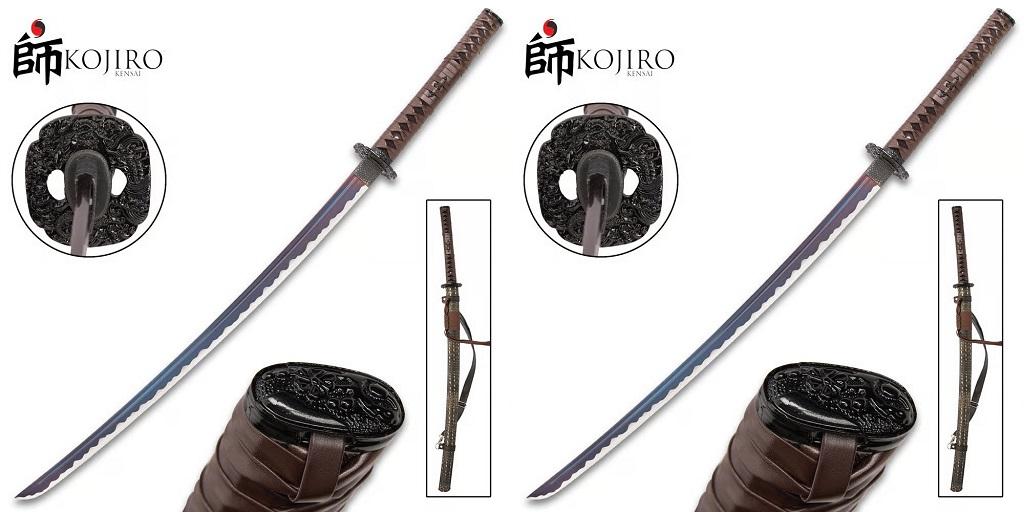
There are many different sword patterns, some of which are recognizable by or referred to by more than one name. There are great swords, bastard swords, claymores, hand and a half swords, rapiers, sabers, cutlasses, falchions, and so on and so forth.
Another such pattern is called a battle cleaver. Here’s what that means.
The Definitive Attributes
A battle cleaver is, effectively, a cleaver knife, but only magnified.
As in the case of the knife, two of the defining attributes of a battle cleaver are that it has one edge and that it has a rounded point if it has a point at all. Most commonly a battle cleaver will have a square nose, utterly lacking a point.
Another defining feature of a cleaver is that it has a very heavy blade, as it is, after all, designed for chopping, or cleaving, hence the name. Sometimes, the blade of a battle cleaver is very short, too.
In some cases, a battle cleaver might have a very long hilt, with an oversized pommel and a wide guard. In the former two cases, these afford much greater control over the sword, and in the latter, the guard protects the wielder.
One historical pattern which hails from China is known as a dadao. This is a sword with a single edge, a heavy blade, and effectively no point. The dadao also had a long hilt that aided in control and also helped to counterbalance the blade.
All in all, battle cleavers are large, heavy, formidable swords capable of inflicting devastating slashing and chopping attacks on targets.
Traits to Look for in a Battle Cleaver
As in the case of all battle ready swords, there are three primary attributes you want to look for in a battle ready cleaver sword to ensure it can be safely used for live cutting practice.
First, the steel alloy must be suitable. There are many alloys that will work here but common ones are tool steels in the 10XX class, like 1095 and 1055.
Second, the sword’s blade must be tempered. If the blade is either too soft or too hard, it will bend, snap, shatter or otherwise fail when it is subjected to live cutting use.
And, lastly, the battle cleaver must be made with a full tang that passes entirely through the hilt. Partial tangs will break and are of no use here. The tang must also be integral with the blade stock and must not be welded or threaded on.
If the battle cleaver has at least these attributes and is ticketed as “battle ready” then you can use it for live cutting practice.
Where to Get a Battle-Ready Battle Cleaver
If you landed here because you are interested in adding a battle-ready cleaver sword to your collection, visit True Swords. They carry a wide range of battle ready sword patterns, including many historical patterns, and many at surprisingly competitive prices. Visit their website today and get in touch with them if you have any questions.
For more information about Japanese Sword and Realistic Katana Please visit: True Swords.

 English
 Arabic
 French
 Spanish
 Portuguese
 Turkish
 Dutch
 Italiano
 Russian
 Romaian
 Portuguese (Brazil)
 Greek