


How to Become a Pilot in India: A Complete Guide for Students
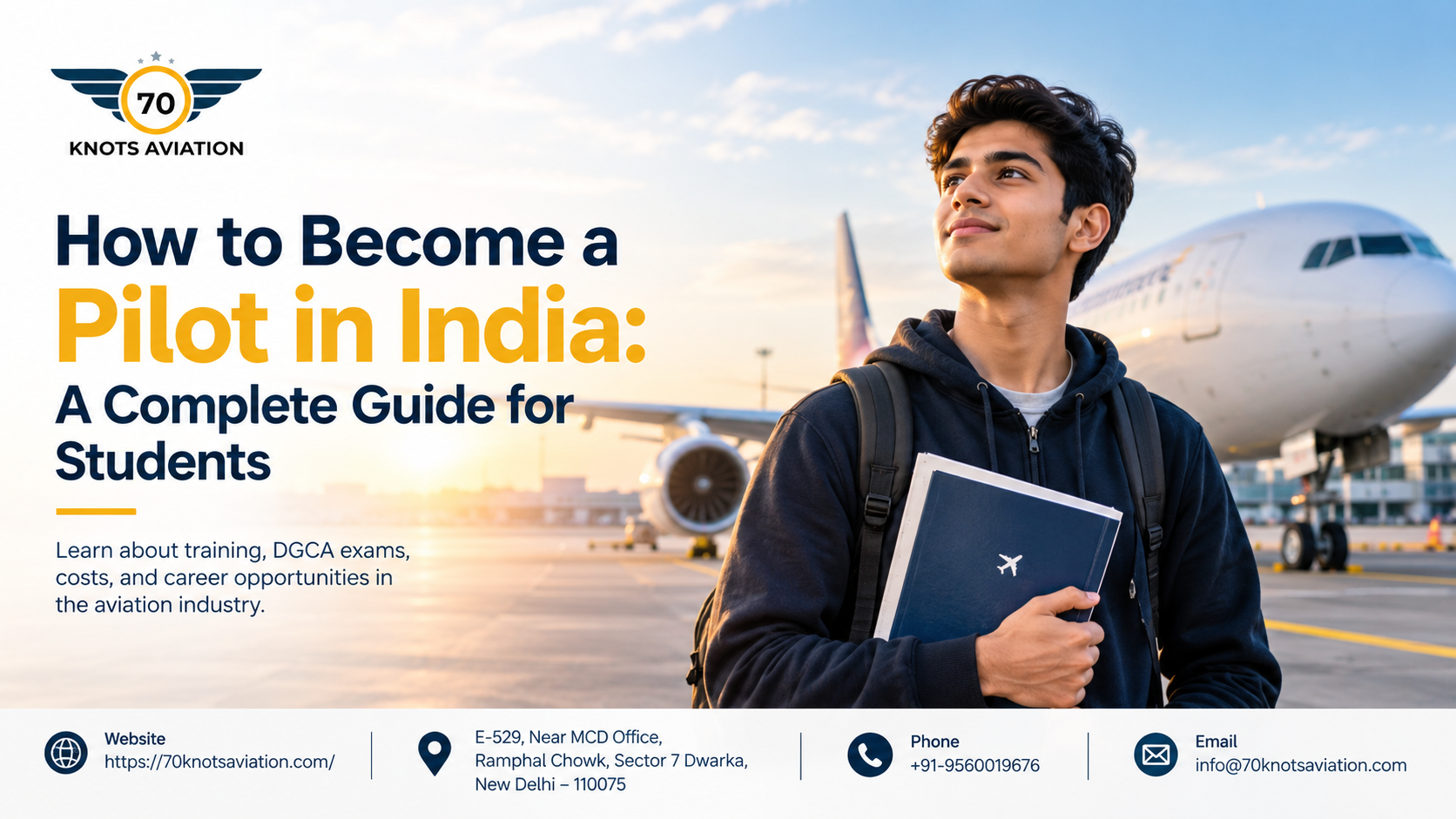
Becoming a pilot is a dream for many students who are interested in aviation, travel, technology, and a career that comes with responsibility and continuous learning. However, turning that dream into a professional career requires proper planning. Students need to understand the educational requirements, medical standards, examinations, ground training, flight training, licensing process, and financial commitment before beginning their journey.
For students planning their aviation careers in 2026, having a clear understanding of the training pathway is more important than ever. The aviation industry continues to evolve, while regulatory requirements, training practices, and examination procedures require students to stay informed and prepared.
If you are wondering how to become a pilot, the journey begins well before your first solo flight. It starts with understanding whether you meet the eligibility requirements and developing a realistic plan for your training.
Understanding the Pilot Career Path
A professional pilot career involves several stages. Students who want to fly commercial aircraft generally work toward obtaining a Commercial Pilot Licence (CPL) and then continue building the qualifications and experience required for their desired aviation career.
The journey typically involves educational preparation, aviation medical assessment, ground training, examinations, practical flight training, and licensing requirements.
Each stage has a different purpose. Ground training develops the theoretical knowledge required for safe flight operations, while flight training allows students to apply that knowledge in an aircraft.
Students should therefore think of pilot training as a combination of academic learning and practical skill development rather than simply learning how to fly.
Educational Requirements for Aspiring Pilots
Students planning to enter professional pilot training should first check the applicable educational requirements.
Physics and Mathematics are important subjects for the commercial pilot pathway, and students should confirm the current requirements applicable to their intended licence before enrolling in training.
Students who do not have the required subjects may need to complete the appropriate academic requirements through a recognised pathway before progressing.
This is one reason why planning early can be beneficial. A student who understands the eligibility requirements before finishing school can avoid unnecessary delays later.
Medical Fitness Is an Important Early Step
Aviation places specific medical requirements on pilots because flying an aircraft requires concentration, coordination, decision-making ability, and the capacity to respond appropriately to changing situations.
Students should therefore consider their aviation medical assessment at an early stage.
There is little value in making a major financial commitment to flight training without first understanding whether they meet the applicable medical standards.
An early medical assessment can help students make better-informed decisions about their aviation plans.
Ground Training: Building the Knowledge Behind Flying
A common misconception among new students is that pilot training is mainly about spending time inside an aircraft. In reality, theoretical knowledge is a major part of professional pilot preparation.
Students study subjects related to areas such as aviation regulations, navigation, meteorology, aircraft and general technical knowledge, human factors, and operational procedures.
Understanding these subjects helps students make informed decisions during flight operations.
For example, a pilot needs to understand weather conditions before a flight, interpret navigation information, understand applicable regulations, and consider aircraft performance and operational limitations.
Strong ground preparation therefore provides the foundation on which practical flying skills are developed.
Understanding DGCA Pariksha
Students preparing for professional pilot training in India will come across DGCA Pariksha, the examination portal associated with the Directorate General of Civil Aviation's Flight Crew examinations.
The examination process is an important part of the theoretical side of pilot licensing. Students need to understand the applicable subjects, examination procedures, registration requirements, schedules, and other relevant instructions.
The examination system can be unfamiliar to students when they first enter aviation. This is why organised preparation and regular attention to official updates can be useful.
Students should always rely on current information from DGCA and the official Pariksha platform because examination procedures, schedules, notices, and regulatory requirements may change.
Preparing for DGCA Examinations
Successful examination preparation requires consistency.
Instead of waiting until the last few weeks before an examination, students can develop a regular study routine from the beginning of their training.
A practical approach is to divide preparation into smaller stages. Students can first understand the syllabus, then study the concepts, practise questions, revise difficult topics, and finally work on examination-oriented preparation.
Regular revision is particularly useful because aviation subjects contain technical terminology, calculations, procedures, and concepts that can become difficult to remember if studied only once.
Students should also keep themselves updated with official examination announcements rather than relying exclusively on information shared through social media or unofficial groups.
Practical Flight Training
After developing the required theoretical foundation, students progress through practical flight training.
Flight training teaches students how to apply aviation knowledge in real operating conditions. Under the supervision of qualified instructors, students gradually learn aircraft handling, take-offs, landings, navigation, communication, emergency procedures, and other essential flying skills.
Training is progressive. Students are not expected to master every skill immediately.
The instructor evaluates the student's performance and provides guidance throughout the process. As students gain experience and confidence, they gradually take greater responsibility for different aspects of the flight.
How Much Does Pilot Training Cost in India?
One of the biggest questions students and parents ask is about pilot training cost in India.
There is no single fixed amount that applies to every student. The overall cost can vary depending on the training organisation, aircraft used, flying rates, location, fuel expenses, training duration, accommodation, examinations, medical requirements, equipment, licensing expenses, and the number of additional flying hours a student may require.
This means students should avoid choosing a training programme based solely on the lowest advertised price.
A training package may appear inexpensive initially but have additional charges that significantly affect the final expenditure.
Before enrolling, students should request a clear breakdown of the expected costs and ask which services are included.
What Can Increase the Overall Training Cost?
Several factors can influence the final cost of pilot training.
Flying Hours
The number of hours required can vary between students. Some students may need additional training before becoming proficient in particular skills.
Aircraft Availability
The availability and utilisation of training aircraft can affect scheduling and training continuity.
Weather
Flying training can be affected by weather conditions. Poor weather may result in delays or changes to planned flying schedules.
Training Duration
The longer a student remains in training, the greater the potential accommodation, transportation, administrative, and other associated expenses.
Ground Training and Examinations
Students should also account for expenses associated with ground preparation and examinations when creating their overall budget.
Accommodation and Living Expenses
Students who relocate for training need to consider accommodation, food, transportation, and everyday living costs in addition to their flying expenses.
For this reason, students should plan their finances around the complete training journey, rather than focusing on a single advertised figure.
Choosing the Right Pilot Training Institute
Students frequently search for the Best pilot training institute in India, but choosing a flight training organisation requires more research than simply looking at online rankings.
Different students have different requirements, budgets, learning preferences, and career goals.
A prospective student should examine the organisation's training environment, instructors, aircraft, scheduling system, ground preparation, transparency of fees, and overall student support.
Training Infrastructure
Students should understand what facilities are available for both theoretical and practical training.
A suitable learning environment should provide students with the resources necessary to develop their aviation knowledge and flying skills.
Instructor Quality
Instructors play a major role in a student's development.
Students should look for an environment where instructors provide clear explanations, practical feedback, and appropriate guidance throughout training.
Aircraft and Flight Operations
Students should ask about the aircraft used for training and how flight scheduling is managed.
Regular flying opportunities can be important for maintaining continuity and developing flying proficiency.
Fee Transparency
A professional training organisation should be able to explain its fee structure clearly.
Students should ask about additional flying hours, examination-related expenses, equipment, documentation, accommodation, and any other costs that may not be included in the initial training package.
Questions Students Should Ask Before Joining
Before committing to a pilot training programme, students should take time to ask questions rather than making a decision based entirely on advertisements.
Important questions include:
- What is included in the quoted training fee?
- Are additional flying hours charged separately?
- What aircraft are used for training?
- How is flight scheduling managed?
- What ground training is provided?
- How are students prepared for examinations?
- What happens if training takes longer than expected?
- What additional expenses should students budget for?
- How are students informed about regulatory updates?
- What documentation and records are maintained during training?
Getting clear answers to these questions can help students compare different options more objectively.
Developing the Right Mindset for Aviation
Pilot training is not only about academic knowledge or flying skills. It also requires discipline.
Students need to become comfortable with preparation, punctuality, communication, procedures, responsibility, and continuous learning.
Aviation is an environment where small details can matter. Pilots are expected to follow established procedures and make decisions based on available information rather than assumptions.
Developing these habits during training can help students prepare for the professional environment they will eventually enter.
Common Mistakes Students Should Avoid
Students beginning their aviation journey can sometimes make decisions based on incomplete information.
One common mistake is choosing a training organisation only because it offers a lower advertised cost. Another is postponing the medical assessment until after making a significant financial commitment.
Students may also underestimate the importance of ground subjects or depend too heavily on outdated examination information.
Another mistake is expecting every student to complete training within exactly the same timeframe. Training progress can be influenced by weather, aircraft availability, scheduling, individual performance, and other operational factors.
Understanding these realities before starting can help students approach pilot training with more realistic expectations.
Staying Updated in 2026
Aviation regulations and examination procedures can evolve, so students should develop the habit of checking current information from official sources.
This is particularly important for students preparing for DGCA examinations or planning their licensing pathway.
Rather than relying on old articles or information shared by other students, candidates should verify important requirements through the relevant official DGCA channels before making decisions.
Staying informed is itself an important professional habit for anyone planning a long-term career in aviation.
Begin Your Aviation Journey with Proper Planning
Becoming a professional pilot requires commitment, preparation, financial planning, and patience. Students should understand the complete pathway before deciding where and how to begin their training.
From checking eligibility and completing the required medical process to preparing for examinations and developing practical flying skills, every stage contributes to the development of a professional pilot.
Students researching how to become a pilot should therefore look beyond the excitement of flying and understand the responsibilities that come with the profession.
For students in Delhi seeking aviation education and guidance, 70Knots Aviation is located at E-529, Near MCD Office, Ramphal Chowk, Sector 7 Dwarka, New Delhi – 110075.
Students can contact 70Knots Aviation for further information about aviation education and pilot training guidance.
70Knots Aviation
Website: https://70knotsaviation.com/
E-529, Near MCD Office, Ramphal Chowk, Sector 7 Dwarka, New Delhi – 110075
Phone: +91-9560019676
Email: info@70knotsaviation.com

 English
 Arabic
 French
 Spanish
 Portuguese
 Deutsch
 Turkish
 Italiano
 Russian
 Romaian
 Portuguese (Brazil)
 Greek
Greek