


Why Does a Pepper Grinder Factory Charge Extra for Patented Designs? Pepper-Grinder Explains R&D Recovery
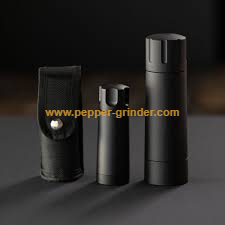
An importer compares two quotes for manual pepper grinders. One price sits twenty percent lower than the other. The cheaper grinder looks identical in photos. Six months after arrival, customers complain about loose adjustment knobs and rusty mechanisms. The low price came from cutting unseen corners. A Pepper Grinder Factory like Pepper-Grinder, produced by Yongkang Funansheng Industry & Trade Co., Ltd., builds cost into visible and invisible features. This reality raises a direct question for any buyer: what factors determine the cost of products in a pepper grinder factory?
The grinding mechanism material drives base cost. A ceramic burr set requires high-temperature firing and diamond grinding for flat mating surfaces. A carbon steel mechanism stamps from sheet metal with fewer steps. Pepper-Grinder's ceramic burrs cost more at the component level but resist salt corrosion and stay sharp longer. A buyer choosing steel saves money upfront but faces earlier replacement. The factory's cost mirrors this durability trade-off.
Housing material changes production expenses. A solid wood grinder needs seasoned timber, turning on a lathe, and multiple sanding passes. An acrylic or ABS plastic grinder injects into a mold in seconds. Pepper-Grinder's wood models require skilled labor for each piece. Plastic models use automated injection molding machines. The wood grinder carries higher material and labor cost. The price difference appears in the final quote.
Motor type separates electric grinder prices. A brushed DC motor uses simple windings and costs less to produce. A brushless DC motor needs electronic control circuits and precision assembly. Pepper-Grinder's battery-operated models with brushless motors cost more to manufacture. The motor runs quieter and lasts through more grinding cycles. A buyer choosing a brushed motor accepts higher noise and shorter life for a lower purchase price.
Certification compliance adds unavoidable cost. Exporting to Europe requires CE, RoHS, and LFGB certificates. Selling in the US demands FDA compliance for food-contact materials. Pepper-Grinder maintains ISO9001 and BSCI certifications for its factory processes. Each certification requires documentation, testing, and annual audits. A factory without these certificates produces cheaper grinders but cannot sell them legally in regulated markets. The cost of compliance appears in every compliant grinder.
Packaging for export multiplies factory costs. A grinder for local sale goes into a printed cardboard box. An exported grinder needs a master carton, desiccant packs, and moisture barrier bags. Pepper-Grinder's ocean-freight packaging includes corner protectors and pallet strapping. The export packaging cost exceeds the domestic version by a measurable amount. A buyer who skips proper packaging saves money but receives damaged goods.
Custom tooling amortization affects per-unit price. A factory that produces standard round grinders uses existing molds. A customer requesting a hexagonal body pays for new injection tooling. Pepper-Grinder spreads this tooling cost across the initial order quantity. A small order of a custom shape has higher per-unit cost than a large order of a standard model. The buyer chooses between design uniqueness and unit price.
Labor rates vary with assembly complexity. A simple grinder with a push-on cap assembles in seconds. A gravity grinder with a magnetic closure needs careful alignment. Pepper-Grinder's multi-function grinders with LED lights require manual soldering and testing. Skilled assemblers in the factory earn higher wages than workers doing basic packing. The final product price reflects this labor difference. A basic grinder costs less because it needs less human attention.
For any buyer evaluating pepper grinder quotes, https://www.pepper-grinder.com/product/ shows Pepper-Grinder's Pepper Grinder Factory pricing breakdown, where Funansheng's engineers list material, motor, and certification options with their respective costs. A low price often hides cheap internals. A fair price transparently reflects durable components. Does your supplier's quote explain what you lose when you pay less?

 English
 Arabic
 French
 Portuguese
 Deutsch
 Turkish
 Dutch
Dutch
 Italiano
 Russian
 Romaian
 Portuguese (Brazil)
 Greek
Greek