


Paper Bag Supplier Guide: What Businesses Should Check Before Placing Orders
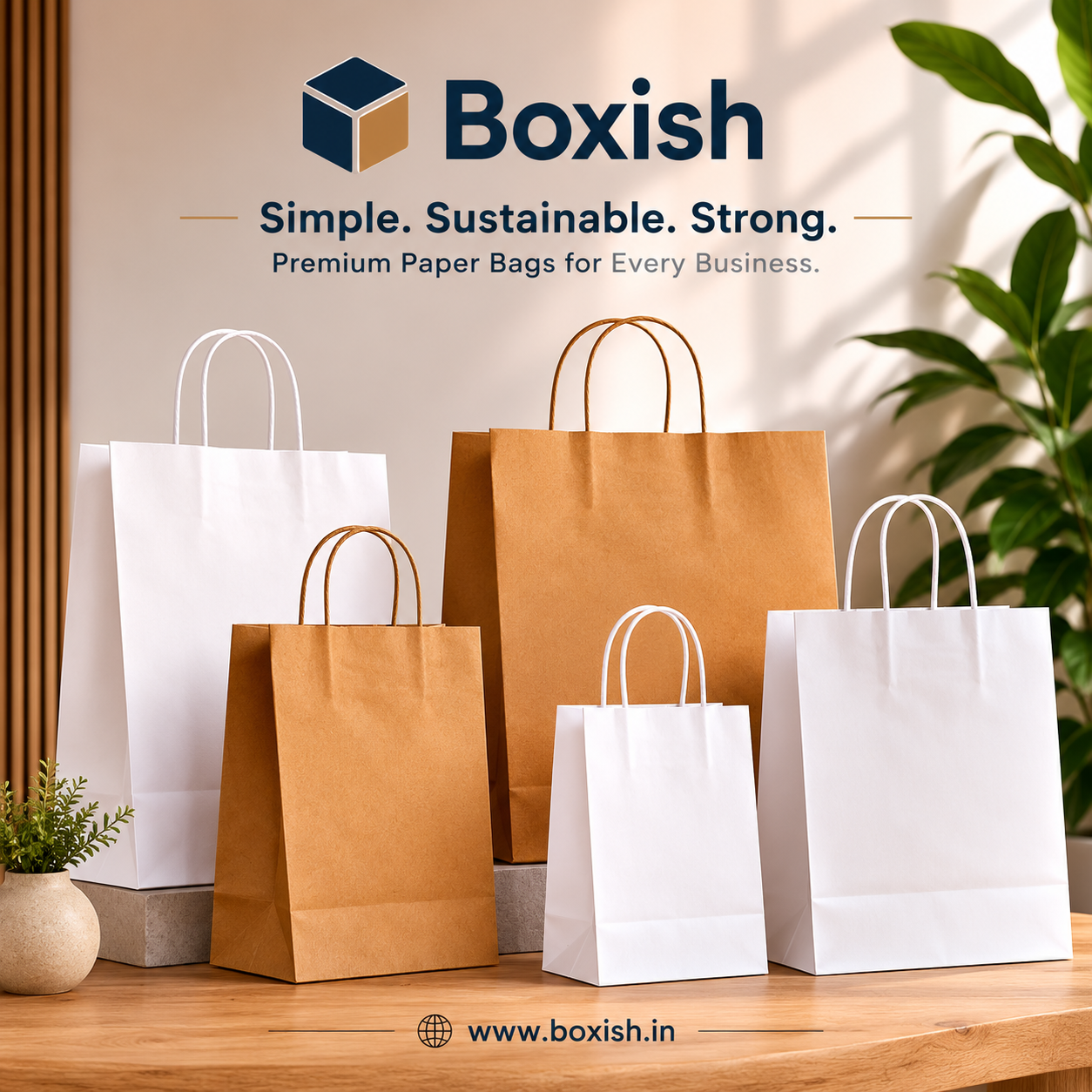
Choosing the right packaging supplier is an important decision for businesses that regularly use paper bags. Whether you operate a retail store, bakery, cafe, boutique, gift shop, restaurant, or ecommerce business, the supplier you choose can affect packaging quality, cost, consistency, and delivery timelines.
A reliable paper bag supplier should provide suitable paper quality, accurate sizes, dependable construction, customization options, and consistent supply. Businesses should therefore evaluate more than just the quoted price before placing a bulk order.
This guide explains the key factors businesses should check when selecting a supplier and ordering paper bags in bulk.
Why Choosing the Right Paper Bag Supplier Matters
Paper bags are used repeatedly by many businesses, which means inconsistent quality can quickly become a recurring problem.
A supplier should be able to provide bags that match the agreed specifications from one order to another.
Important factors include:
-
Paper quality
-
GSM
-
Bag dimensions
-
Handle strength
-
Bottom construction
-
Printing quality
-
Order quantity
-
Production time
-
Packaging
-
Delivery
-
Customization options
A supplier that understands these requirements can make regular packaging purchases easier to manage.
1. Check the Paper Quality
Paper quality should be one of the first things businesses evaluate.
Different products require different levels of paper strength. A lightweight bag may be suitable for small retail products, while heavier merchandise may require stronger paper and construction.
Businesses should ask the supplier about:
-
Paper type
-
GSM
-
Paper thickness
-
Strength
-
Finish
-
Intended application
GSM is useful for comparing paper specifications, but it should not be treated as the only measure of bag strength. Construction, handles, adhesive, dimensions, and manufacturing quality also influence performance.
2. Confirm the Bag Size
The bag should be large enough to accommodate the intended products without creating unnecessary empty space.
Before ordering, measure the products that will normally be packed and determine the required:
-
Length
-
Width
-
Height
-
Opening
-
Carrying capacity
A clothing retailer may need larger bags, while a gift shop or small retail business may require several smaller sizes.
Using the correct dimensions can improve packing efficiency and help avoid unnecessary material costs.
3. Understand the Different Bag Types
A supplier may offer several types of paper bags for different applications.
Businesses may choose from:
-
Brown kraft bags
-
White paper bags
-
Flat bags
-
Gusseted bags
-
Handled carry bags
-
Designer bags
-
Cake bags
-
Custom printed bags
For businesses looking for a broader selection, a dedicated paper bag collection can make it easier to compare different formats and applications.
The right type should be selected based on the product, weight, packing process, and customer requirements.
4. Check Handle Strength and Design
If customers need to carry the bag after purchasing a product, handle quality becomes particularly important.
Common handle options include:
-
Flat paper handles
-
Twisted paper handles
-
Rope-style handles
-
Die-cut handles
The handle should be suitable for the expected product weight.
Businesses should test handles with actual products rather than choosing them only based on appearance. A bag that looks attractive but has weak handles can create a poor customer experience.
5. Ask About Custom Printing
Many businesses use paper bags as part of their branding strategy.
Depending on the supplier, businesses may be able to customize:
-
Logo
-
Brand name
-
Brand colors
-
Contact details
-
Website
-
Promotional message
-
Product information
-
Artwork
Before ordering, ask about the available printing options, number of colors, printing area, artwork requirements, and minimum order quantity.
A simple, clear design can often provide strong brand visibility without making the packaging unnecessarily complicated.
6. Consider White and Brown Paper Bags
Color can influence both appearance and branding.
A white bag can provide a clean surface for logos and graphics, while natural kraft paper can create a simple and practical appearance.
For businesses interested in a clean presentation, White Paper Bag options can be considered for suitable retail and branding applications.
Businesses should compare color options based on their brand identity, product type, printing requirements, and budget.
7. Check Minimum Order Quantity
Minimum order quantity, or MOQ, is another important consideration when selecting a supplier.
A supplier may offer lower per-unit pricing for larger orders, but businesses should make sure they can actually use and store the quantity they purchase.
Before placing an order, consider:
-
Average monthly consumption
-
Seasonal demand
-
Storage capacity
-
Available working capital
-
Expected product sales
-
Potential design changes
Ordering too little can result in frequent reorders, while ordering too much can tie up money and storage space.
8. Compare Pricing Properly
Businesses should not compare suppliers based only on the advertised price per bag.
A proper comparison should consider the complete specification.
Compare:
| Factor | What to Check |
|---|---|
| Size | Exact finished dimensions |
| GSM | Paper weight |
| Construction | Flat, gusseted, SOS, handled, etc. |
| Handles | Type and strength |
| Printing | Number of colors and coverage |
| Quantity | Total order volume |
| Packaging | How bags are packed |
| Delivery | Shipping and delivery charges |
A cheaper quotation may not actually be cheaper if it uses different paper quality or excludes important costs.
9. Ask for Samples Before Bulk Ordering
Sample testing is one of the safest ways to evaluate a supplier.
Businesses should test the sample using their actual products.
Check:
-
Bag size
-
Paper quality
-
Handle strength
-
Bottom strength
-
Printing clarity
-
Product fit
-
Overall appearance
-
Ease of carrying
This can help identify potential problems before committing to a large order.
10. Check Supplier Consistency
A supplier may provide a good first order, but businesses should also consider whether the same quality can be maintained over time.
For regular buyers, consistency matters in:
-
Paper GSM
-
Dimensions
-
Printing
-
Color
-
Handle construction
-
Bag strength
-
Finishing
Consistent specifications make it easier for businesses to maintain a uniform customer experience.
11. Consider Custom Sizes
Standard sizes can be suitable for many businesses, but some products may require customized dimensions.
Custom sizing can help businesses create a better fit for their products and reduce unnecessary empty space.
Before requesting a custom size, provide accurate product measurements and explain how the bag will be used.
The supplier should also confirm whether the requested dimensions are practical for production.
12. Check Production and Delivery Timelines
Packaging shortages can interrupt daily business operations.
Before placing an order, ask the supplier about:
-
Production time
-
Dispatch time
-
Delivery timeline
-
Bulk-order processing
-
Repeat-order lead time
Businesses with seasonal demand should plan purchases early rather than waiting until existing stock is nearly finished.
Maintaining a reasonable safety stock can also reduce the risk of sudden packaging shortages.
13. Evaluate Packaging and Storage
The bags should arrive properly packed to reduce the possibility of damage during transportation.
Businesses should also consider how much storage space the finished bags require.
Before ordering a large quantity, check:
-
Carton size
-
Bundle quantity
-
Storage conditions
-
Available warehouse space
-
Protection from moisture
-
Ease of handling
Paper products should generally be stored in a clean and dry environment.
14. Consider Your Business Application
The best supplier depends partly on how the bags will be used.
Retail Stores
Retail businesses often require handled bags in multiple sizes for different products.
Bakeries
Bakeries may require bags designed around cake boxes, pastries, and takeaway products.
Restaurants and Cafes
Food businesses may prioritize quick packing, easy carrying, and suitable bag construction.
Gift Shops
Gift stores may focus more heavily on appearance, printing, and presentation.
Ecommerce Businesses
Ecommerce sellers may use paper bags for local deliveries, retail orders, gifting, or customer-facing packaging.
Understanding the application helps businesses communicate their requirements clearly to the supplier.
15. Look Beyond Price
Price is important, but it should not be the only deciding factor.
A reliable supplier should offer a reasonable balance between:
-
Quality
-
Price
-
Customization
-
Consistency
-
Production capacity
-
Delivery
-
Customer support
Choosing the cheapest supplier can become expensive if poor-quality bags result in product damage, customer complaints, or frequent replacements.
Common Mistakes When Ordering Paper Bags
Businesses can avoid several common purchasing mistakes by planning ahead.
Ordering Without Testing
Bulk orders should ideally follow sample testing.
Ignoring Product Weight
The bag should be designed according to the weight it needs to carry.
Choosing Only by Price
Always compare equivalent specifications.
Ordering the Wrong Size
Incorrect dimensions can make packing inconvenient and waste material.
Ignoring Storage
Large orders require sufficient dry storage space.
Not Checking Printing Details
Businesses should approve artwork, colors, dimensions, and printing placement before production.
Paper Bag Supplier Checklist
Before placing an order, businesses can use this checklist:
-
Confirm bag dimensions.
-
Check paper type and GSM.
-
Determine the required construction.
-
Select suitable handles.
-
Confirm printing requirements.
-
Ask about MOQ.
-
Request samples.
-
Test the bag with actual products.
-
Compare complete quotations.
-
Confirm production and delivery timelines.
-
Check storage requirements.
-
Confirm repeat-order consistency.
Following these steps can make supplier selection more systematic.
Final Thoughts
Selecting the right paper bag supplier is about more than finding the lowest price. Businesses should evaluate paper quality, size, construction, handles, printing, quantity, customization, delivery, and supplier consistency before placing an order.
A reliable supplier can help businesses maintain consistent packaging quality while managing costs and inventory more effectively.
The best approach is to define your packaging requirements first, compare suppliers using the same specifications, test samples, and then place a bulk order that matches your actual business demand.
This can help ensure that the paper bags are not only visually suitable but also practical, reliable, and appropriate for everyday business use.
Frequently Asked Questions
1. What should businesses check before choosing a paper bag supplier?
Businesses should check paper quality, GSM, dimensions, construction, handles, printing, MOQ, pricing, samples, production time, delivery, and supplier consistency.
2. Should businesses order samples before buying paper bags wholesale?
Yes. Testing samples with actual products can help businesses evaluate size, strength, handles, printing, and overall quality before placing a large order.
3. Does a higher GSM always mean a stronger paper bag?
Not necessarily. GSM is one factor, but bag construction, paper quality, dimensions, handles, adhesive, and manufacturing quality also affect strength.
4. Can businesses order customized paper bags?
Yes. Depending on the supplier, businesses may be able to customize size, printing, colors, handles, and other specifications.
5. How can businesses compare two paper bag suppliers?
Compare both suppliers using the same specifications for size, GSM, construction, printing, quantity, handles, delivery, and other applicable costs. This provides a more accurate comparison than looking only at the unit price.

 English
 Arabic
 French
 Spanish
 Portuguese
 Deutsch
 Turkish
 Dutch
Dutch
 Italiano
 Romaian
 Portuguese (Brazil)
 Greek
Greek