


Material Selection for Demanding Valve Applications
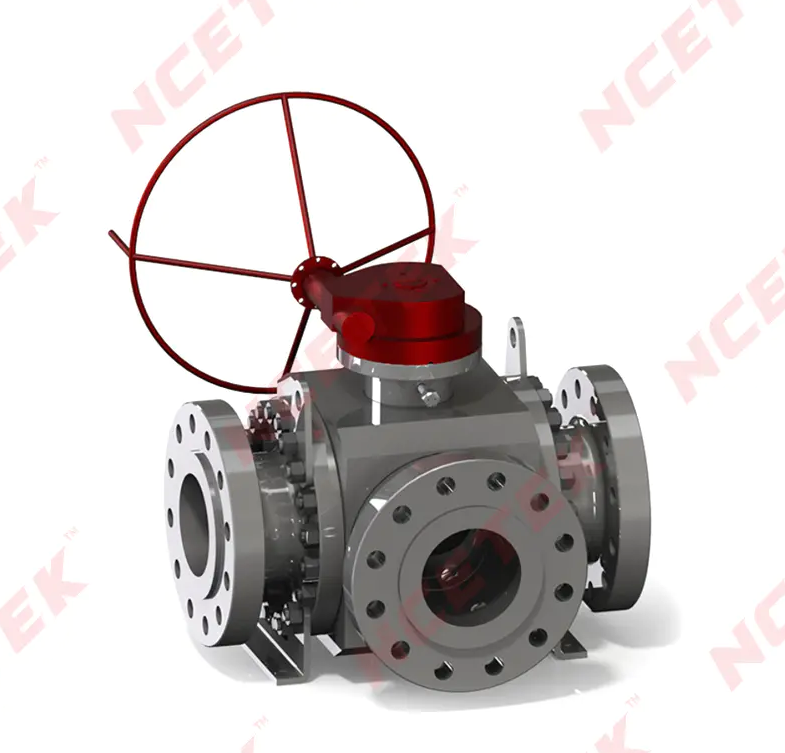
Industrial pipeline systems often require valves that can manage substantial mechanical loads while maintaining reliable shutoff performance. In these applications, the relationship between body construction, ball support, sealing design, and actuator operation becomes especially important. A Cast Steel Trunnion Mounted Ball Valve uses a supported ball arrangement to distribute operating loads more effectively than a freely floating design. This structural principle makes it suitable for applications where valve size, pressure conditions, operating frequency, or actuator requirements place greater demands on the equipment.
The cast steel body provides the primary pressure boundary and protects the internal components from external mechanical influences. Casting allows manufacturers to create complex body shapes, integrated connection areas, and internal flow passages with fewer fabricated joints. However, casting quality must be carefully controlled. Mold accuracy, molten metal quality, pouring conditions, cooling speed, and heat treatment can affect the mechanical properties and dimensional stability of the body. After casting, machining and inspection are necessary to ensure that sealing surfaces, mounting areas, and connection dimensions meet the intended design requirements.
The trunnion structure supports the ball at fixed upper and lower points. This arrangement reduces the amount of pressure-related load transferred directly to the operating stem. As a result, the actuator may require less torque to rotate the ball, particularly when the valve is used in larger pipeline systems. Reduced operating torque can simplify actuator selection and may help improve control over repeated opening and closing cycles. The support system must nevertheless be accurately aligned, because uneven loading or poor machining can create friction, stress concentration, and premature wear.
Seat design is a central part of the valve’s performance. In a trunnion mounted configuration, the seats may be designed to move toward the ball under line pressure or spring force. This allows the sealing surfaces to maintain contact while accommodating changes in operating conditions. Seat materials must be selected according to the medium, temperature, pressure, and expected cycling frequency. Polymer seats may be appropriate for many general applications, while metal-seated arrangements may be considered when abrasive particles, high temperatures, or severe service conditions make conventional soft materials less suitable.
The ball surface must be finished with precision because the sealing interface depends on consistent contact between the ball and seats. Machining marks, surface contamination, or dimensional deviations can create leakage paths and increase operating resistance. Manufacturers therefore need controlled processes for turning, grinding, polishing, cleaning, and inspection. The stem, trunnion supports, bearings, and seat pockets must also be manufactured within suitable tolerances. A reliable valve is the result of coordinated accuracy across the complete internal assembly rather than the quality of one individual component.
Body and seat testing help verify the integrity of the finished product. Pressure testing can identify leakage through the body or external joints, while seat testing evaluates the ability of the valve to isolate the pipeline. Depending on the application, manufacturers may also perform functional testing, material verification, non-destructive examination, and checks of actuator mounting interfaces. Testing procedures should be supported by clear records so that users can review the production and inspection history of the valve when required for project documentation or maintenance planning.
Actuator integration should be considered during the design stage. The actuator must provide sufficient force for the valve’s operating conditions without creating excessive stress in the stem or support structure. Gearboxes, electric actuators, pneumatic actuators, and other operating arrangements may be selected according to site requirements. The connection between actuator and valve should be properly aligned, protected against environmental exposure, and accessible for inspection. Where remote operation is needed, position feedback and control system compatibility may also influence the final configuration.
Installation practices have a direct effect on service life. Pipeline supports should prevent excessive external loads from being transferred to the valve. The flow path should be cleaned before commissioning, and the valve should be operated carefully to confirm correct travel. Maintenance teams should monitor torque changes, external seal condition, actuator response, and any signs of leakage. In systems carrying dirty or abrasive media, suitable filtration and cleaning procedures can help reduce damage to internal sealing surfaces.
When evaluating a Cast Steel Trunnion Mounted Ball Valve, purchasers should review body material, support structure, seat technology, machining standards, testing procedures, actuator compatibility, and maintenance access as one complete engineering package. A dependable valve solution should match the actual operating environment rather than rely only on general product descriptions. Industrial users can explore the valve product range at https://www.ncevalve.com/product/ to compare suitable designs for demanding pipeline and process applications.

 English
 French
 Spanish
 Portuguese
 Deutsch
 Turkish
 Dutch
Dutch
 Italiano
 Russian
 Romaian
 Portuguese (Brazil)
 Greek
Greek