


Hair Loss Treatment in Dubai for Women With a Widening Part
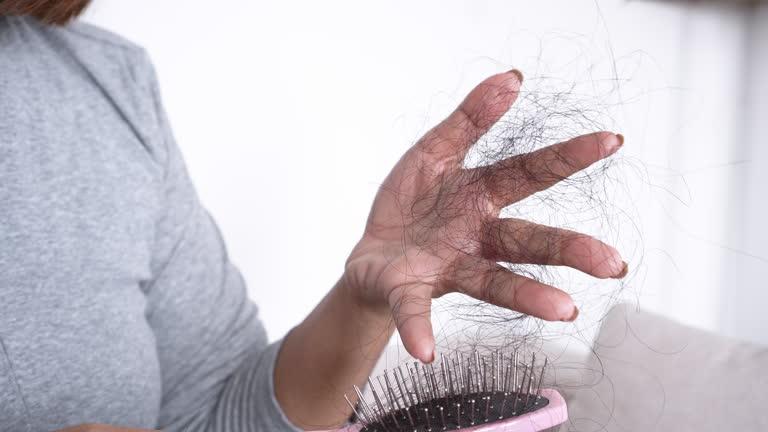
A widening part can be an early sign of reduced hair density, even when overall hair volume still appears normal. Hair Loss Treatment in Dubai for women should therefore begin by determining whether the change reflects follicular miniaturization, temporary shedding, hormonal influences, nutritional factors, or damage to the hair shaft.
The central question is not simply how much hair is falling. It is whether the follicles along the central part are producing progressively thinner or fewer terminal hairs.
Why a Widening Part Can Signal Hair Loss
The central part provides an unusually visible reference point for detecting changes in scalp coverage.
When the part gradually becomes broader, the underlying scalp becomes easier to see because the density of terminal hairs on either side has decreased. This may happen slowly enough that a woman notices the change only when comparing older photographs.
Female-pattern hair loss is one possible explanation. In this pattern, follicles can undergo progressive miniaturization, producing shorter and finer hairs while the frontal hairline may remain relatively preserved.
However, not every widening part represents the same condition.
Temporary shedding can produce diffuse density reduction without permanent follicular damage. A dermatologist or hair-restoration specialist must therefore distinguish active shedding from progressive miniaturization before selecting treatment.
Hair Loss Treatment in Dubai and Follicular Miniaturization
Miniaturization refers to a reduction in the size and caliber of hair produced by an affected follicle.
A previously thick terminal hair may gradually become finer and less noticeable. Several cycles of this process can create visible scalp exposure even though follicles are still present.
This is clinically important because an area with functioning but weakened follicles may have different treatment possibilities from an area where follicles have been permanently lost.
Assessment may therefore include examination of hair caliber, density distribution, scalp condition, and the pattern of thinning.
Hair Loss Treatment in Dubai Should Identify the Cause
A widening part can have multiple contributors, and some may occur simultaneously.
Potential factors include:
- Genetic predisposition to female-pattern thinning
- Hormonal changes
- Recent pregnancy or postpartum shedding
- Significant weight loss
- Nutritional deficiencies
- Prolonged psychological or physical stress
- Certain medications
- Thyroid or other systemic conditions
- Scalp inflammation
- Repeated chemical or thermal hair treatments
The timing of the change is often as informative as the appearance itself.
A part that has widened gradually over several years suggests a different clinical pattern from a noticeable increase in shedding that developed within a few months.
Hair Loss Treatment in Dubai for Diffuse Versus Localized Changes
Female-pattern thinning often produces a broader reduction in density over the central scalp rather than a sharply defined bald patch.
A localized area with inflammation, scaling, scarring, pain, or significant redness requires a different type of evaluation. Treating the visible density problem without addressing an underlying scalp disorder can produce disappointing results.
The distribution of thinning also helps determine whether a regenerative treatment, medical management, hair transplantation, or another approach is appropriate.
How Hair Density Is Evaluated
A visual inspection under ordinary room lighting can underestimate early density loss.
During a professional assessment, the clinician may compare different scalp regions and examine the relationship between terminal and finer hairs. Standardized photographs can also establish a baseline for monitoring progression.
For women considering restoration, donor-area quality must be evaluated separately from the thinning region.
The back and sides of the scalp may appear dense while still having limitations in the number of follicles that can safely be harvested. Donor conservation is especially important when the underlying condition is progressive.
Hair Loss Treatment in Dubai: Treatment Options for a Widening Part
Treatment should correspond to the condition of the follicles rather than the appearance of the part alone.
| Clinical situation | Main objective | Possible treatment direction |
|---|---|---|
| Early follicular miniaturization | Preserve and support existing follicles | Regenerative or medical approaches |
| Increased temporary shedding | Identify and manage the trigger | Medical evaluation and supportive care |
| Diffuse thinning with viable follicles | Improve density and follicular performance | Individualized regenerative treatment |
| Established permanent density loss | Restore coverage | Hair transplantation where appropriate |
| Hair-shaft breakage | Reduce further structural damage | Hair-care modification and treatment of contributing factors |
| Scalp disorder accompanying thinning | Address the underlying scalp condition | Dermatological management |
No single treatment should be presented as universally appropriate for women with a widening part.
The amount of remaining hair, follicle quality, cause of loss, age, progression, medical history, and expectations all influence the treatment plan.
Hair Loss Treatment in Dubai and Regenerative Approaches
Regenerative hair treatments are generally most relevant when follicles remain biologically active but are producing weaker or thinner hair.
PRP is one example. It uses a patient's own blood-derived platelet concentrate and involves targeted scalp injections into selected areas of thinning.
Injection technique matters. The clinician must distribute the treatment across the relevant scalp region rather than simply injecting the area where the part looks widest.
The depth, spacing, treatment area, and scalp anatomy all influence how the procedure is performed.
For women with diffuse central thinning, the treatment zone may extend beyond the immediately visible part because the underlying density reduction can be broader than the patient's visual reference point suggests.
For those researching the broader range of hair restoration and aesthetic treatments in Dubai, understanding the difference between follicle stimulation and physical hair replacement can make treatment decisions more rational.
Why Regenerative Treatment Does Not Equal a Hair Transplant
These approaches solve different problems.
Regenerative treatments aim to support existing follicles. Hair transplantation physically relocates follicles from a suitable donor area to a recipient region.
If follicles are still producing fine hairs, stimulating their activity may be considered before surgical restoration. If a section has experienced substantial permanent follicular loss, transplantation may become more relevant.
A widening part therefore does not automatically mean that a woman needs surgery.
Hair Loss Treatment in Dubai and the Dubai Environment
Dubai's environment can affect the practical management of thinning hair, although climate alone does not explain female-pattern hair loss.
High outdoor temperatures can lead to frequent sweating and repeated scalp washing. Long periods in air-conditioned environments can also contribute to dryness of the skin and hair shaft.
Women who combine outdoor heat exposure with frequent blow-drying, straightening, coloring, or other chemical services may experience additional shaft damage.
This distinction is important because breakage can make the hair look less dense without necessarily indicating that the follicles themselves are failing.
A clinician should therefore examine both the scalp and the physical condition of the hair shafts.
When a Widening Part Needs Closer Evaluation
Not every change requires urgent intervention, but certain accompanying symptoms warrant professional assessment.
These include:
- Rapidly increasing scalp visibility
- Sudden heavy shedding
- Patchy areas of hair loss
- Persistent scalp itching or burning
- Redness, scaling, or inflammation
- Pain or tenderness
- Loss of eyebrow or body hair alongside scalp changes
- Significant thinning despite no obvious change in hair-care habits
Rapid progression deserves particular attention because the underlying cause may be more than ordinary pattern thinning.
Hair Loss Treatment in Dubai and Long-Term Planning
Women often focus on restoring the current appearance of the part without considering whether the thinning process is continuing.
That can create a planning problem. A treatment that improves density today may need to be combined with a longer-term strategy if follicular miniaturization continues.
Long-term planning should consider the patient's current density, future progression, donor reserve, treatment response, and realistic expectations.
This is particularly relevant when transplantation is being considered. The objective is not simply to fill the widest section of the part but to allocate donor follicles in a way that remains proportionate over time.
Questions to Ask Before Treatment
Before proceeding, patients can ask:
- Is my widening part caused by shedding or miniaturization?
This establishes whether the follicles are temporarily cycling or progressively producing finer hair. - Are the follicles along my part still active?
Viable follicles may offer more non-surgical treatment possibilities. - Could a medical or nutritional factor be contributing?
Identifying an underlying cause may change the treatment strategy. - How much donor hair do I have?
This becomes important if transplantation may eventually be considered. - How will progression be monitored?
Baseline photographs and periodic assessments can make subtle changes easier to detect.
The Strategic Investment in Hair Loss Treatment in Dubai
A widening part is often an early visual signal rather than the complete diagnosis. The most effective Hair Loss Treatment in Dubai strategy begins by identifying what is happening at follicle level, distinguishing temporary shedding from miniaturization, and selecting an intervention that matches the remaining biological potential of the scalp.
For women concerned about progressive density loss, Tajmeels Clinic provides a Dubai-based setting for individualized hair-restoration assessment and treatment planning. The priority should remain preservation of viable follicles, appropriate treatment selection, and a realistic long-term approach to density.

 English
 Arabic
 French
 Spanish
 Portuguese
 Deutsch
 Turkish
 Dutch
Dutch
 Italiano
 Russian
 Romaian
 Greek
Greek