


3PL Logistics Company in India: What Businesses Should Evaluate Before Outsourcing
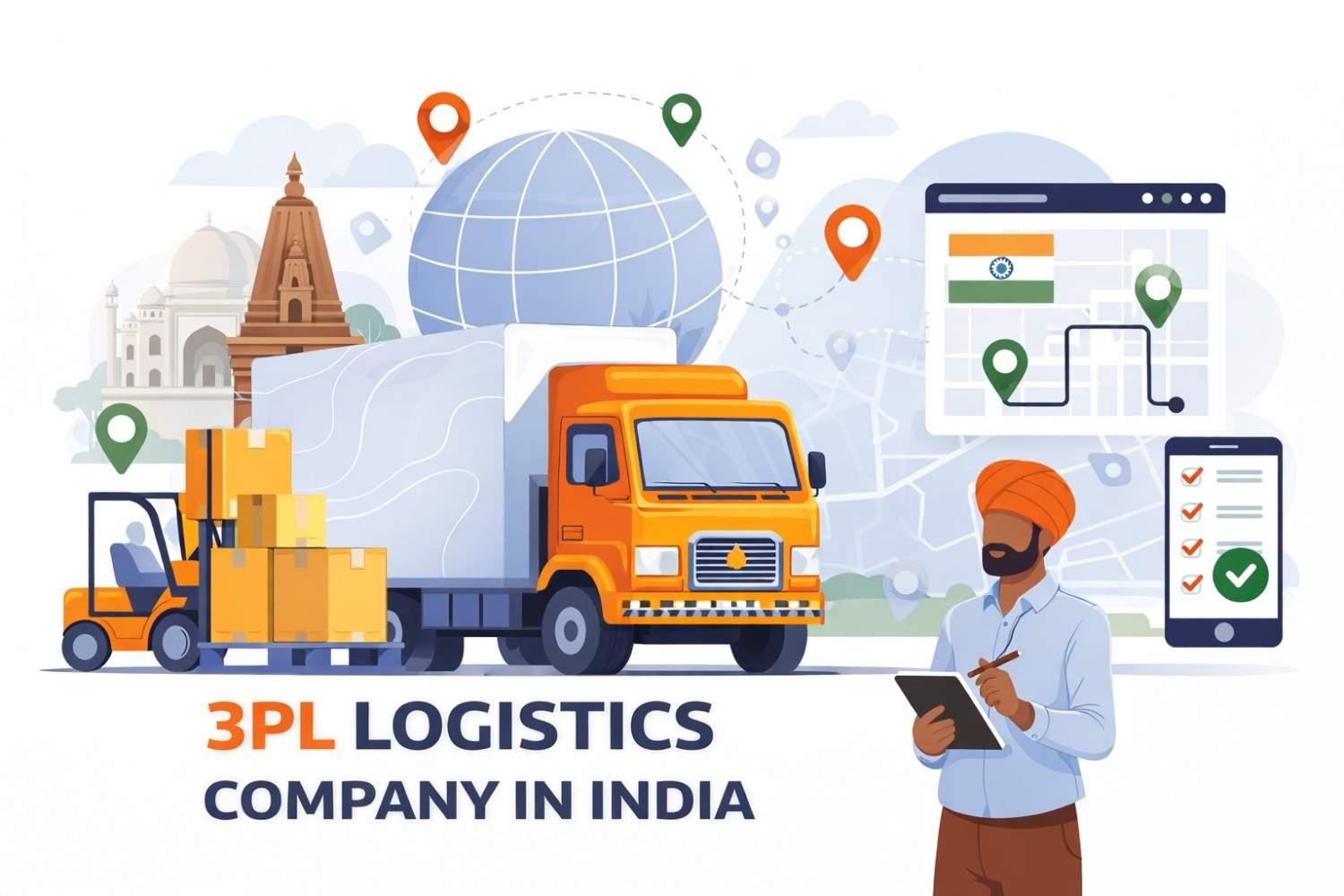
For many businesses, logistics starts becoming a problem long before anyone officially calls it a supply chain problem. Orders increase, warehouses get busier, dispatches become harder to track, and suddenly the team that was supposed to focus on sales or production is spending half its day coordinating vehicles and checking shipment updates. This is where a 3PL logistics company in India can become useful, but only if the business is outsourcing the right problems rather than simply outsourcing transportation.
The Indian 3PL market is also moving beyond the old idea of hiring an outside transporter. Current industry activity shows strong demand from 3PL operators, manufacturing and e-commerce, while warehousing networks are becoming more organized and technology-driven.
The important question, therefore, is not simply, “Which logistics company can move our goods?” It is, “Which logistics partner can take enough operational responsibility away from us without creating another layer of problems?”
The real reason businesses move towards 3PL
There is a point in business growth where managing logistics internally starts looking cheaper than outsourcing it. On paper, this often makes sense. You already have people handling dispatches, a few transport contacts, perhaps your own storage space, and established routes.
Then volume changes.
A company that once shipped 20 or 30 consignments a week may suddenly be handling several times that volume. The problem is not necessarily the transportation cost. It is the coordination around it. Someone has to check inventory, prepare orders, arrange pickups, match shipments with vehicles, monitor movement, resolve delivery exceptions and keep customers informed.
This is where most businesses struggle. Logistics becomes dependent on individual employees remembering what needs to happen next.
A capable 3PL arrangement changes that dependency. The objective is to create a repeatable operating system around storage, movement and fulfilment rather than simply handing over a pile of shipments to an outside party.
Honestly speaking, outsourcing logistics does not automatically make operations better. Poorly defined outsourcing can actually make things harder because the business loses direct control without gaining meaningful visibility.
What a 3PL logistics company in India should actually manage
A useful 3PL relationship usually sits between your business and the physical movement of goods. Depending on the requirement, that can include warehousing, inventory handling, order fulfilment, transportation management, distribution and related coordination.
But the depth of responsibility matters.
Suppose a manufacturer sends finished goods to distributors across several cities. If the provider only arranges trucks, the manufacturer still has to manage inventory, warehouse activity, dispatch planning and delivery follow-ups. That is transportation outsourcing, not necessarily a meaningful 3PL setup.
On the other hand, a properly designed model could connect inventory records with warehouse operations, order processing, shipment planning and final distribution. The business still owns its commercial decisions, but the operational workload becomes more structured.
This distinction is important when evaluating a third party logistics service provider. Ask what they will actually own operationally. A provider promising “end-to-end logistics” should be able to explain where their responsibility begins, where it ends and how exceptions are handled.
Inventory is often the hidden reason to consider 3PL
Transportation gets most of the attention because it is visible. Inventory problems are quieter and often more expensive.
A product may technically be available in the warehouse, but if the stock record is inaccurate, the wrong SKU is picked, or replenishment is poorly timed, the business still experiences a fulfilment failure.
This is why inventory management logistics services deserve more attention when comparing providers. Good inventory management is not simply counting boxes. It involves maintaining reliable records, organizing storage logically, reducing unnecessary handling and making sure the physical stock and system information remain aligned.
Consider a business selling hundreds of SKUs with different movement rates. Keeping fast-moving products buried behind slow-moving inventory creates unnecessary picking time. Poor warehouse organization can also increase errors even when the overall stock level looks healthy.
A 3PL partner should therefore be evaluated on its warehouse processes, not just warehouse capacity.
The question should be less about “How much space do you have?” and more about “How will our inventory actually be managed inside that space?”
Affordable 3PL logistics solutions are not necessarily the cheapest quote
Price comparisons can become misleading very quickly.
One provider may quote a lower transportation rate but charge separately for storage, handling, order processing, loading, unloading, packaging, returns or additional delivery attempts. Another may appear more expensive initially but include more operational activities within the agreed model.
This is why businesses looking for affordable 3PL logistics solutions should calculate the total operating cost rather than comparing one rate card against another.
There is another consideration that is often missed: internal employee time.
If three people currently spend several hours every day coordinating logistics, following up on deliveries and resolving routine issues, that labour has a cost even if it does not appear under the logistics budget. The same applies to delayed dispatches, inventory discrepancies and avoidable returns.
A sensible comparison looks at the complete operating picture. What are you paying today, what work is being performed internally, what would move to the 3PL, and what additional visibility or control would you receive in return?
That gives a much more realistic answer than simply choosing the lowest quotation.
End-to-end does not mean giving the provider unlimited responsibility
The phrase end-to-end 3PL logistics services sounds attractive, but businesses should be careful with it.
End-to-end should mean clearly connected activities, not an unclear promise to “handle everything.”
For example, a retailer may want the provider to receive inventory, store it, process orders, pick and pack products, dispatch shipments, coordinate transportation and manage returns. That is a genuine operational chain.
But commercial decisions such as pricing, product assortment, customer policies and sales forecasting may remain entirely with the retailer.
The strongest 3PL relationships are usually built around clearly defined responsibilities. Both sides know who owns inventory accuracy, who approves dispatches, who handles failed deliveries, who reports exceptions and who is responsible for resolving discrepancies.
Without that clarity, even a large logistics operation can become a daily blame game.
Choosing a provider based on your operating model
There is no universal 3PL model that works equally well for every business.
A manufacturer with palletized B2B shipments has different requirements from an e-commerce company processing hundreds of individual orders. A pharmaceutical distributor has different handling requirements from a furniture business. A company expanding into new regions may care more about network coverage than warehouse automation.
Before approaching a provider, businesses should understand their own shipment profile.
This includes order frequency, SKU count, storage requirements, delivery destinations, shipment size, return volume, seasonal peaks and service expectations. Without this information, it becomes difficult to judge whether a provider is genuinely suitable.
Technology should also be viewed practically. A dashboard is useful only when the underlying operational data is accurate. Real-time visibility cannot compensate for poor warehouse discipline or inconsistent scanning.
The same principle applies to automation. Automation can reduce repetitive work, but it should solve a real bottleneck rather than being included simply because it sounds impressive.
A practical decision-making guide before signing a 3PL contract
Before selecting a provider, I would focus on these areas rather than relying heavily on a sales presentation:
-
Operational fit: Can the provider handle your actual shipment profile, SKU complexity, storage needs and delivery pattern?
-
Visibility: Can your team see inventory, shipment status, exceptions and proof of delivery without repeatedly calling someone?
-
Responsibility: Are warehouse, transportation, returns and exception-handling responsibilities clearly documented?
-
Cost structure: Are storage, handling, transportation and additional service charges transparent?
-
Scalability: Can the operation handle seasonal spikes without forcing you into an entirely different model?
-
Exit terms: If the relationship stops working, can inventory, data and operations be transferred without major disruption?
One practical test is to ask the provider how they handled a difficult shipment recently. Not the successful ones. Ask about the shipment that went wrong. Their answer can reveal much more about operational maturity than a polished presentation.
What changes for 3PL in 2026?
The 2026 logistics environment is becoming more demanding because businesses expect faster decisions, better visibility and greater flexibility across their networks.
CBRE's 2026 research shows that 3PL operators remain a major driver of industrial and logistics demand in India, while warehousing is increasingly moving towards higher-quality and more technology-enabled infrastructure.
Technology will continue to influence this shift, particularly through transportation management systems, warehouse systems, automated reporting, route optimization and AI-assisted forecasting. But there is a practical limitation worth remembering: technology is only as useful as the operational data feeding it.
Another important shift is network design. Businesses are no longer thinking only about one large warehouse and a collection of trucks. Multi-location inventory, regional fulfilment, multimodal movement and smaller distribution points are becoming more relevant as delivery expectations change.
Recent industry reporting also points towards greater use of AI for demand forecasting, route planning and operational issue resolution as logistics networks become more complex.
For businesses, that means choosing a 3PL provider in 2026 is increasingly a decision about operational capability, data visibility and adaptability, not simply freight rates.
The right 3PL partner should make the business easier to run
A good logistics arrangement should eventually become almost boring from the client's perspective. Orders move, inventory records remain dependable, exceptions are visible, and the internal team does not need to chase five different people to understand where a shipment is.
That is the real value of outsourcing.
A 3PL logistics company in India should not merely take physical logistics work away from your employees. It should bring processes, accountability and visibility into areas that have become difficult to manage internally.
Before choosing a provider, look beyond the quotation and ask what operational problem you are actually trying to solve. If the answer is only “we need cheaper transportation,” a transport-focused solution may be enough. If the problem involves inventory, warehousing, fulfilment, distribution and growing operational complexity, a properly structured 3PL model may make far more sense.
The best outsourcing decision is not the one that transfers the most work. It is the one that removes the right work while keeping the business in control of what matters.
FAQs
1. What does a 3PL logistics company in India do?
Ans. A 3PL provider can manage activities such as warehousing, inventory handling, transportation, order fulfilment and distribution. The exact scope depends on the contract and the business's operating requirements.
2. When should a business consider using a 3PL provider?
Ans. 3PL becomes worth considering when logistics starts consuming significant internal time, shipment volumes increase, inventory becomes harder to manage, or the business needs to expand its distribution network without building the entire infrastructure itself.
3. How do businesses compare affordable 3PL logistics solutions?
Ans. Do not compare transportation rates alone. Review storage, handling, fulfilment, returns, additional delivery charges, technology costs and internal labour requirements to understand the actual total cost.
4. What are inventory management logistics services?
Ans. These services involve managing the physical storage and movement of inventory while maintaining accurate stock records. Depending on the operation, they can include receiving, put-away, picking, stock reconciliation and dispatch preparation.
5. How do I choose a third party logistics service provider?
Ans. Start with operational fit rather than brand size. Evaluate the provider's warehouse processes, network, technology, reporting, exception handling, pricing structure and ability to manage your specific shipment and inventory profile

 English
 Arabic
 Spanish
 Portuguese
 Deutsch
 Turkish
 Dutch
Dutch
 Italiano
 Russian
 Romaian
 Portuguese (Brazil)
 Greek
Greek