


Hybrid Hair Transplant in Dubai: Natural Hairline Strategy
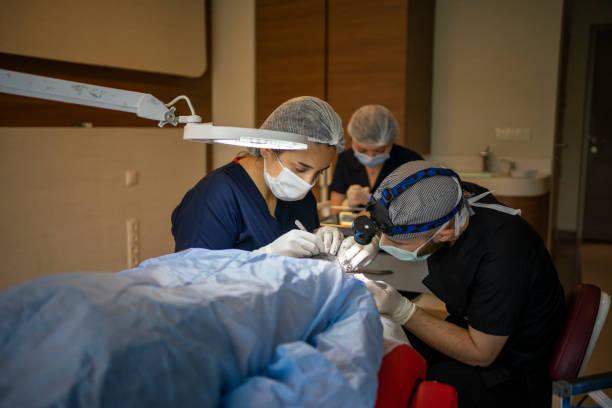
A convincing hair transplant begins with a hairline that looks appropriate before density is even considered. Hybrid Hair Transplant in Dubai can incorporate FUE and FUT harvesting while allowing the recipient plan to focus on hairline position, follicular-unit selection, emergence angle, irregularity, and the transition between transplanted and native hair.
Why Hairline Design Requires More Than Drawing a Line
The frontal hairline frames the face, making even small design errors highly visible.
A natural hairline is not a perfectly straight boundary between forehead and hair. It contains subtle irregularities, changes in density, different follicular-unit compositions, and directional transitions that vary from the center toward the temples.
For a hybrid procedure, the harvesting strategy may determine how many grafts are available, but hairline design determines how those grafts are visually organized.
Facial Proportions Influence Hairline Position
The appropriate hairline height is not identical for every patient.
Age, forehead proportions, facial shape, existing hairline characteristics, and anticipated future hair loss all influence the design.
A very low hairline may initially appear youthful, but it can consume substantial donor resources and become difficult to maintain if native hair behind it continues to thin.
Natural Hairlines Are Irregular
The leading edge normally contains fine hairs and subtle variation.
Creating an excessively uniform row of grafts can make the transplant detectable because natural hairlines rarely have identical spacing and thickness across the entire frontal border.
The objective is controlled irregularity rather than randomness.
Follicular-Unit Selection Shapes the Frontal Transition
Hairline reconstruction depends heavily on which grafts are selected for the leading edge.
A follicular unit containing one hair can create a finer visual transition than a multi-hair unit.
Single-Hair Grafts at the Leading Edge
Single-hair follicular units are often valuable along the most anterior portion of the hairline.
Their smaller diameter helps soften the transition from forehead skin to the denser region behind it.
The placement should still follow the patient's existing hair characteristics rather than applying an identical formula to every scalp.
Multi-Hair Units Behind the Transition
Further behind the leading edge, two- and three-hair follicular units can contribute more visual density.
This creates a graduated structure:
fine transition → intermediate density → stronger density.
Such progression is more consistent with natural hair architecture than placing high-density multi-hair grafts directly at the front.
Hair Emergence Angle Is a Major Visual Detail
The angle at which a hair exits the scalp influences how the hair lies against the forehead.
Even correctly selected grafts can look unnatural if recipient sites are created with inappropriate orientation.
The Frontal Scalp Has a Low Emergence Pattern
Hair near the frontal hairline generally emerges at a relatively shallow angle.
The recipient sites must accommodate this direction so the transplanted hairs blend with surrounding native hair.
Direction Changes Across the Scalp
Hair direction is not uniform from the hairline to the crown.
The frontal region generally projects forward, while the mid-scalp transitions toward different directional patterns. The crown follows a whorl.
A surgeon planning a hybrid restoration must therefore treat recipient-site direction as a three-dimensional anatomical problem.
Temple Design Requires Particular Restraint
The temples influence the perceived shape of the face and connect the frontal hairline with the lateral scalp.
Overbuilding this region can make the hairline appear artificially wide or squared.
Temple Angles Are Different From Central Hairline Angles
Hair around the temples changes direction as it approaches the side of the face.
Grafts should follow this transition rather than being placed according to the same orientation used in the central frontal region.
Conservative Temple Restoration Can Look More Natural
When donor supply is limited, it can be more effective to restore the most important structural areas rather than aggressively rebuilding every recess.
The final design should account for facial proportions and future hair-loss progression.
Why Hybrid Harvesting Can Support Hairline Planning
The hairline itself does not require a separate "hybrid" implantation technique. The hybrid element primarily concerns how donor grafts are obtained.
FUE and FUT can provide follicular units that are then allocated according to the recipient plan.
FUE Can Provide Selective Graft Types
Individual extraction can be useful when the surgical team needs to selectively harvest suitable follicular units from specific donor areas.
This may be relevant when particular graft characteristics are desired for the frontal transition.
FUT Can Contribute Additional Grafts
A FUT strip can provide a substantial number of follicular units from a defined donor region.
These grafts can contribute to density behind the hairline or other recipient areas where multi-hair units may be useful.
The exact allocation depends on the patient's donor characteristics and the surgical design.
The Techniques Serve Different Roles
The purpose is not to label the procedure as technologically superior because it uses two harvesting methods.
Instead, each technique can be used for the role it is best suited to perform within the overall restoration.
Hairline Density Should Be Graduated
A common misconception is that the hairline should have maximum density from the first millimeter.
In reality, a natural appearance depends on gradual density progression.
| Hairline zone | Typical visual objective | Graft characteristic |
|---|---|---|
| Leading edge | Soft transition | Primarily finer/single-hair units |
| Transitional zone | Blend with existing hair | Mixed follicular-unit composition |
| Frontal zone | Stronger visual density | Greater use of multi-hair units |
| Mid-scalp | Continuity | Density adjusted to available grafts |
| Crown transition | Natural directional flow | Orientation-specific placement |
These zones should not be interpreted as rigid measurements. The appropriate design varies with hair caliber, density, facial anatomy, and the patient's existing pattern.
Donor Supply Should Influence Hairline Ambition
A patient's desired hairline cannot be separated from available donor resources.
If the donor supply is limited, placing excessive grafts into the frontal region may reduce the ability to address the mid-scalp or crown later.
A Younger Hairline Can Require More Grafts
Lowering the hairline increases the surface area requiring coverage.
It can also create a larger long-term commitment because the transplanted hairline remains while native hair behind it may continue to recede.
Mature Hairlines Can Be More Sustainable
A slightly more conservative hairline can preserve donor resources while remaining aesthetically appropriate.
The goal is not to make a patient look artificially younger. It is to create a structure that remains compatible with the patient's facial proportions and future hair-loss trajectory.
Existing Native Hair Must Be Protected
Hairline restoration often occurs in areas where some native hair remains.
Creating recipient sites among existing follicles requires careful planning.
Miniaturized Hair Can Complicate Placement
Hair that is still present but progressively thinning may eventually disappear.
The surgeon needs to distinguish stable native hair from vulnerable miniaturized follicles when determining where transplanted grafts should be placed.
Recipient Sites Need Anatomical Precision
The location, angle, and direction of each recipient site must be controlled to avoid unnecessary trauma to surrounding native follicles.
This becomes particularly important when increasing density within an existing frontal region rather than treating completely bald skin.
Crown and Hairline Should Not Be Planned Independently
Patients sometimes focus entirely on the frontal hairline because it is the most visible area.
However, a restoration plan should consider the complete scalp.
If too many grafts are committed to a very dense hairline, there may be insufficient resources for the crown or mid-scalp.
Visual Balance Matters
The final appearance should be evaluated from multiple angles.
A strong frontal hairline combined with severe thinning behind it can create an abrupt contrast.
Strategic graft allocation can produce a more balanced result even when complete restoration is impossible.
The Crown Has Different Directional Anatomy
The crown follows a whorl, requiring a different implantation pattern.
This means grafts cannot simply be extended backward from the frontal hairline using the same direction.
A comprehensive restoration plan should therefore treat the scalp as multiple interconnected anatomical zones.
Age and Future Hair Loss Affect Hairline Design
Hairline reconstruction should be compatible with the patient's expected long-term pattern.
Androgenetic hair loss can continue even after a successful transplant.
A Stable Design Matters More Than a Temporary Appearance
A hairline that looks excellent immediately after surgery may become problematic if surrounding native hair continues to recede.
This is why surgeons evaluate current hair loss alongside potential future progression.
Donor Resources Need to Be Preserved
Future hair loss may require additional medical management or another restoration procedure.
Preserving donor capacity can provide more options later.
The objective is therefore to solve the present cosmetic problem without creating a future imbalance.
The Dubai Environment Adds Practical Considerations
Hairline design is primarily anatomical, but postoperative behavior can influence how comfortably the scalp heals.
Dubai's strong sunlight and hot climate make outdoor exposure an important consideration during early recovery.
Sun Protection During Healing
Recently treated skin can be more sensitive to environmental exposure.
Patients should follow the surgical team's specific instructions regarding sunlight and protective measures during recovery.
Air Conditioning Can Affect Scalp Comfort
Extended exposure to indoor air conditioning can contribute to a dry or uncomfortable scalp for some patients.
Following the prescribed washing and scalp-care routine is more appropriate than adding unapproved products during early healing.
What Happens During Hairline Mapping
Hairline planning should take place before harvesting begins because the recipient design determines how grafts will ultimately be allocated.
The surgeon assesses facial proportions, existing hairline characteristics, donor availability, and recipient density.
The Proposed Hairline Is Evaluated From Multiple Angles
A hairline can look appropriate from directly in front but appear unnatural from the side.
The surgeon should therefore consider frontal, oblique, and lateral perspectives.
The Design Should Work With Native Hair
The existing direction and density provide important reference points.
Rather than creating a completely independent hairline, the transplant should transition naturally into the patient's remaining hair.
Questions to Ask About Hairline Design
How Was the Hairline Position Chosen?
The answer should involve facial proportions, age, current recession, donor availability, and future hair-loss considerations.
Which Grafts Will Be Used at the Front?
Ask whether single-hair and multi-hair follicular units will be strategically distributed.
How Will the Temples Be Connected?
The surgeon should explain how the frontal and temporal regions will transition into one another.
How Will Future Hair Loss Affect the Design?
A credible plan should address what happens if native hair behind the transplanted hairline continues to thin.
How Will Donor Grafts Be Allocated?
Ask how the available follicles will be divided between the hairline, frontal region, mid-scalp, and crown.
Evaluating a Hybrid Hairline Plan
A strong hairline strategy should answer several questions before surgery:
- Is the proposed position compatible with facial anatomy?
- Does the design preserve sufficient donor resources?
- Are finer grafts available for the leading edge?
- Does implantation follow natural hair direction?
- Is density graduated rather than uniform?
- Are existing native follicles being considered?
- Does the plan account for future recession?
- Is the crown or mid-scalp being considered as part of the same restoration?
- Is the use of FUE and FUT justified by the patient's donor characteristics?
This type of assessment is more meaningful than comparing procedures by graft numbers alone.
The Strategic Investment
A natural hairline is not created by simply placing grafts along a drawn boundary. It depends on anatomy, follicular-unit selection, directional control, density transitions, facial proportions, and an understanding of how the patient's native hair may change over time.
For patients researching hair transplant planning in Dubai, these factors can help distinguish a carefully designed restoration from a procedure focused primarily on graft quantity.
Patients considering Hybrid Hair Transplant in Dubai can explore the surgical approach and arrange an individualized assessment through Tajmeels Clinic, where donor characteristics and recipient anatomy can be evaluated before a treatment plan is established.

 English
 Arabic
 French
 Spanish
 Deutsch
 Turkish
 Dutch
Dutch
 Italiano
 Russian
 Romaian
 Portuguese (Brazil)
 Greek
Greek