


Curd Benefits: Nutrition, Health, Skin and Digestion
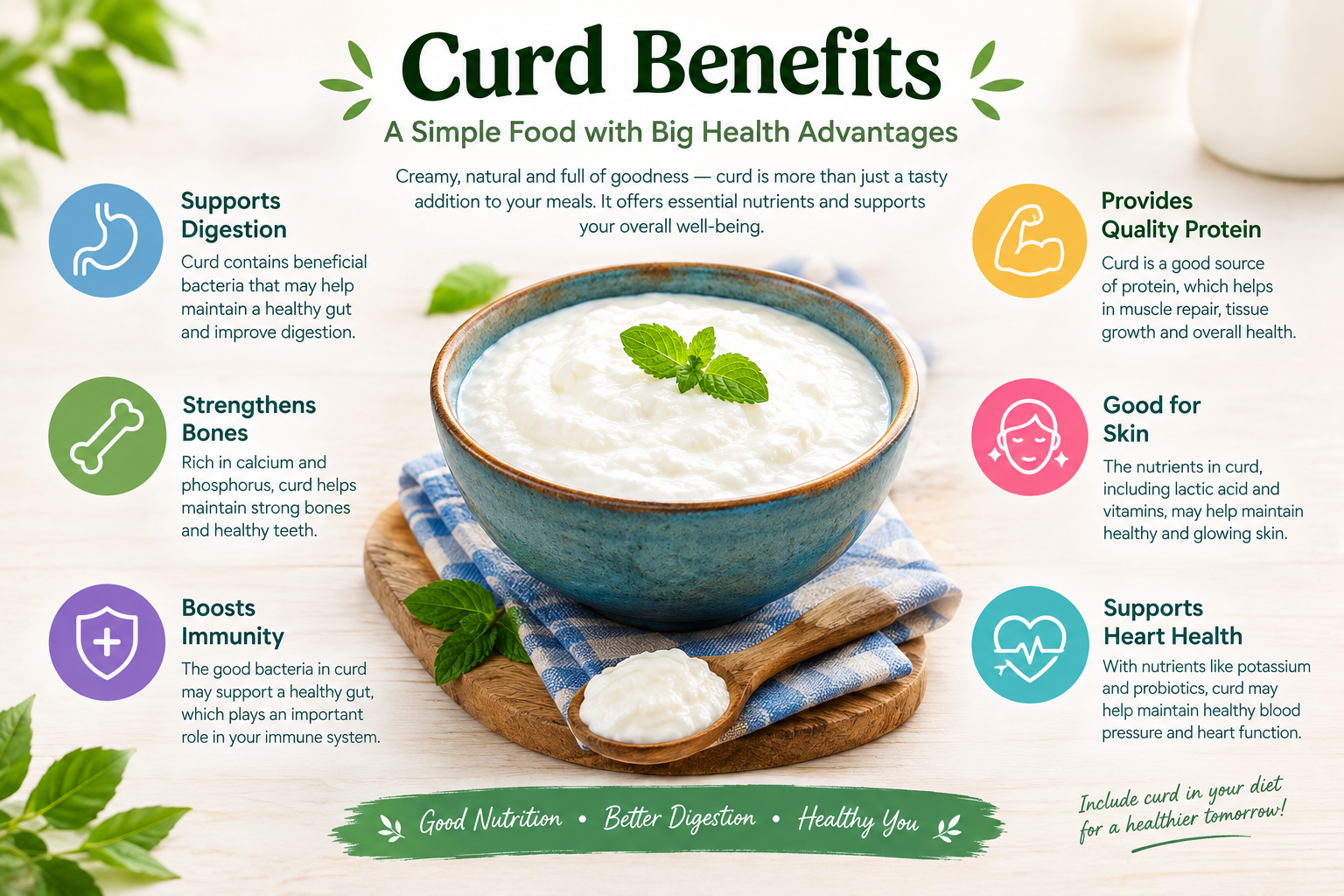
Curd is one of the most common fermented dairy products consumed by the people in India. It can be prepared with the help of beneficial bacteria and is commonly added to foods, snacks and traditional dishes. Curd offers other nutrients, including protein and calcium, as well as a refreshing taste. Knowing about the potential Curd Benefits can help you make use of it as a part of a balanced and nutritious diet.
Why Curd is Healthy?
Curd offers a variety of nutrients including proteins, calcium, phosphorus, and micronutrients; however, the nutritional content will depend on the milk used and how it is processed. In many curd products the microorganisms are also alive while undergoing fermentation.
Curds are also an easy-to-include food in a well balanced diet because of their nutritional value. If you want a plain curd, you can also go for a plain one, but you need to make sure that no excessive added sugar has been used.
Curd helps in digestion.
A digestive benefit of curds is something that is often mentioned. Dairy products that have been fermented with live cultures may contain helpful micro-organisms that can help maintain a healthy gut.
Curd is easier to digest than milk as some lactose is removed during the fermentation process. But there can be variation in tolerance. Those who are lactose intolerant or have a dairy allergy should choose dairy-free products that meet their needs.
Curd is beneficial for bone health.
Curd is a good source of calcium and phosphorus, both of which play an important role in maintaining healthy bones and teeth. Calcium in particular is needed for bone growth in small children and adolescents.
Curd can be incorporated with other calcium rich food items, which can help achieve overall nutritional requirement. It is still key to eating a diverse diet that includes vegetables, fruits, whole grains, proteins and dairy or dairy alternatives.
Curd Benefits for Skin
Curd is also occasionally included in traditional home skincare due to its creamy consistency and the presence of lactic acid, which is a naturally occurring acid. The use of the food product as a food product on the skin, however, is not recommended for all people because it can irritate or cause allergic reactions.
When it comes to skincare, specifically formulated products have a greater chance of being predictable. Good nutrition, which provides enough protein, vitamin A, vitamin C, minerals and fluids, can also help maintain healthy skin.
Benefits of Eating Curd Daily
Regular consumption of plain curd can be a simple method for individuals who are okay with dairy products to incorporate protein and calcium into their diet. Can be added in various combinations with fruits, vegetables, grains or the traditional dishes.
But you don't have to eat curd for every meal. The nutritional requirements are different for each age group, lifestyle, health status and food preference.
Before eating curd, you should consider the following items:
Pick fresh and properly stored curd and look for added sugar in packaged curds. Dairy curd is not recommended for people with milk allergies, and small quantities may be permitted for people with lactose intolerance, or they may need to find a lactose-free alternative.
Also read: Curd Benefits: A Nutritious Choice for Everyday Wellness
Final Thoughts
Its Curd Benefits include the fact that it is an important source of protein and calcium in the food and may be beneficial if live cultures are present, for digestive wellness. Regular consumption of plain curd as a part of a balanced, nutritious diet can be a simple approach to supplement the daily diet with nutritional value.

 English
 Arabic
 French
 Spanish
 Deutsch
 Turkish
 Dutch
Dutch
 Italiano
 Russian
 Romaian
 Portuguese (Brazil)
 Greek
Greek