


Web Development: Building a Strong Digital Presence
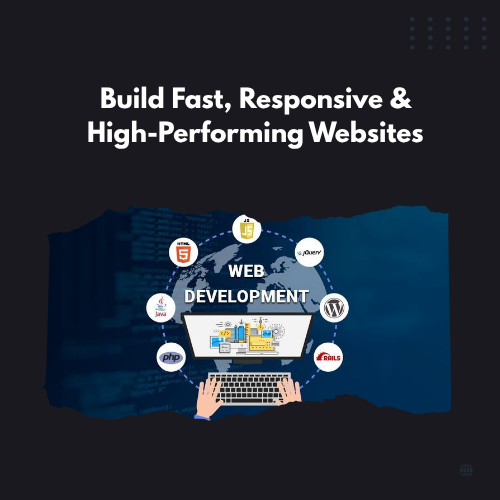
- Introduction to Web Development: Web development is the process of creating, developing, and maintaining websites and web applications. In today's digital world, a professional website is essential for businesses, organizations, startups, and individuals. A website acts as a digital identity and allows businesses to present their products, services, information, and brand to customers around the world.
- What Is Web Development? Web development involves different technologies, programming languages, tools, and processes used to build websites. It can range from a simple static website containing basic information to complex web applications such as e-commerce platforms, booking systems, educational portals, and business management applications.
- Importance of Web Development: A well-developed website can help a business create a strong online presence and build credibility. Customers often visit a company's website before making a purchasing decision. A professional website can provide important information, answer customer questions, showcase products or services, and encourage visitors to contact the business.
- Main Areas of Web Development: Web development is generally divided into several areas, including:
- Frontend development
- Backend development
- Full-stack development
- Database management
- Website security
- Website testing
- Website maintenance
- Frontend Development: Frontend development focuses on everything that users see and interact with on a website. It includes page layouts, menus, buttons, images, forms, animations, and other visual elements. Frontend developers use technologies such as HTML, CSS, and JavaScript to create interactive and user-friendly interfaces.
- HTML: HTML, or HyperText Markup Language, provides the basic structure of a webpage. Developers use HTML to create headings, paragraphs, images, links, forms, tables, and other website elements. It is one of the fundamental technologies that beginners usually learn when starting web development.
- CSS: CSS, or Cascading Style Sheets, is used to control the visual appearance of a website. It can define colors, fonts, spacing, layouts, borders, animations, and responsive designs. CSS allows developers to transform a basic HTML structure into an attractive and professional website.
- JavaScript: JavaScript is a programming language commonly used to add interactive and dynamic functionality to websites. It can be used for menus, sliders, form validation, animations, interactive tools, and many other website features. Modern web applications often depend heavily on JavaScript.
- Backend Development: Backend development focuses on the server-side part of a website. It handles processes that users do not directly see, such as data processing, authentication, databases, APIs, and business logic. Backend technologies can include PHP, Python, Java, Node.js, and .NET.
- Database Management: Many modern websites need databases to store and manage information. Databases can contain customer details, product information, orders, user accounts, blog posts, and other data. Developers use database technologies to securely store, retrieve, update, and manage this information.
- Full-Stack Development: Full-stack development involves both frontend and backend development. A full-stack developer can work on the visible interface as well as server-side functionality and databases. Full-stack skills are valuable for developing complete web solutions and understanding how different parts of a website work together.
- Web Design and Development: Web design and web development are closely related but have different focuses. Web design mainly concentrates on the visual appearance and user experience, while development focuses more on functionality and technical implementation. Successful websites require both attractive design and reliable development.
- Responsive Web Development: Responsive development ensures that websites work properly across smartphones, tablets, laptops, and desktop computers. A responsive website automatically adapts its layout and content to different screen sizes. Mobile-friendly websites provide better usability and help businesses deliver a consistent experience to visitors.
- Website Speed: Website speed is an important part of web development. Visitors expect websites to load quickly and respond smoothly. Developers can improve performance by optimizing images, reducing unnecessary code, using caching, improving hosting, and minimizing unnecessary scripts. Faster websites can provide a better user experience.
- Website Security: Security is essential for protecting websites, businesses, and users. Websites may store sensitive information such as customer accounts and transaction details. Developers can improve security by using HTTPS, strong authentication, secure passwords, updated software, protected databases, regular backups, and appropriate security measures.
- Search Engine Optimization: Web development plays an important role in SEO. Developers can create SEO-friendly website structures by improving page speed, mobile responsiveness, URLs, headings, internal linking, crawlability, and technical performance. A technically strong website can make it easier for search engines to discover and understand its content.
- Content Management Systems: Content Management Systems, or CMS platforms, allow users to create and manage websites without building every feature from scratch. Popular platforms include WordPress, Joomla, Drupal, Shopify, and Wix. CMS platforms can be useful for businesses that regularly update website content.
- E-Commerce Development: E-commerce development focuses on creating websites that allow customers to purchase products or services online. Important features can include product pages, shopping carts, payment systems, customer accounts, order management, product reviews, inventory systems, and secure checkout processes.
- Business Websites: Business websites help companies present their brand, products, and services online. A professional business website may include a homepage, about page, services page, portfolio, testimonials, blog, contact page, and lead-generation forms. The website should clearly communicate what the business offers and why customers should choose it.
- Landing Pages: Landing pages are designed to encourage visitors to complete a specific action. They are commonly used for digital advertising and lead-generation campaigns. A good landing page usually contains a clear headline, relevant information, strong benefits, an attractive call-to-action, and a simple conversion process.
- Web Development and Digital Marketing: Web development and digital marketing work together closely. SEO campaigns, Google Ads, social media marketing, email marketing, and content marketing often direct users to websites or landing pages. If the website is slow, confusing, or difficult to navigate, marketing efforts may become less effective.
- Website Testing: Testing is an important stage of web development. Developers should check whether pages, links, forms, buttons, images, menus, and other features work correctly. Websites should also be tested across different browsers and devices to identify technical problems before and after launch.
- Website Maintenance: Web development does not end after a website is launched. Websites require regular maintenance to remain secure, functional, and updated. Maintenance can include updating software, fixing broken links, adding new content, improving performance, checking security, updating plugins, and creating backups.
- Benefits of Professional Web Development: Professional web development can provide several benefits, including:
- Stronger online presence
- Better user experience
- Improved credibility
- Mobile compatibility
- Better website performance
- Increased lead-generation opportunities
- Improved SEO foundations
- Better security
- Easier content management
- Skills Required for Web Development: People interested in web development can develop technical and creative skills. Important skills include HTML, CSS, JavaScript, programming fundamentals, databases, responsive design, debugging, version control, website security, SEO basics, problem-solving, and communication.
- Artificial Intelligence in Web Development: Artificial intelligence is becoming increasingly useful in web development. AI-powered tools can assist developers with coding, debugging, testing, content organization, design ideas, and workflow automation. However, developers still need technical knowledge to review AI-generated results and ensure that websites are secure, functional, accessible, and suitable for users.
- Future of Web Development: The future of web development is expected to focus on faster websites, artificial intelligence, automation, advanced web applications, improved accessibility, stronger security, cloud technologies, and personalized user experiences. Developers who continue learning new technologies will be better prepared for changes in the industry.
- Career Opportunities: Web development offers various career opportunities. People can work as frontend developers, backend developers, full-stack developers, WordPress developers, web designers, UI developers, or freelance web developers. Businesses of different sizes require websites and web applications, creating opportunities for skilled professionals.
- Conclusion: Web development is an essential part of the modern digital world. A successful website needs more than attractive visuals; it should be fast, responsive, secure, user-friendly, and technically reliable. By combining frontend and backend technologies with good design, SEO, security, and regular maintenance, businesses can create websites that attract visitors and support their marketing and growth objectives. As technology continues to evolve, web development will remain an importa

 English
 Arabic
 Spanish
 Portuguese
 Deutsch
 Turkish
 Dutch
Dutch
 Italiano
 Russian
 Romaian
 Portuguese (Brazil)
 Greek
Greek