


Can Hair Transplant in Sharjah Correct an Uneven Hairline
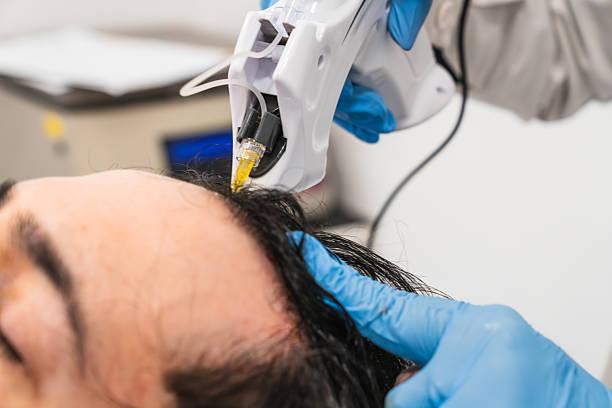
An uneven hairline can result from natural asymmetry, previous recession, trauma, surgery, or differences in hair growth between the two sides of the scalp. In selected cases, Hair Transplant in Sharjah can refine an irregular frontal outline by placing follicular units into carefully mapped areas while preserving the natural characteristics of the existing hairline.
The goal is not to create perfect geometric symmetry. A convincing correction should account for facial proportions, natural irregularity, hair direction, follicular-unit composition and the possibility of future hair loss.
Why Hairlines Are Naturally Asymmetric
Human facial and scalp anatomy is rarely perfectly symmetrical. Small differences between the left and right sides of the hairline can exist without indicating a medical problem.
Natural Differences Between Both Sides
One temple may sit slightly higher, one side may have a different recession pattern, or the central hairline may shift subtly toward one direction.
These variations can be normal and should be distinguished from progressive hair loss before transplantation is planned.
Recession Can Increase Asymmetry
Pattern hair loss does not always progress evenly. One side may recede faster than the other, producing an irregular frontal contour.
If the underlying loss is still progressing, simply filling the lower side may not create a stable long-term result.
Previous Procedures Can Alter the Hairline
Hairline irregularities can also follow earlier transplantation, scalp surgery or trauma. In these situations, the clinician needs to understand the existing graft pattern and tissue condition before adding new follicles.
The correction should work around the existing anatomy rather than treating the scalp as untouched recipient tissue.
How Hair Transplant in Sharjah Can Refine an Irregular Hairline
Hair transplantation can be used selectively when the uneven area has suitable recipient tissue and the donor region can provide appropriate follicles.
Mapping the Existing Contour
The current hairline should be evaluated from the front and from multiple angles. This helps identify whether the difference comes from the central hairline, temporal region, density, direction or actual recession.
A precise map can prevent unnecessary graft placement in areas that are already naturally positioned.
Defining the Desired Correction
The new contour should be based on facial proportions rather than simply moving one side until both sides measure identically.
Small asymmetries can remain appropriate if they preserve a natural appearance. Overcorrection may produce a hairline that looks artificial.
Blending New and Existing Hair
The transplanted area should transition gradually into the existing hair. This is particularly important when one side already has substantial native density.
A sudden increase in density can make the correction more visible instead of less noticeable.
The Anatomy of an Uneven Frontal Hairline
Hairline correction requires attention to several connected zones.
Central Frontal Region
The central area determines much of the perceived position of the hairline. Its shape should relate to the forehead and overall facial proportions.
The central boundary also needs to transition naturally toward each side rather than appearing independently designed.
Temporal Regions
The temples contribute to the outer contour of the hairline. Differences in temporal height, angle and density can make an otherwise balanced central hairline appear uneven.
Planning should therefore consider the frontal and temporal regions together.
Existing Hair Direction
Hair does not grow vertically from the scalp. It emerges at changing angles and directions across the frontal region.
Recipient sites should follow these patterns so new follicles integrate with existing growth instead of producing a visibly different orientation.
Graft Selection for Asymmetry Correction
Correcting a small irregularity often requires fewer grafts than rebuilding a substantially depleted frontal region, but the quality and composition of those grafts remain important.
| Planning factor | What is assessed | Why it matters |
|---|---|---|
| Asymmetry location | Center, side or temple | Defines the recipient area |
| Existing density | Hair surrounding the correction | Determines blending requirements |
| Hair caliber | Thickness of native and donor hair | Influences visual coverage |
| Follicular units | Number of hairs per graft | Guides graft selection |
| Direction | Natural growth pattern | Determines site angles |
| Donor supply | Available stable follicles | Limits extraction |
| Future progression | Potential additional recession | Shapes long-term design |
The purpose is to correct the specific irregularity without using donor follicles where they provide little additional visual benefit.
Why Perfect Symmetry Is Not Always the Goal
A perfectly mirrored hairline can look less natural than a slightly irregular one.
Natural Irregularity Creates Softness
The leading edge of a natural hairline typically contains subtle variations in density and position. Reproducing every contour as a perfectly straight or symmetrical line can make transplanted hair appear artificially designed.
Facial Proportions Matter More Than Measurements
The relationship between the hairline and facial features can be more important than matching the exact height of each side.
A small difference may be visually appropriate if it follows the person's natural anatomy.
Correction Should Be Proportionate
If only a limited area is visibly uneven, extensive transplantation may be unnecessary. A targeted approach can preserve donor follicles while addressing the specific concern.
This is especially relevant when the surrounding native hair remains dense.
Protecting Native Hair During Hairline Correction
Existing follicles can be just as important as the transplanted grafts.
Identifying Existing Follicles
Recipient-site planning should account for native hairs that are still growing within the intended treatment area. New sites should be positioned carefully around them.
This reduces unnecessary disturbance and allows transplanted follicles to complement rather than replace functioning native hair.
Considering Miniaturization
Hair that appears present today may still be progressively miniaturizing. If this possibility is identified during assessment, the treatment plan should account for potential changes in the surrounding density.
This helps prevent a correction from becoming visually isolated as native hair changes.
Preserving the Donor Zone
An uneven hairline rarely justifies unnecessary donor extraction. The donor area should be harvested conservatively so additional restoration remains possible if future hair loss occurs.
Correcting Asymmetry After a Previous Transplant
Some patients seek refinement because a previous procedure left the hairline uneven or inconsistent.
Existing Graft Assessment
Previously transplanted follicles may have different angles, densities or directions from the surrounding native hair. These characteristics should be mapped before new grafts are added.
Working Around Existing Follicles
New recipient sites may need to be placed between existing grafts rather than replacing them. This requires careful control of spacing and direction.
Addressing Visible Irregularities
The correction may involve density balancing, directional refinement or filling isolated gaps. The appropriate approach depends on what caused the visible asymmetry in the first place.
FUE and Implantation Considerations
Technique selection should follow the anatomy of the correction.
Follicular Unit Extraction
FUE allows individual follicular units to be harvested from the donor area. For a localized hairline correction, extraction can be planned around the amount and type of grafts actually required.
Recipient-Site Creation
Precise recipient-site creation determines the angle and direction of the new follicles. This is especially important when correcting an existing hairline because the new grafts need to merge with established growth.
Direct Implantation Approaches
Direct implantation can be considered in appropriate cases where controlled placement of prepared grafts fits the clinical plan. The technique itself is less important than achieving correct follicular orientation and integration.
When an Uneven Hairline May Need More Investigation
Not every irregular hairline is suitable for immediate transplantation.
Recently Changing Hairline
A rapidly changing contour may indicate ongoing hair loss. Establishing the stability of the pattern can be important before permanent graft placement.
Unexplained Localized Loss
A sudden or unusual area of hair loss should be clinically evaluated before assuming that it represents ordinary pattern recession.
Limited Donor Availability
If the donor area has insufficient stable follicles, even a small correction may need to be reconsidered. Donor resources should be evaluated before promising a specific density or contour.
Recovery After Hairline Refinement
Following transplantation, the treated area may experience temporary redness, swelling, crusting or sensitivity. The duration and intensity can vary according to the extent of treatment and individual healing.
Patients travelling between Sharjah and Dubai should arrange transportation and work commitments around their postoperative instructions. Direct sun exposure, heavy sweating and strenuous exercise may need to be restricted during the initial healing period.
The clinic's specific aftercare instructions should take priority over generalized recovery schedules.
Questions About Uneven Hairline Correction
Can a transplant make an uneven hairline more balanced?
Yes, selected irregularities can be refined by placing grafts into areas with reduced coverage or an altered contour.
Does the hairline need to become perfectly symmetrical?
No. Natural hairlines commonly contain subtle asymmetry, and preserving appropriate irregularity can support a more natural appearance.
Can only one side of the hairline be treated?
Yes. A localized correction may be appropriate when one side has significantly less coverage and the surrounding tissue is suitable.
How many grafts are needed for a small correction?
There is no universal number. The requirement depends on the size of the area, existing density, hair characteristics and desired refinement.
Can a previously transplanted hairline be corrected?
In selected cases, yes. Existing graft direction, density, donor availability and recipient-tissue condition need to be evaluated first.
Building a Balanced Hairline Without Making It Artificial
The most useful hairline correction is usually based on proportion rather than symmetry alone. The clinician should identify exactly where the imbalance originates, determine whether the underlying hair loss is stable and then plan graft placement around existing follicles.
For patients exploring individualized hair restoration, Tajmeels Clinic can be part of the consultation process for evaluating hairline anatomy, donor characteristics and targeted graft planning.
The consultation should also establish whether the desired change can be achieved conservatively. Preserving donor resources is particularly important when the patient still has substantial native hair and may experience further changes over time.
The Strategic Investment
An uneven hairline does not necessarily require a complete frontal reconstruction. In suitable cases, carefully targeted graft placement can refine an irregular contour while retaining the characteristics that make the hairline look naturally grown.
A Hair Transplant in Sharjah may be considered when the asymmetry is clinically appropriate for transplantation, the donor area can support the required grafts and the recipient tissue is suitable. The planning should prioritize natural proportions, directional consistency, native-hair protection and long-term donor preservation.
Patients considering hairline refinement can discuss the specific source of their asymmetry and available restoration options with Tajmeels Clinic in Dubai during an individualized consultation.

 English
 Arabic
 French
 Spanish
 Portuguese
 Deutsch
 Turkish
 Italiano
 Russian
 Romaian
 Portuguese (Brazil)
 Greek
Greek