


Is PRP Hair Treatment in Abu Dhabi Useful for Hair Shedding
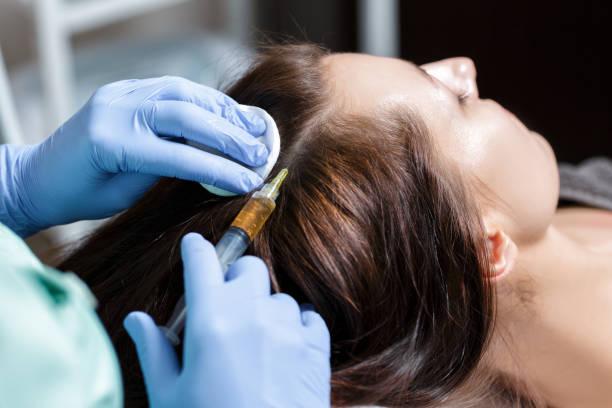
Not every episode of increased hair shedding requires a regenerative procedure, but persistent shedding can indicate that the hair-growth cycle has been disrupted. PRP Hair Treatment in Abu Dhabi may be useful in selected cases when shedding is associated with weakened or progressively thinning follicles, particularly when there is still visible hair that can be supported.
Understanding Persistent Hair Shedding
Hair naturally moves through phases of growth, transition, resting, and shedding. Seeing individual hairs on a pillow, brush, shower floor, or clothing is therefore normal to a degree.
The clinical concern begins when shedding becomes noticeably heavier, continues for an extended period, or is accompanied by reduced coverage, finer strands, or visible scalp.
Shedding Is Not the Same as Permanent Hair Loss
A shed hair is a strand that has completed its current cycle. Losing that strand does not automatically mean that its follicle has permanently stopped functioning.
This distinction is important when considering PRP. The treatment is directed toward the scalp and existing follicles, not toward replacing individual hairs immediately after they shed.
Why the Cause Matters
Persistent shedding can occur for different reasons, including temporary physiological stress, nutritional issues, hormonal changes, inflammatory scalp conditions, medication effects, or an underlying pattern of follicular miniaturization.
PRP should therefore be considered within a proper assessment rather than used as a universal response to every episode of hair fall.
Where PRP May Fit Into Hair-Shedding Management
PRP involves collecting a small amount of the patient's blood, processing it to concentrate platelets, and injecting the prepared plasma into selected scalp areas.
Supporting the Follicular Environment
The treatment is intended to deliver platelet-associated growth factors around targeted follicles. The goal is to create a more supportive local environment for follicles that remain capable of producing hair.
This can be particularly relevant when shedding occurs alongside gradual thinning.
Focusing on Areas With Reduced Hair Quality
A patient may notice increased shedding while also seeing that the replacement hairs are becoming progressively finer. That combination can suggest a broader follicular problem rather than isolated shedding alone.
A practitioner may therefore assess hair caliber and density alongside the reported amount of daily shedding.
Avoiding Treatment Based on Hair Count Alone
Counting every shed hair is rarely enough to determine the cause. Washing frequency, hair length, brushing habits, and styling can dramatically change the number of visible strands collected on a particular day.
Clinical assessment focuses more broadly on the pattern of change in the scalp.
What Should Be Assessed Before PRP
A consultation for persistent shedding should establish whether PRP is appropriate before treatment begins.
| Assessment | What It Helps Determine | Relevance to PRP |
|---|---|---|
| Shedding duration | Whether the problem is temporary or persistent | Helps establish the clinical pattern |
| Hair density | Whether coverage has declined | Identifies areas requiring attention |
| Shaft caliber | Whether hairs are becoming finer | Can reveal progressive miniaturization |
| Scalp condition | Whether inflammation or irritation is present | May require separate management |
| Distribution | Whether shedding is localized or diffuse | Influences treatment mapping |
| Medical history | Potential triggers or contributing factors | Helps avoid treating the wrong cause |
| Progress photographs | Whether the pattern is changing | Creates a useful baseline |
The objective is to identify what is happening to the follicles rather than simply responding to the number of hairs found after washing.
How Shedding Patterns Can Change the Treatment Approach
Different shedding patterns can point toward different clinical considerations.
Diffuse Shedding
When hair is being lost across much of the scalp, the practitioner may evaluate whether the reduction in density is uniform or whether certain regions are more affected.
Diffuse shedding combined with progressive thinning can require a broader scalp assessment than a small localized treatment area.
Frontal Shedding
If increased shedding is accompanied by changes around the frontal scalp, the hairline and surrounding regions may require separate examination.
The key issue is whether the frontal area is simply experiencing temporary shedding or whether the underlying follicles are also becoming progressively weaker.
Crown-Heavy Changes
A patient may notice increased hair loss while shampooing but only later recognize that the crown has become more visible.
Because the crown naturally has a whorl pattern, changes in scalp visibility should be evaluated under consistent lighting rather than judged from one photograph.
The Role of Injection Mapping in Shedding Cases
PRP treatment should be based on the actual distribution of follicular change.
Mapping the Affected Scalp
A practitioner can identify areas where hair density has declined, where strands appear finer, and where scalp visibility has increased.
The prepared PRP can then be administered to clinically relevant zones rather than treating every part of the scalp identically.
Adjusting for Diffuse Patterns
Diffuse thinning may require a wider treatment field than localized shedding. The treatment information for PRP describes individualized protocols according to the extent and distribution of hair loss.
This approach recognizes that shedding does not automatically create a uniform treatment requirement.
Protecting the Hairline From Over-Treatment
The frontal hairline contains finer transitional hairs and has distinct anatomy. If the primary issue is diffuse shedding elsewhere, the treatment plan should not automatically treat the hairline as though it has the same degree of loss.
Precision is more useful than simply increasing the treatment area.
PRP and the Hair Growth Cycle
Hair growth is governed by cycles, which explains why a treatment aimed at the follicular environment cannot produce an instant reduction in visible shedding.
The Growth Phase
During the active growth phase, follicles produce hair shafts that gradually increase in length. Supporting the follicular environment is intended to help maintain favorable conditions for this process.
The Resting and Shedding Phases
Some hairs naturally enter a resting stage before being released. A temporary increase in shedding can therefore occur without representing permanent follicular destruction.
Understanding these cycles prevents unrealistic expectations immediately after treatment.
Why Follow-Up Matters
Repeated clinical assessment can show whether shedding is stabilizing, whether density is being maintained, and whether the underlying pattern is changing.
A single treatment session cannot establish the long-term behavior of a progressive hair-loss condition.
Abu Dhabi Lifestyle Factors and Hair Shedding
The local environment can influence scalp comfort and everyday hair-care practices, although it should not automatically be considered the cause of persistent hair loss.
Heat and Sweating
Abu Dhabi's high temperatures can increase scalp perspiration, especially for people who spend time outdoors or exercise regularly. Keeping the scalp clean without aggressive scrubbing is generally preferable to repeatedly irritating the skin.
Strong Sun Exposure
Frequent ultraviolet exposure can affect the hair shaft and scalp surface. After PRP, treatment instructions should be followed carefully regarding direct sunlight and scalp protection.
Air-Conditioned Environments
Moving repeatedly between hot outdoor conditions and heavily air-conditioned indoor environments may leave some people's scalp and hair feeling dry.
Gentle washing, appropriate conditioning, and avoidance of unnecessary chemical or thermal stress can help protect the hair shaft while the underlying issue is being assessed.
When PRP May Be More Relevant Than a Hair-Shedding Concern Alone
The distinction between shedding and thinning is especially important.
Shedding With Stable Density
If a person experiences a temporary increase in shedding but overall density remains stable, the underlying cause should be investigated rather than assuming PRP is automatically required.
Shedding With Progressive Thinning
When shedding is accompanied by increasingly fine hairs, reduced coverage, or visible scalp, PRP may become more relevant as part of a broader hair-management strategy.
The treatment can be considered alongside other clinically appropriate approaches depending on the diagnosis.
For people researching hair restoration options in Dubai, understanding whether the primary issue is shedding, miniaturization, or established follicular loss is an important first step.
How Results Are Monitored
The number of hairs lost each day is difficult to measure consistently. More useful indicators can include changes in density, hair caliber, scalp visibility, and standardized photographs.
Baseline Photography
Images should ideally be taken from consistent angles with similar lighting and hair positioning. This makes comparisons more meaningful over time.
Scalp Examination
Magnified assessment may help identify changes that are not obvious in ordinary photographs, including differences in shaft diameter and follicular distribution.
Time-Based Evaluation
The PRP treatment information describes visible improvement over several months rather than immediately after injection. This means progress should be judged over an appropriate period rather than from short-term changes alone.
When PRP May Not Be the Right First Step
Persistent shedding can sometimes be a symptom of an underlying condition that requires separate investigation.
Sudden or Severe Shedding
Rapid, widespread hair loss deserves clinical assessment before proceeding with a cosmetic treatment protocol.
Scalp Inflammation or Infection
If there is significant redness, scaling, pain, or other signs of scalp disease, that issue may need to be addressed separately.
Suspected Nutritional or Hormonal Factors
Where medical history suggests a systemic contributor, appropriate medical evaluation may be more important than immediately focusing on scalp injections.
PRP can be useful in selected patients, but identifying the cause of shedding remains the foundation of effective management.
Questions About PRP Hair Treatment in Abu Dhabi and Hair Shedding
Can PRP Reduce Hair Shedding
It may help when shedding is associated with weakened follicles or progressive thinning, but it does not treat every possible cause of hair shedding.
How Long Does It Take to See Changes
Hair-related changes generally develop over several months. Individual response and the underlying cause influence the timeline.
Is Shedding After PRP Normal
Temporary scalp symptoms can occur after injections, but significant or unexpected hair loss should be discussed with the treating clinician rather than assumed to be part of the normal response.
Can PRP Treat Sudden Hair Loss
The cause of sudden loss should first be established. PRP may not be appropriate when shedding is caused by a condition requiring another form of treatment.
Does PRP Stop Every Type of Hair Fall
No. Its potential role depends on the underlying diagnosis and the condition of the existing follicles.
The Strategic Investment
Persistent shedding deserves more than a simple daily hair count. The useful clinical question is whether the scalp is experiencing temporary shedding, progressive follicular weakening, or another condition that requires a different approach.
For patients who need a structured assessment of ongoing thinning and are considering non-surgical hair restoration, Tajmeels Clinic provides PRP hair treatment with individualized scalp evaluation and treatment planning.

 English
 Arabic
 French
 Spanish
 Portuguese
 Deutsch
 Turkish
 Dutch
Dutch
 Italiano
 Romaian
 Portuguese (Brazil)
 Greek
Greek