


Historic Building Preservation: Choosing the Right Preservation Strategy
There's something more to historic building preservation than simply keeping an old structure standing. It is about deciding what parts of a building’s history are most important and finding a practical way to protect them.
Because every historic building is different, there is no single solution that works in every situation. Preservation, restoration, rehabilitation, adaptive reuse, and relocation are all possible approaches, depending on the building’s condition, its importance, and the problems surrounding it.
Preservation
Preservation is generally the least invasive approach. The main goal is to maintain a building as it exists, including the materials and changes that have accumulated over time. Preservation favors repairing and stabilizing it whenever possible, and does not replace old or worn features.
This approach recognizes that a building’s later additions can also be part of its history. A house, for example, may contain details from several different periods, and preservation attempts to keep that complete story intact.
Restoration
For some structures that have seen several different historic periods, this is considered the better approach. Restoration focuses on a particular period that has been identified as especially significant. Research becomes very important here. Old photographs, drawings, written records, and other reliable evidence can help determine what the building looked like during that period.
Features added later may be removed, while missing details can be recreated when there is enough evidence to support them. The goal is not to guess what an old building might have looked like, but to make a historically supported return to an earlier appearance.
Rehabilitation and Adaptive Reuse
This option is more flexible because it allows a historic building to continue serving a useful purpose. Necessary repairs, modern building systems, accessibility improvements, and other updates can be introduced while significant historic features are protected.
This approach is especially useful when an old building needs to function in modern life. A former warehouse, for instance, might become housing or a business while retaining its masonry, structural elements, or other defining characteristics.
Closely related to rehabilitation is adaptive reuse. In this case, the building receives a new purpose rather than being preserved solely for its original function. An abandoned factory could become a museum, a historic home could become an office, or an old commercial building could be converted into apartments. The building changes, but its character and important historic features remain visible. Giving a structure a useful future can often be one of the strongest ways to ensure that it survives.
Historic Building Preservation Includes Relocation
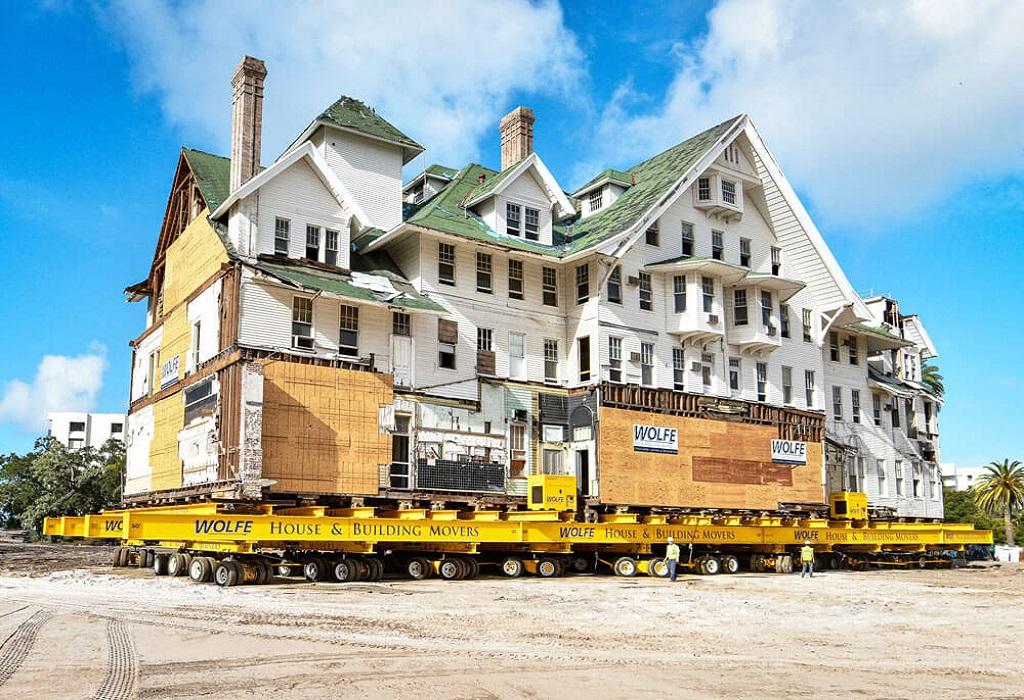
Sometimes, however, preserving or restoring a historic building may require moving it from its original site. Relocation may become necessary when the original site is threatened by development, environmental conditions, infrastructure projects, or other forces that cannot reasonably be stopped.
Moving a historic structure requires thoughtful planning, especially when its original setting is part of its historic significance. Even so, there are circumstances where relocation is the only realistic alternative to demolition. A carefully planned move can preserve the building’s physical fabric, craftsmanship, and architectural character when leaving it in place would mean losing all of them.
When relocation is the best way to preserve a historic building, it's important to choose expert building movers who have the experience and equipment to safely move historic buildings. Wolfe House & Building Movers, in particular, have completed several historic building preservation projects across the country. TThey are experienced in coordinating with contractors and historic organizations to ensure the building is safely relocated.
Historic building preservation is about balancing history with reality. Although keeping a structure in its original location may be ideal, saving the building itself can sometimes matter more when that location is no longer safe or viable. The best approach depends on the circumstances, but the underlying goal remains the same: give a valuable piece of the past a realistic chance to survive into the future.
For More Information About House Movers and Building Jacking Please Visit: Wolfe House & Building Movers.

 English
 Arabic
 French
 Spanish
 Portuguese
 Deutsch
 Turkish
 Dutch
Dutch
 Italiano
 Russian
 Romaian
 Greek
Greek