


Can FUE Hair Transplant in Dubai Treat Slow Crown Thinning?
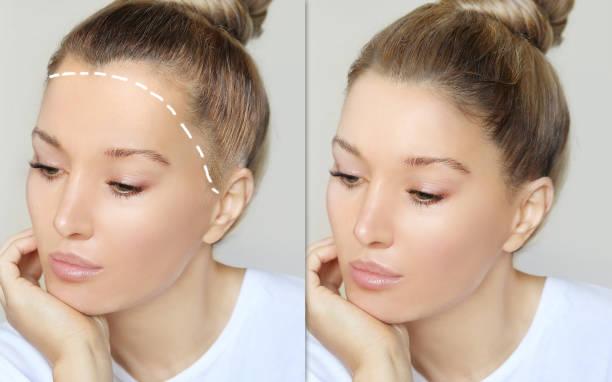
Slow crown thinning can be difficult to notice at first because the change usually develops gradually rather than producing an obvious bald patch. For suitable patients, FUE Hair Transplant in Dubai may be used to reinforce the crown when native follicles have become too sparse or miniaturized to provide sufficient visual coverage.
The crown requires particularly careful planning because hair does not grow in straight rows in this region. The natural vertex pattern curves around a central whorl, so graft direction, placement, density, and the relationship between existing and transplanted hair all influence the final appearance.
Why Slow Crown Thinning Needs a Different Assessment
Gradual vertex loss is not the same as sudden complete baldness. A patient may still have hundreds or thousands of functioning follicles across the crown, but those hairs may have become progressively finer.
Miniaturization Can Hide the Extent of Loss
Miniaturized crown hairs may remain visible under bright lighting but provide considerably less coverage than healthy terminal hairs. This can make the scalp appear increasingly visible even though the area is not completely bald.
A close examination can help determine how much native density remains and whether transplantation would add useful coverage between existing follicles.
The Crown Can Change Over Time
Pattern hair loss may continue beyond the area currently showing visible thinning. Treating only today's crown appearance without considering future progression can create an uneven distribution of density later.
This makes long-term planning particularly relevant for patients with slowly developing vertex loss.
How FUE Can Address a Thinning Crown
FUE removes individual follicular units from a suitable donor region and places them into carefully prepared recipient sites. For crown restoration, those sites must follow the existing growth pattern rather than being arranged in a simple linear grid.
Grafts Follow the Vertex Pattern
Crown hair typically changes direction as it approaches the whorl. The outer portions of the vertex can require a different angle and orientation from the central area.
A surgeon must account for these transitions when designing recipient channels. Correct alignment helps transplanted follicles blend with surrounding native hair instead of appearing artificially organized.
Density Is Not Uniform Across the Crown
The crown does not necessarily require identical density from its center to its outer perimeter. A gradual transition can produce a more integrated appearance while allowing the available donor supply to be used strategically.
This is especially important when the crown is thinning slowly rather than being completely bald.
When Native Crown Hair Is Still Present
Patients with slow thinning often have substantial native hair remaining. In these cases, transplantation may involve placing grafts between existing follicles instead of filling an empty recipient surface.
Interstitial Placement Requires Precision
Existing follicles create a more complex recipient environment. Recipient sites must be positioned carefully to avoid unnecessary trauma to native hair while following the established direction of growth.
The objective is to increase visual density without disrupting the follicles that are still contributing to coverage.
Existing Hair Can Improve the Visual Transition
Native hair provides an important background layer. When transplanted follicles mature, they can supplement this existing coverage and reduce scalp visibility.
The amount of improvement depends on the degree of miniaturization, hair caliber, contrast between hair and scalp, and the available donor characteristics.
How Donor Hair Influences Crown Restoration
The crown can consume a significant portion of a donor reserve if extensive thinning is present. The specialist therefore needs to assess whether treating the vertex is compatible with the patient's broader restoration priorities.
Hair Characteristics Affect Coverage
Thicker donor hairs may create greater visual mass than very fine hairs. Follicular units containing multiple hairs can also contribute useful density when appropriately placed behind the transition areas.
Donor hair should therefore be evaluated for more than its numerical availability.
The Donor Reserve Has to Support the Overall Plan
A patient may eventually experience additional frontal or mid-scalp thinning. Allocating too much donor supply to the crown at an early stage could limit options for those areas later.
A responsible plan considers the entire scalp rather than treating the crown as an isolated problem.
Why Early Crown Thinning Can Be Easy to Misjudge
Lighting and hairstyle can dramatically change how visible the crown appears. Overhead lighting, wet hair, short hairstyles, and naturally finer hair can make a moderate degree of thinning look more advanced.
Photographs Do Not Tell the Whole Story
A single photograph can show scalp visibility but cannot reliably establish follicular density or miniaturization. Clinical magnification and direct examination provide more useful information about the underlying condition.
This distinction matters when deciding whether transplantation is justified or whether existing follicles should first be monitored or supported through another treatment approach.
The Whorl Can Naturally Look Less Dense
The central crown whorl often exposes some scalp even in people without significant hair loss. Treatment planning should distinguish normal vertex geometry from true pathological thinning.
Overcorrecting a naturally visible whorl can lead to unnecessary graft use.
Choosing Grafts for a Slow-Thinning Crown
Crown restoration is not simply a matter of extracting any available follicular units. Grafts should be selected according to their characteristics and the location where they will be implanted.
Single-Hair Grafts Have a Different Role Here
Single-hair units can be useful around transition areas, but the crown often benefits from appropriately selected multi-hair units where greater visual mass is needed.
The surgeon can use the natural composition of available grafts to build a gradual density pattern rather than treating every recipient site identically.
Hair Direction Must Match Existing Growth
The angle and orientation of crown hair are essential to creating a natural result. Grafts placed against the existing pattern may become visually obvious even if the density is technically adequate.
Recipient-site design should therefore follow the circular or spiral growth characteristics of the patient's individual vertex.
When FUE May Not Be the Immediate Answer
Slow crown thinning does not automatically mean transplantation should happen immediately. If a substantial amount of native hair remains, the first priority may be establishing whether the loss is stable enough to justify surgical reinforcement.
Mild Thinning May Require Observation
When the crown still has good native coverage, monitoring progression can be appropriate. A specialist may evaluate changes over time before committing donor follicles to the area.
This approach can be particularly relevant when the patient's overall pattern of hair loss is still developing.
Advanced Miniaturization Changes the Equation
If many crown follicles have become severely miniaturized, the remaining hair may provide limited long-term coverage. In that situation, transplantation may become more relevant if the donor area can support the required restoration.
The decision depends on the individual pattern rather than the presence of crown thinning alone.
Planning the Crown Around Future Hair Loss
A successful crown plan should not be based solely on the appearance of the vertex on the day of consultation. Pattern progression can alter the relationship between the crown, mid-scalp, and frontal region.
Avoiding an Isolated Density Island
Creating a dense circular patch in the crown while surrounding hair continues to thin can produce an unnatural distribution. The transition between restored and native areas therefore needs to be considered from the beginning.
Preserving Flexibility
Patients with gradual loss may benefit from a restoration strategy that leaves options for future changes. This can mean selecting a realistic treatment boundary and avoiding unnecessary use of grafts in areas that may still respond to non-surgical management.
Long-term donor planning becomes more valuable when the expected progression is uncertain.
Dubai Recovery Considerations for Crown FUE
The local environment can influence how patients manage the early recovery period. Dubai's intense sunlight and high temperatures make direct scalp exposure something patients should take seriously while the recipient area is healing.
Frequent indoor air-conditioning can also leave the skin feeling dry or irritated. Following the clinic's prescribed cleansing, activity, and scalp-protection instructions is more important than trying to accelerate the normal healing process.
Patients who exercise outdoors should plan a temporary reduction in strenuous activity according to their surgeon's instructions. Swimming, intense workouts, and prolonged sun exposure may need to be restricted during the early postoperative period.
What Patients in Dubai Should Do Next
Someone noticing gradual crown thinning should begin with an assessment rather than assuming the visible whorl represents advanced hair loss. The consultation should examine native follicle density, miniaturization, donor characteristics, crown dimensions, and the likely progression of untreated areas.
The next step is to establish whether the crown actually needs transplanted grafts now and, if so, how the available follicles should be distributed. A detailed crown-focused hair restoration assessment can help connect the current vertex pattern with a longer-term treatment strategy.
Useful questions to discuss include:
Can slow crown thinning be treated before complete baldness develops?
Yes, selected patients may be considered for reinforcement while native hair remains, but the timing depends on the stability and progression of the loss.
Does crown FUE require a special implantation pattern?
Yes. Recipient sites need to follow the patient's natural vertex direction and changing angles around the whorl.
Can existing crown hair be preserved during transplantation?
Potentially. Recipient sites can be planned around native follicles, although the exact approach depends on their density and degree of miniaturization.
Will treating the crown stop future hair loss?
No. Transplantation adds follicles to the treated area but does not automatically prevent continued loss of untreated native hair.
The Strategic Investment
Slow crown thinning is best approached as a gradual hair-pattern change rather than simply a bald spot that needs filling. FUE may provide useful reinforcement for appropriate candidates, but the quality of the plan depends on understanding the vertex anatomy, existing native follicles, donor characteristics, and future progression.
A carefully mapped crown restoration can integrate transplanted follicles with the patient's existing growth pattern while keeping broader donor requirements in view. For patients considering treatment in Dubai, Tajmeels Clinic can provide an individualized assessment of whether FUE is appropriate for the current stage of crown thinning.

 English
 Arabic
 French
 Spanish
 Portuguese
 Deutsch
 Dutch
Dutch
 Italiano
 Russian
 Romaian
 Portuguese (Brazil)
 Greek
Greek