


Managed SIEM Providers: An Essential Security Layer for Indian BFSI
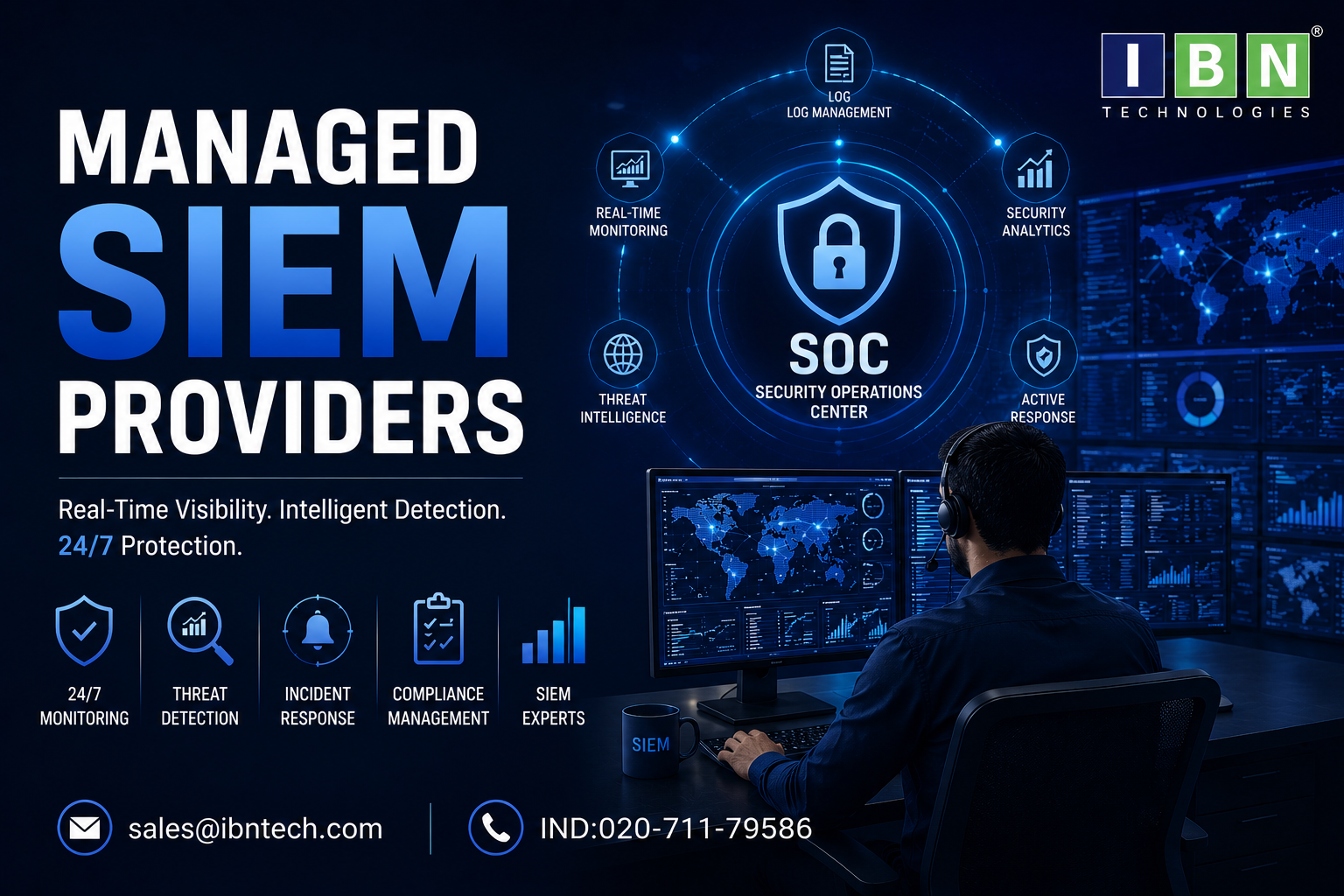
Why Security Monitoring Matters So Much in BFSI
Financial institutions operate environments where availability, confidentiality, integrity, and accountability are closely connected.
Banking platforms, financial applications, employee accounts, customer-facing systems, digital channels, and supporting infrastructure continuously generate security events. When these environments become more connected, the volume and variety of security information can also increase.
This makes centralized security monitoring an important part of a broader cybersecurity strategy.
Managed SIEM providers help BFSI organizations collect and correlate security information from relevant systems and support the monitoring and analysis of activity that could indicate suspicious behavior.
The objective is not simply to store large volumes of logs. It is to create useful security visibility so that relevant activity can be identified, investigated, and escalated according to established procedures.
For BFSI organizations, that visibility can also support security governance by helping teams maintain a clearer record of what is happening across monitored environments.
How Managed SIEM Supports BFSI Security Visibility
A SIEM platform can bring security events from multiple sources into a centralized monitoring environment.
Instead of examining individual systems separately, security teams can analyze related events together.
For example, an authentication event may appear routine when considered alone. If it occurs alongside unusual access activity, unexpected privilege changes, or other abnormal events, the combined pattern may warrant investigation.
This is where event correlation becomes valuable.
A managed service adds an operational layer around the technology. Depending on the agreed scope, this can involve continuous monitoring, alert analysis, investigation support, escalation, and reporting.
For BFSI organizations, this model can help connect security telemetry with an established security operations process.
What Makes BFSI Monitoring Different?
BFSI organizations face a combination of operational and security requirements that makes visibility particularly important.
Financial services depend heavily on digital systems. A disruption or security incident can affect employees, customers, transactions, applications, and supporting business operations.
At the same time, financial organizations often operate under formal governance and compliance requirements.
Security monitoring therefore needs to support more than incident detection.
It can contribute to:
- Understanding security activity across critical environments
- Identifying unusual access patterns
- Supporting investigation of suspicious events
- Maintaining relevant security records
- Improving visibility for security teams
- Supporting internal security reviews
- Providing information that may assist compliance processes
The exact monitoring requirements will vary according to the organization, systems, data, and applicable regulatory obligations.
Why Log Collection Alone Is Not Enough
A common misconception is that collecting logs automatically creates effective security monitoring.
It does not.
A SIEM can receive security data, but organizations still need to determine which sources are relevant, which events require attention, and how suspicious patterns should be investigated.
Poorly configured monitoring can create two opposing problems.
The first is insufficient visibility. Important systems or event types may not be adequately monitored.
The second is excessive alert volume. Security teams may receive too many low-value alerts, making it harder to focus on events that require investigation.
Effective monitoring requires an ongoing operational process.
Detection logic may need adjustment as infrastructure changes. Alert patterns should be reviewed. New systems may introduce new sources of security information.
A managed approach can help maintain this operational discipline.
The Role of SOC Service Providers in India
A SOC provides the operational environment in which security monitoring and analysis take place.
When BFSI organizations evaluate soc service providers in india, they should consider how the SOC function works with SIEM rather than assessing either capability independently.
The SIEM can provide centralized security information and event correlation.
The SOC team can monitor that information, investigate relevant alerts, and follow established escalation procedures.
This creates a connection between technology and security operations.
A useful SOC model should also have clearly defined responsibilities. The organization needs to understand which activities are handled by the service provider and which decisions remain with its internal security and technology teams.
A Security Event Through the BFSI Monitoring Process
Consider a simplified example.
An employee account generates several unusual authentication events. Shortly afterward, the same account accesses a sensitive system from an unexpected location or through an unusual pattern.
The individual events may not provide enough context when examined separately.
A SIEM can correlate the activity.
The monitoring function can then identify the resulting alert for further analysis.
An analyst can examine related activity and determine whether the behavior appears consistent with legitimate business activity or requires escalation.
If the event meets the organization's defined incident criteria, it can move into the appropriate response process.
This example illustrates why security monitoring should be treated as a workflow rather than simply a technology deployment.
Choosing a Managed SIEM Approach for BFSI
BFSI leaders should evaluate a managed SIEM service according to their specific security environment.
Start With Critical Assets
Identify the systems and applications where security visibility matters most.
This could include infrastructure supporting financial services, authentication systems, applications, endpoints, and other critical technology components.
The goal is to establish what needs monitoring before determining how the service should be configured.
Define Monitoring Objectives
Organizations should decide what they want monitoring to accomplish.
Objectives may include identifying suspicious authentication activity, detecting unusual system behavior, supporting investigation, improving visibility, or strengthening security operations.
Clear objectives make it easier to determine whether the managed service is delivering meaningful value.
Establish Escalation Rules
A monitoring service needs a defined path for significant events.
BFSI organizations should establish how alerts are categorized, when internal teams are contacted, what information is included in an escalation, and who owns subsequent decisions.
Review Reporting
Security leaders need visibility into the operation of the monitoring service.
Reporting should help stakeholders understand significant events, recurring patterns, monitoring activity, and areas requiring attention.
Consider Environment Changes
Financial organizations continuously modify their technology environments.
New applications, infrastructure, integrations, users, and digital services can affect monitoring requirements.
The managed SIEM model should therefore be capable of adapting to relevant changes.
A Practical BFSI Monitoring Checklist
Before implementing or reviewing a managed SIEM arrangement, BFSI organizations can consider:
- Identify critical applications and infrastructure
- Map important security data sources
- Define the events that require monitoring
- Establish alert priorities
- Document investigation and escalation procedures
- Clarify provider and internal-team responsibilities
- Review how detection logic is maintained
- Establish appropriate reporting requirements
- Align monitoring with internal security policies
- Review applicable regulatory and contractual obligations
- Reassess monitoring coverage when the environment changes
This approach keeps the focus on operational requirements rather than treating SIEM as a standalone product.
Compliance Should Support the Security Process
BFSI organizations operate within a regulatory environment where security, data protection, operational resilience, and recordkeeping can be important considerations.
In India, applicable requirements may vary depending on the type of financial organization and the services it provides. Organizations should therefore determine their specific obligations rather than assuming that a single monitoring configuration satisfies every requirement.
Where RBI requirements or other applicable regulatory frameworks apply, security monitoring should be considered as part of the organization's wider control environment.
ISO/IEC 27001 may also be relevant for organizations establishing or maintaining an information-security management framework.
A managed SIEM service can support visibility and security operations, but it should not be presented as a substitute for compliance governance.
The organization remains responsible for understanding and meeting the requirements applicable to its operations.
Connecting Monitoring With Incident Response
Security monitoring becomes more useful when it connects with a broader incident-management process.
An alert should lead somewhere.
If suspicious activity is identified, the organization should know who investigates it, who makes response decisions, how evidence is handled, and how the incident is documented.
This does not mean every alert becomes a formal security incident.
Instead, monitoring helps provide an early signal that allows the organization to assess activity according to predefined procedures.
For BFSI organizations, establishing this connection can help prevent security monitoring from becoming an isolated technical function.
Contact Us:
IND- 02067680404
IBN Technologies Ltd.
E-mail: - sales@ibntech.com

 English
 Arabic
 French
 Spanish
 Portuguese
 Deutsch
 Turkish
 Italiano
 Russian
 Romaian
 Portuguese (Brazil)
 Greek
Greek