


Polyurethane Sandwich Panel Supplier UAE For High Performance Building Insulation
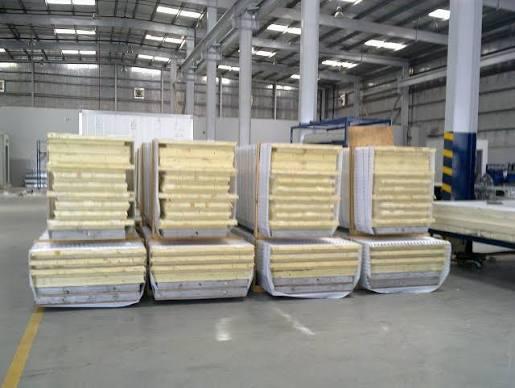
Polyurethane (PUR) and polyisocyanurate (PIR) sandwich panels are composite building materials engineered to deliver maximum thermal efficiency, structural integrity, and weather protection. In the United Arab Emirates (UAE), where ambient summer temperatures routinely exceed 45°C (113°F), selecting the right Polyurethane Sandwich Panel Supplier UAE is critical for reducing HVAC operational costs, meeting local green building mandates, and preventing long-term structural degradation caused by extreme thermal stress.
An ideal insulation panel balances three primary elements: an insulating rigid foam core, durable outer metallic skins (typically pre-painted galvanized iron or aluminum), and double-tongue-and-groove jointing systems that eliminate thermal bridging.
+-------------------------------------------------------------------+
|               Top Outer Facing: Galvanized Steel / Aluminum       |
+-------------------------------------------------------------------+
|                                                                   |
|              Polyurethane (PUR / PIR) Rigid Foam Core             |
|                                                                   |
+-------------------------------------------------------------------+
|             Bottom Inner Facing: Galvanized Steel / Aluminum      |
+-------------------------------------------------------------------+
What Makes Polyurethane Panels Essential for UAE Architecture?
The primary driver behind adopting thermal insulation panels UAE developers rely on is thermal conductivity ($k$-value). Polyurethane rigid foam features one of the lowest thermal conductivity ratings among commercial insulation materials—typically between $0.020 \text{ W/m}\cdot\text{K}$ and $0.023 \text{ W/m}\cdot\text{K}$.
Compared to alternative cores like mineral wool ($0.035\text{–}0.040 \text{ W/m}\cdot\text{K}$) or expanded polystyrene ($0.033\text{–}0.038 \text{ W/m}\cdot\text{K}$), polyurethane achieves higher thermal resistance ($R$-value) with a significantly thinner profile.
Core Comparison Matrix
| Core Insulation Type | Thermal Conductivity (W/m⋅K) | Moisture Absorption Resistance | Primary Advantage | Typical UAE Application |
| PUR (Polyurethane) | ~0.022 | High (Closed-cell structure) | Superior cost-to-thermal ratio | Cold stores, industrial roofs |
| PIR (Polyisocyanurate) | ~0.020 | High (Closed-cell structure) | Enhanced fire reaction rating | Commercial facades, logistics hubs |
| Rockwool / Mineral Wool | ~0.038 | Moderate to Low | Non-combustible (A1 rating) | High-rise perimeter walls |
| EPS (Polystyrene) | ~0.035 | Moderate | Lightweight, basic insulation | Temporary site offices |
Beyond core insulation values, ambient humidity in coastal areas like Dubai and Abu Dhabi creates vapor drive—where warm, moist air constantly pushes toward cooler indoor environments. High-density PUR/PIR cores feature a closed-cell structure (exceeding 95%), making them virtually impermeable to water vapor and resistant to mold growth.
Technical Specifications and Performance Factors
Selecting the appropriate panel configuration requires evaluating structural load requirements, panel thickness, coating types, and joint designs.
1. Foam Density and Thickness
-
Density: Standard structural PUR/PIR cores operate at a nominal density of 38–42 kg/m³. This density yields optimal compressive strength (typically $\ge 100 \text{ kPa}$) to withstand wind loads and handling stress.
-
Core Thickness: Ranging from 30 mm for basic cladding up to 200 mm for deep-freeze storage facilities operating at -25°C.
2. Facing Skins and Anti-Corrosion Coatings
Because atmospheric salinity near Gulf coastal zones accelerates oxidation, raw steel skin performance depends heavily on surface coatings:
-
Polyester (PE): Standard indoor or low-exposure external applications.
-
Polyurethane (PU) / PVDF: Recommended for aggressive marine or industrial environments to resist UV degradation and chemical corrosion.
-
Substrates: Sub-coatings should feature minimum $Z180$ to $Z275$ galvanization or Aluzinc ($AZ150$) protection.
3. Joint Geometry and Airtightness
Continuous double-tongue-and-groove joint profiling ensures tight mechanical interlocking. Applying factory-applied foam gaskets or on-site sealant beads inside the joint gap maintains air permeability standards required by municipal regulations.
Key Applications Across the Gulf Region
Polyurethane sandwich panels serve a wide range of building envelope applications throughout the GCC region:
                      +-----------------------------+
                      | Polyurethane Panel Uses     |
                      +--------------+--------------+
                                     |
         +---------------------------+---------------------------+
         |                           |                           |
         v                           v                           v
+-----------------+         +-----------------+         +-----------------+
| Cold Storage &  |         | Industrial &    |         | Modular &       |
| Logistics Hubs  |         | Warehouses      |         | Clean Rooms     |
+-----------------+         +-----------------+         +-----------------+
Cold Storage and Food Logistics
Cold rooms, processing facilities, and distribution hubs rely on 100 mm to 150 mm thick PIR panels to maintain stable interior temperatures despite intense outdoor heat. Vapor-tight joints prevent ice buildup within the core.
Commercial and Industrial Cladding
Industrial warehouses and manufacturing plants use corrugated roof sandwich panels and flat wall panels for rapid envelope enclosure, reducing overall structural steel weight requirements.
Controlled Environments and Cleanrooms
Precision pharmaceutical and micro-assembly facilities require smooth, easily sanitized interior surfaces. Flush-joint PUR panels coated with anti-bacterial linings prevent dust accumulation and withstand frequent chemical washdowns.
Evaluating Polyurethane Panel Suppliers in the UAE
When sourcing a Polyurethane Sandwich Panel Supplier UAE contractors trust, project managers should look beyond price per square meter and evaluate technical capabilities and compliance:
1. Civil Defence Approvals and Regulatory Compliance
Verify whether the supplier's PIR formulations carry valid approvals from local authorities, such as the Dubai Civil Defence (DCD) or Abu Dhabi Civil Defence. Ensure the core formulations meet recognized international fire testing standards (such as ASTM E84, EN 13501-1, or FM Approvals).
2. Manufacturing Technology (Continuous vs. Discontinuous)
-
Continuous Injection Lines: Preferred for long structural roof and wall panels. Provides uniform core density, seamless surface finish, and higher daily production output.
-
Discontinuous Presses: Suitable for specialized, high-thickness cold storage doors, irregular corner panels, or small custom orders.
3. Material Traceability and Quality Assurance
Inquire about the origin of steel coils and chemical polyol/isocyanate inputs. Reputable manufacturers provide mill test certificates ($MTC$), fire laboratory reports, and thermal testing documentation ($ASTM C518$) for every production batch.
Common Installation Pitfalls and How to Avoid Them
Even high-specification insulation panels can underperform if installed incorrectly. Avoid these common jobsite mistakes:
-
Unsealed Joint Interfaces: Failing to apply continuous vapor sealants within panel joints allows humid ambient air to penetrate, leading to condensation and thermal bridging.
-
Over-Tightening Fasteners: Over-driven screws compress the outer facing skin, cracking the protective coating and exposing the core to moisture ingress.
-
Improper Field Cutting: Using abrasive cutting discs generates high-temperature sparks that burn protective metal coatings and ignite the foam core. Always use nibblers or cold-cut circular saws.
-
Neglecting Thermal Expansion Gaps: Long metal panels expand and contract under severe temperature swings. Fastener placement must accommodate thermal movement to prevent buckling.
Frequently Asked Questions
What is the difference between PUR and PIR sandwich panels?
PUR (Polyurethane) and PIR (Polyisocyanurate) share similar base chemistry, but PIR incorporates higher ratios of isocyanate processed at elevated temperatures. This creates ring-like chemical structures that enhance thermal stability and flame resistance, allowing PIR to pass stricter fire safety standards.
What thickness of polyurethane panel is recommended for UAE warehouses?
For standard ambient warehouses, a 50 mm to 80 mm wall and roof panel profile typically meets local energy efficiency codes. Cold storage facilities operating below freezing require 120 mm to 200 mm core thicknesses depending on target operating temperatures.
How do sandwich panels improve energy efficiency in hot climates?
Sandwich panels combine a low-conductivity foam core with airtight joints. This system drastically reduces conductive heat gain through walls and roofs, easing the mechanical load on air conditioning systems and reducing electricity consumption.
Can polyurethane sandwich panels be used for roof applications?
Yes. Roof-specific sandwich panels feature an engineered trapezoidal outer skin that increases structural load-bearing capacity and facilitates water drainage during seasonal rainfall.
Are polyurethane panels resistant to Gulf coastal conditions?
Standard steel face panels can corrode if left untreated in coastal marine zones. To ensure long-term durability, specify marine-grade coatings like PVDF, Polyurethane, or high-build synthetic coatings applied over hot-dip galvanized steel.
Implementation Technical Checklist & Implementation Strategy
Before finalizing panel purchases, review this checklist with your structural engineer and procurement team:
-
[ ] Thermal Calculations: Verify that overall assembly $U$-values meet municipal building codes ($W/m^2\cdot K$).
-
[ ] Fire Compliance: Confirm PIR cores hold valid local Civil Defence certificates.
-
[ ] Coating Specs: Select facing coatings based on distance to the coastline and ambient atmospheric conditions.
-
[ ] Handling & Rigging: Plan jobsite storage to keep panels elevated off wet ground and protected from direct sunlight before installation.
Technical Recommendations for Web & Technical Teams
-
Suggested Schema Markup: Implement
ProductandFAQPagestructured data to help search engines accurately render product details and direct answers. -
Original Assets: Include high-resolution diagrams of joint interlocking mechanisms and real project installation photos with descriptive alt text (e.g.,
alt="Worker installing double tongue and groove PIR panel in cold storage construction"). -
Indexing Check: Ensure the hosting server returns proper HTTP 200 responses, maintains stable URLs without tracking parameters, and is fully accessible via Googlebot.

 English
 Arabic
 Spanish
 Portuguese
 Deutsch
 Turkish
 Dutch
Dutch
 Italiano
 Russian
 Romaian
 Portuguese (Brazil)
 Greek
Greek