


Can FUSS Hair Transplant in Dubai Treat Norwood Hair Loss
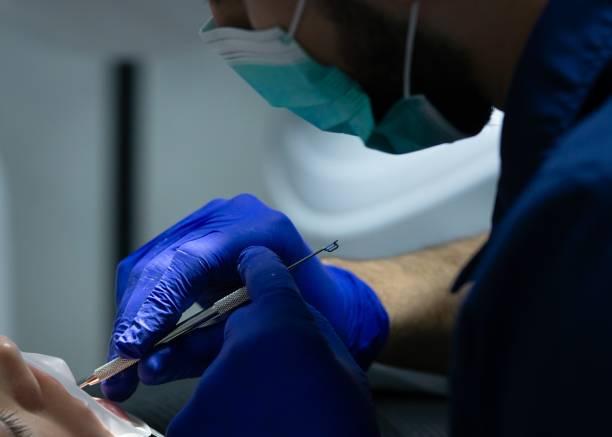
FUSS Hair Transplant in Dubai can be considered for suitable patients with Norwood-pattern hair loss when the donor region contains enough viable follicles and the pattern is appropriate for surgical restoration. The Norwood stage helps describe the distribution of hair loss, but it does not by itself determine candidacy; donor quality, progression, recipient area and long-term planning remain essential.
Norwood-pattern loss can involve progressive frontal recession, temple loss, mid-scalp thinning and crown changes. Each pattern requires a different allocation of donor follicles.
Understanding Norwood-Pattern Loss
Frontal recession
Earlier stages may show recession at the temples and changes in the frontal hairline. Restoration at this stage often centers on creating a conservative, natural transition.
Mid-scalp involvement
As loss progresses, the thinning area can expand behind the frontal hairline. This increases the importance of donor allocation because the restoration zone becomes larger.
Crown involvement
Advanced patterns may include significant vertex loss. Crown restoration requires attention to the rotational growth pattern and can require substantial graft resources.
How FUSS Hair Transplant in Dubai Fits Norwood Planning
Strip harvesting
FUSS removes a donor strip from the scalp and uses microscopic dissection to separate follicular units for implantation.
Stage-specific planning
The Norwood pattern helps establish where loss has occurred, but graft planning must be individualized to the patient's actual scalp.
Long-term donor management
The donor area needs to support the current restoration plan while leaving appropriate resources for potential future needs.
Norwood Pattern and Graft Allocation
| Norwood pattern characteristic | Main restoration issue | Planning emphasis |
|---|---|---|
| Temple recession | Frontal corners appear wider | Natural temple transition |
| High frontal hairline | Increased forehead exposure | Conservative hairline design |
| Frontal and mid-scalp thinning | Larger recipient area | Balanced graft allocation |
| Crown thinning | Vertex scalp visibility | Whorl-oriented placement |
| Extensive frontal-crown loss | Limited donor relative to area | Prioritization and staged planning |
Why Norwood Stage Alone Is Not Enough
Donor density varies
Two people with similar visible hair loss can have very different donor reserves.
Hair caliber varies
Thicker donor hair can produce greater visual coverage than finer hair using a comparable graft count.
Loss may continue
A transplant does not automatically stop the progression of native hair loss. The surrounding native hair needs to be considered when designing the restoration.
A clinical review notes that appropriate FUT candidates require assessment of donor characteristics relative to the recipient area.
Hairline Planning Across Norwood Stages
Early-stage recession
The main challenge may be restoring the frontal corners without creating an excessively low hairline.
Moderate recession
The surgeon may need to rebuild the frontal frame while accounting for thinning behind it.
Advanced loss
When frontal, mid-scalp and crown areas are involved, donor follicles may need to be allocated strategically rather than attempting maximum density everywhere.
Norwood Loss and the FUSS Donor Scar
Because FUSS uses strip harvesting, a linear donor scar is expected. The ISHRS distinguishes this from FUE, which uses individual follicular extraction rather than a continuous strip.
Patients should consider how their preferred haircut interacts with this difference.
Longer hairstyles
Surrounding donor hair can provide natural coverage.
Short hairstyles
Very short cuts can make a linear scar easier to see.
Future hairstyle changes
A patient's long-term hairstyle preferences should be considered before selecting the harvesting method.
Protecting Native Hair Around Transplanted Areas
Existing miniaturized follicles
Native follicles may still provide useful coverage and should be considered during recipient-site planning.
Avoiding unnecessary trauma
Recipient sites should be positioned carefully where native hairs remain.
Planning for future loss
A restoration should not assume that all existing native hair will remain unchanged indefinitely.
Recovery After Norwood-Pattern FUSS
The postoperative course includes healing of both the donor incision and recipient scalp. Early redness, swelling, tightness and scabbing can occur.
Tajmeels' FUT recovery guidance describes an initial healing period followed by shedding and gradual regrowth, with fuller results developing over later months.
Patients should therefore judge the outcome over the full growth cycle rather than immediately after surgery.
Dubai Considerations During Recovery
Direct sun exposure should be minimized during early healing. Patients should also follow instructions concerning exercise, sweating, scalp washing and physical activity.
This is particularly relevant for people who regularly spend time outdoors in Dubai's warm climate.
When FUSS May Not Address the Entire Norwood Pattern
Advanced Norwood loss can involve a recipient area that is substantially larger than the available donor supply. In such circumstances, the objective may be strategic improvement rather than complete restoration of the original hair density.
The ISHRS notes that the choice of transplantation approach depends on factors such as the extent of hair loss, donor availability and patient goals.
Questions Patients Commonly Ask
Can FUSS treat all Norwood stages?
Suitability varies by individual. Advanced stages may have insufficient donor supply for complete coverage.
Does Norwood stage determine the number of grafts needed?
No. Graft requirements depend on the size of the recipient area, desired density, donor characteristics and treatment priorities.
Can FUSS restore both the hairline and crown?
It may be possible in selected cases, but donor resources may need to be divided between the two regions.
Does FUSS stop Norwood hair loss?
No. It restores selected areas but does not inherently stop the underlying progression of native hair loss.
The Strategic Investment
Norwood classification provides a useful framework for describing the distribution of male-pattern hair loss, but surgical planning must go beyond the stage number. FUSS Hair Transplant in Dubai can be considered when strip harvesting matches the patient's donor capacity and restoration objectives, with grafts allocated according to the frontal, mid-scalp and crown pattern. At Tajmeels Clinic, an individualized assessment can establish how the available donor follicles may be used to create a balanced long-term restoration plan.

 English
 Arabic
 French
 Spanish
 Portuguese
 Deutsch
 Turkish
 Dutch
Dutch
 Italiano
 Russian
 Romaian
 Portuguese (Brazil)