


How Can ERG Laboratory-Scale Vanadium Flow Battery Cells Aid Research
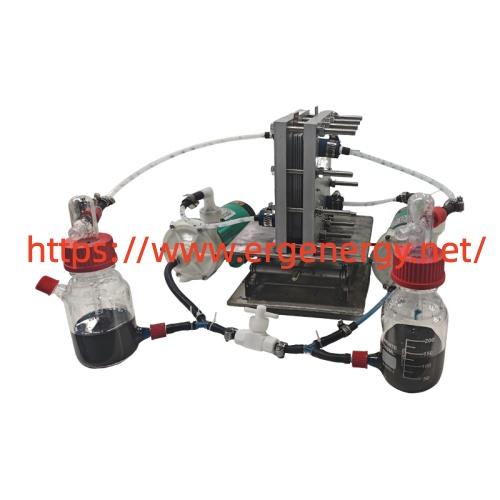
Laboratory-Scale Vanadium Flow Battery Cells can support battery research by giving researchers a controlled platform for examining electrolyte behavior, electrochemical reactions, charge and discharge characteristics, and operating conditions. Instead of moving directly to a large installation, research teams can conduct focused experiments with manageable quantities of materials and equipment. This makes small laboratory platforms useful during early stage investigation, especially when researchers need to compare operating parameters or evaluate changes in cell components.
Vanadium flow battery technology has attracted research interest because its energy storage mechanism separates energy capacity from power output. Energy is stored in liquid electrolytes held in external tanks, while electrochemical conversion takes place within the cell stack. This architecture provides researchers with several variables to investigate, including electrolyte concentration, membrane characteristics, electrode materials, flow rates, current density, and operating temperature.
One important area of laboratory work involves electrolyte behavior. Researchers may examine how electrolyte concentration and operating conditions influence voltage, efficiency, stability, and capacity retention. Temperature can also affect chemical and electrochemical processes, so controlled experiments can help identify how performance changes under different thermal conditions. By recording these results systematically, research teams can establish useful datasets for later modeling and system design.
Cell components provide another area for investigation. Membranes influence ion transport while limiting unwanted crossover between electrolytes. Electrodes affect reaction kinetics and electrical characteristics. Flow fields influence how electrolyte moves through the active area. By changing one component while keeping other conditions consistent, researchers can compare different configurations and identify how individual design choices affect experimental results.
Repeatability is particularly important in battery research. A test platform should allow researchers to establish consistent operating procedures for charging, discharging, measurement, cleaning, and maintenance. Reliable data collection can make comparisons between different experiments more meaningful. Researchers may monitor parameters such as voltage, current, temperature, pressure, flow rate, capacity, and efficiency depending on the purpose of the study.
Small scale testing can also support membrane and electrode research. When a new material is introduced, researchers may want to evaluate its electrochemical response before considering a larger system. A controlled cell arrangement allows specific variables to be isolated more easily. This can reduce the complexity of early experiments and provide information that helps guide subsequent development.
Another useful application is testing different operating strategies. Researchers can adjust current density, electrolyte circulation, charge duration, discharge duration, and other parameters to observe how the system responds. Such experiments can help identify relationships between operating conditions and measurable performance indicators. The resulting data may then be used for simulation, optimization studies, or the design of subsequent experiments.
Temperature management can also become an important research variable. Flow battery behavior may change when ambient conditions shift, so researchers can conduct tests across selected temperature ranges when appropriate equipment is available. Monitoring thermal conditions alongside electrical measurements provides a broader picture of system behavior and can help researchers understand how environmental factors influence experimental outcomes.
For universities, laboratories, and technology developers, equipment selection should match the research objective. Factors such as active area, membrane type, electrode configuration, electrolyte compatibility, measurement requirements, flow control, and available laboratory space all deserve attention. Researchers should also consider whether the platform can accommodate future experiments without requiring extensive modifications.
ERG develops flow battery products and related solutions with research and application requirements in mind. A suitable experimental platform can help research teams organize controlled tests, evaluate different materials, and build technical knowledge before moving toward larger configurations. When laboratory results are connected with clear testing procedures and accurate measurements, they can provide a practical foundation for continued development. Researchers interested in flow battery solutions can review the available product information at https://www.ergenergy.net/ while considering specifications that match their intended experimental work.

 English
 French
 Spanish
 Portuguese
 Deutsch
 Turkish
 Dutch
Dutch
 Italiano
 Russian
 Romaian
 Portuguese (Brazil)
 Greek
Greek