


What Makes PVC Flex Banner Practical for Creative Signage?
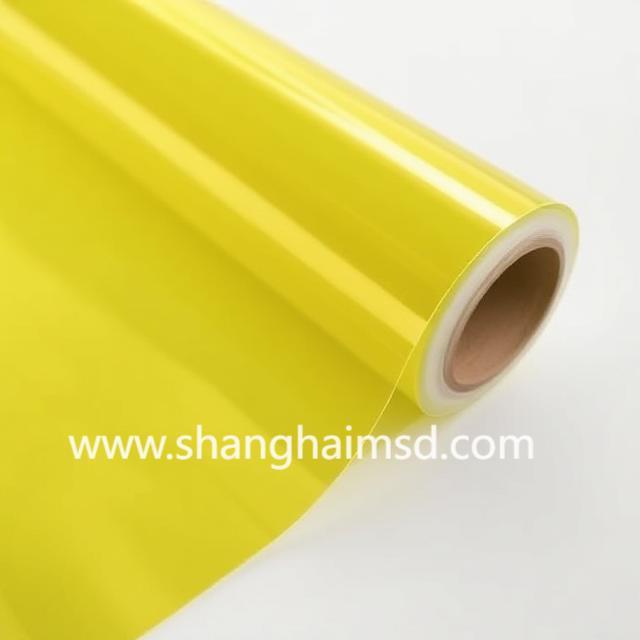
Visual communication often needs to balance attractive presentation with practical handling, and PVC Flex Banner from ShanghaiMsd offers a material option for businesses working across advertising, retail, exhibitions, events, and architectural displays. Its flexible structure, printable surface, and convenient rollable form create room for different visual concepts while allowing designers and installers to consider the requirements of each project.
A display material does more than carry an image. Its structure can influence how a graphic is produced, transported, installed, stored, and eventually reused. Flexible banner materials generally combine a polyester fabric base with PVC coatings, creating a surface that can bend and roll while providing support for printed graphics. This construction also gives the material useful dimensional stability and resistance to tearing during ordinary handling.
For advertising applications, flexibility can make a meaningful difference. Large graphics may need to cover fences, walls, temporary structures, storefront areas, or event spaces without the handling requirements associated with rigid boards. A rollable format can simplify transportation and storage, while installation methods such as eyelets, hems, rope tunnels, or pole pockets can accommodate different display structures.
Printing is another important part of the material experience. The coated surface can support several printing approaches, including solvent, eco-solvent, UV, latex, and screen printing, depending on the selected material and production process. This gives designers considerable freedom when developing photographs, typography, brand graphics, directional information, or decorative compositions.
Outdoor environments introduce additional considerations. Rain, sunlight, wind, dust, and changing temperatures can all influence signage during use. PVC-coated structures can provide moisture resistance, while the internal textile reinforcement helps distribute mechanical stress across the sheet. Proper installation remains important, particularly when a banner is positioned in an exposed location where wind pressure may affect its edges and fastening points.
Inside retail spaces, the same material can take on a different visual role. Store promotions, seasonal graphics, directional signs, decorative panels, and temporary campaign displays can all benefit from a surface that combines graphic flexibility with straightforward installation. Because the material can be rolled after removal, it can also fit projects where displays are changed according to different promotional schedules.
Events provide another creative setting. Exhibition booths, stage backgrounds, entrance graphics, information panels, and temporary partitions can use flexible printed surfaces to establish a visual environment without relying entirely on rigid construction. The ability to produce large continuous graphics can also help designers develop cohesive visual themes across different parts of an event space.
Backlit applications introduce yet another design direction. Translucent variants can allow light to pass through the material, making them suitable for illuminated displays where controlled light diffusion and printed graphics need to work together. Different structures and surface treatments can therefore support different visual effects according to the intended installation.
Choosing an appropriate banner material should begin with the actual project rather than with a fixed assumption. Designers and buyers can consider printing technology, installation method, viewing distance, lighting conditions, expected exposure, surface finish, and handling requirements before selecting a suitable construction. These factors help connect material characteristics with the practical demands of the finished display.
The appeal of flexible signage lies partly in this adaptability. One project may require a temporary promotional backdrop, while another may call for an outdoor graphic attached to a building or fence. A material that can move between different settings gives creative teams more freedom to shape their visual communication around the space available.
When the next display begins as a blank concept, the material itself can become part of the creative conversation. Rather than stopping at an ordinary graphic, consider how flexibility, printing, structure, and installation can work together. Visit https://www.shanghaimsd.com/product/ and take a closer look at the possibilities waiting behind your next visual project.

 English
 Arabic
 French
 Spanish
 Deutsch
 Turkish
 Dutch
 Italiano
 Russian
 Romaian
 Portuguese (Brazil)
 Greek