


Could Network Intelligence Define the Next Phase of the 5G Services Market?
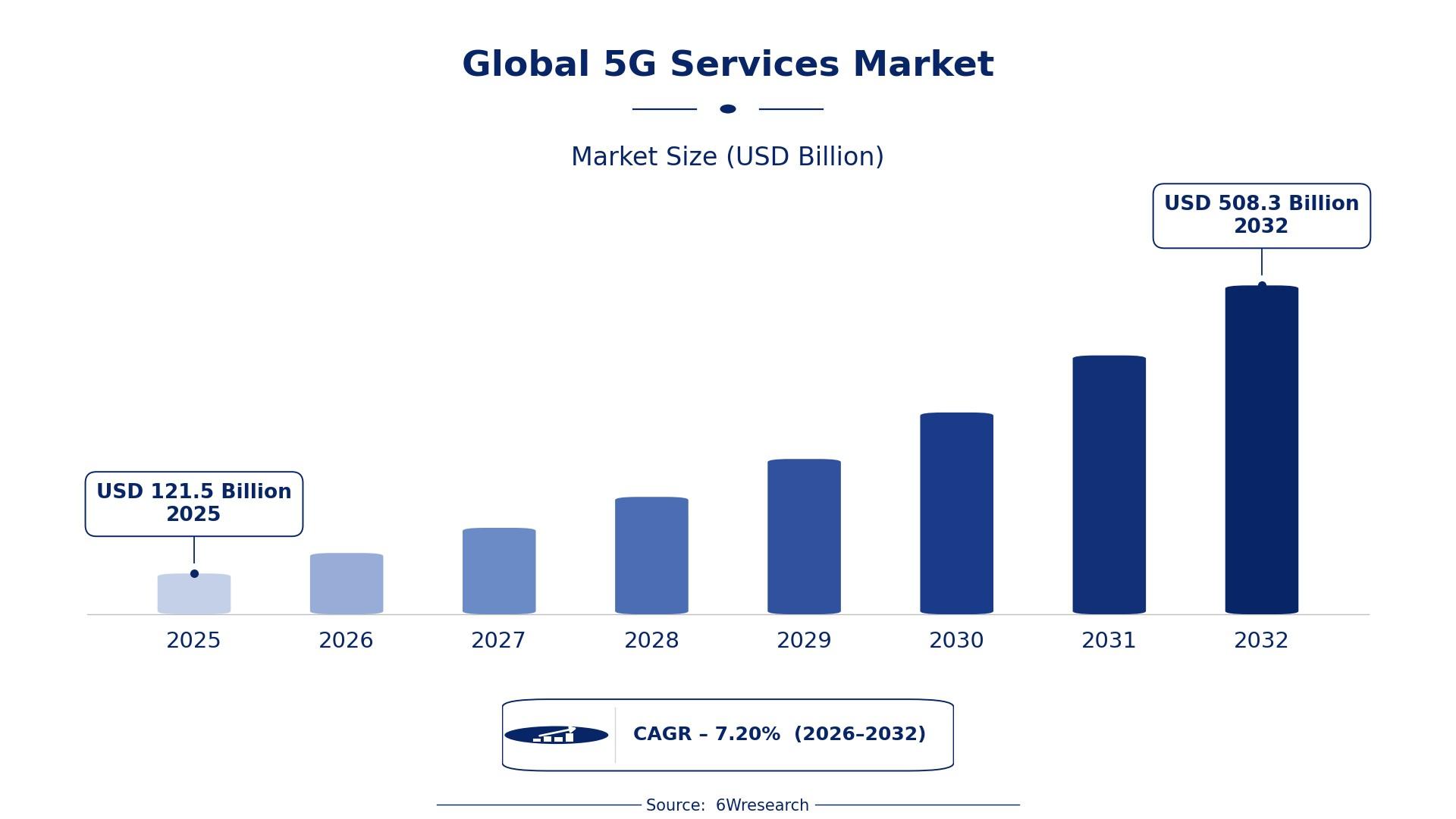
The 5G Services Market is entering a phase where connectivity alone may no longer be enough. Telecommunications networks are becoming increasingly software-driven, automated, and intelligent. Artificial intelligence, cloud computing, edge platforms, and network virtualization are creating new possibilities for how 5G services are managed and delivered.
From Physical Infrastructure to Intelligent Networks
Earlier generations of telecommunications relied heavily on physical network equipment.
Modern networks are becoming more software-oriented.
Operators can use advanced software platforms to monitor network performance, allocate resources, identify problems, and optimize service delivery.
This creates opportunities to make networks more responsive.
Artificial Intelligence in Network Management
AI can analyze large volumes of network information.
Potential applications include:
- Predictive maintenance
- Traffic optimization
- Automated fault detection
- Capacity planning
- Security monitoring
- Energy optimization
Instead of waiting for a network problem to occur, operators can use analytics to identify patterns that may indicate future issues.
Network Virtualization
Virtualized network functions allow selected network capabilities to run through software rather than dedicated hardware.
This can provide operators with greater flexibility.
They may be able to deploy or modify services without making equivalent changes to physical infrastructure.
Virtualization can also support more customized enterprise services.
Edge Computing and 5G
Edge computing moves processing resources closer to users and connected devices.
This can reduce the distance data needs to travel and may improve application responsiveness.
Potential use cases include:
- Industrial automation
- Connected vehicles
- Smart-city analytics
- Augmented reality
- Video analytics
- Remote monitoring
The combination of 5G and edge computing therefore creates opportunities for applications requiring rapid communication and processing.
Network Slicing
Network slicing is another concept associated with advanced 5G networks.
Instead of providing identical network characteristics to every user, operators can create logically separated network environments designed around different requirements.
For example, one service may prioritize high bandwidth while another may prioritize reliability or low latency.
This could allow operators to develop more specialized enterprise offerings.
Cybersecurity Becomes More Important
More connected devices also create more potential entry points for cyber threats.
5G security therefore needs to consider:
- Device authentication
- Data protection
- Network access
- Software security
- IoT vulnerabilities
- Cloud security
As network functions become increasingly virtualized, cybersecurity must also extend across software platforms and cloud environments.
The Business Opportunity
Intelligent networks can help operators move toward more flexible service models.
Instead of simply selling connectivity, providers can potentially offer managed solutions designed around industries and applications.
These could include dedicated connectivity for factories, logistics networks, healthcare applications, or smart infrastructure.
6Wresearch identifies AI-enabled network management and virtualized network functions among important trends shaping the global 5G services ecosystem.
What the Future Could Look Like
The next generation of 5G services may be increasingly automated.
AI could optimize network resources, edge platforms could process information closer to users, and virtualized infrastructure could allow new services to be launched more quickly.
This transformation could make the network itself a more intelligent part of the digital ecosystem.
Who We Are
About 6Wresearch: 6Wresearch is a commercial strategy and growth advisory firm founded in 2011 and headquartered in New Delhi, India, with partners across Southeast Asia and the Middle East & Africa. The firm has delivered over 20,000 commercial engagements for over 2,000 organizations, including Fortune 500 companies, government agencies, and multilateral institutions such as the World Bank and the Asian Development Bank. Backed by proprietary market research and advanced analytics, 6Wresearch combines sector expertise with data-driven intelligence to help organizations navigate market complexity and drive sustainable growth. These capabilities explain why organizations trust 6Wresearch Global Market Research & Consulting Firm for reliable commercial insights and confident decision-making.
Our Proprietary Platform: 6W Export GTM
6W Export GTM is 6Wresearch's proprietary trade intelligence and go-to-market platform, built on UN Comtrade data and enhanced with 6Wresearch's in-house analytical and simulation models, including system dynamics-based forecasting. Unlike broad, sector-level market sizing tools, 6W Export GTM operates at the individual product level down to specific HS codes and micro-segments to identify precise, actionable export opportunities by country and product pair, including markets where trade currently does not exist. This granular, simulation-driven approach allows 6W Export GTM to surface opportunities that sector-wide analysis typically misses, positioning it among a small number of platforms globally offering this depth of product-and-country-specific export intelligence.

 English
 Arabic
 French
 Spanish
 Portuguese
 Deutsch
 Turkish
 Italiano
 Russian
 Romaian
 Portuguese (Brazil)
 Greek
Greek