


SOC Services for BFSI in India: Costly Security Gaps a Managed Model Can Address
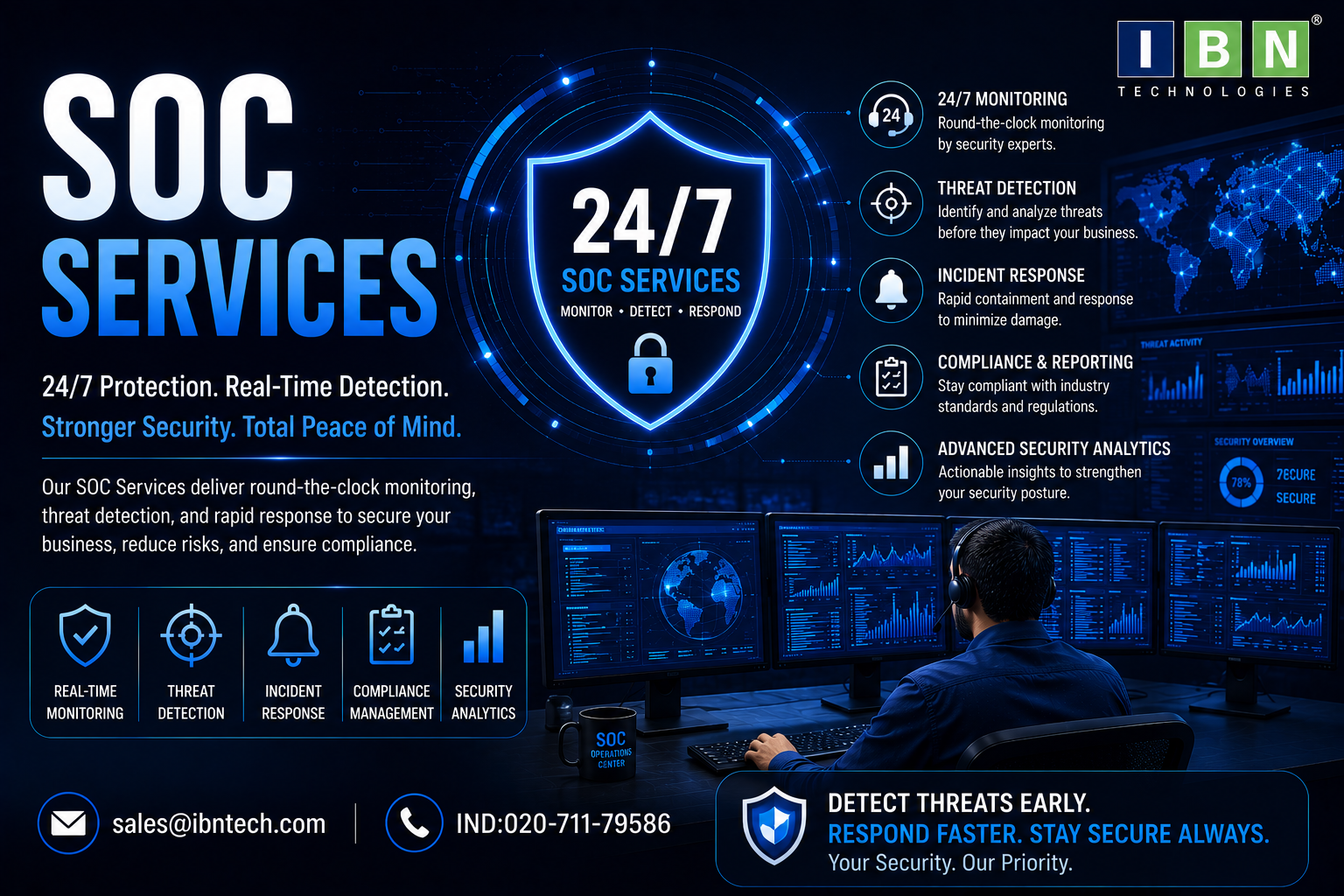
Why BFSI Firms Are Rethinking How SOC Services Are Delivered
Banks, financial institutions, and insurance organizations operate technology environments where security incidents can have consequences beyond IT systems. Customer information, financial applications, digital channels, internal systems, and connected services all require appropriate protection.
As Indian BFSI organizations expand digital operations, continuous security visibility becomes increasingly important. This is where soc services can support a structured approach to security monitoring, threat detection, investigation, and incident handling.
For organizations considering an outsourced model, the question is not simply whether to use a Security Operations Center. It is how the SOC should operate, what responsibilities should remain internal, and whether a managed approach fits the institution's security requirements.
What are SOC services for BFSI organizations in India?
SOC services provide structured security monitoring and operational support for identifying, analyzing, investigating, and escalating potential cybersecurity incidents. In BFSI environments, these services can help security teams maintain visibility across relevant systems while supporting established incident-management and security-governance processes.
A SOC may be operated internally, externally, or through a hybrid model. A managed approach can be particularly relevant when an organization wants dedicated monitoring capabilities without taking responsibility for every SOC function internally.
Why does continuous security monitoring matter in BFSI?
BFSI environments generate security events across many technology layers. Authentication activity, application behavior, network events, endpoint activity, and other signals can provide information about potential security issues.
Without an organized monitoring process, important signals may be difficult to prioritize. Continuous monitoring gives security teams a defined mechanism for identifying unusual activity and determining whether an event requires investigation.
For financial organizations, this operational visibility also supports broader risk-management objectives.
How does a SOC as a service provider support BFSI security?
A soc as a service provider can deliver defined SOC capabilities through an external operating model. Depending on the engagement, these capabilities may include security monitoring, event analysis, alert investigation, threat detection, incident escalation, and reporting.
The advantage of this approach is not simply outsourcing. It is establishing clear operational responsibilities around security events.
For example, a BFSI organization can define which events the provider monitors, which incidents require immediate escalation, what information must be communicated, and which response decisions remain with internal teams.
That distinction is important because outsourcing monitoring does not mean outsourcing organizational accountability.
What challenges can a managed SOC model address?
Building an internal SOC requires more than purchasing monitoring technology. Organizations need appropriate processes, skilled personnel, security data, escalation procedures, and ongoing operational management.
A managed model can provide external support for defined security operations activities. This can be useful for organizations that want to extend their monitoring capabilities while retaining internal ownership of business decisions and security governance.
The model can also help establish greater consistency in monitoring. Instead of relying solely on internal teams to review security activity alongside their other responsibilities, a managed SOC can provide dedicated operational coverage according to the agreed service scope.
How should BFSI organizations evaluate a managed SOC?
The evaluation should begin with the organization's security requirements.
Financial institutions should identify the systems and environments that require monitoring, determine which security events are important, and define how potential incidents should be escalated.
A provider's technical capabilities are only one part of the assessment. BFSI organizations should also understand how the provider communicates incidents, documents investigations, supports reporting, and coordinates with internal security teams.
What should be included in the evaluation?
- Monitoring coverage for critical environments
- Security event collection and analysis
- Alert triage and investigation
- Threat detection processes
- Incident escalation procedures
- Reporting and operational visibility
- Defined responsibilities between provider and organization
- Integration with existing security technologies
- Processes for reviewing monitoring effectiveness
These considerations help organizations assess whether a managed SOC can fit their operating model.
Can SOC services improve incident response for financial institutions?
Security monitoring and incident response are closely connected. Detecting a suspicious event is only the beginning; organizations also need a process for investigating its significance and communicating the findings.
A SOC can support this process by identifying potential incidents, analyzing relevant activity, and escalating findings according to predefined procedures.
For example, an unusual authentication event may require additional investigation when combined with other suspicious activity. A structured SOC process helps security teams examine such signals together rather than treating every alert independently.
The final response may still require decisions from the organization's internal security, IT, risk, or business teams.
How does compliance fit into SOC operations?
BFSI organizations operate within a highly governed environment. Depending on the institution and its activities, security programs may need to account for applicable regulatory expectations, contractual requirements, data-protection obligations, and frameworks such as ISO/IEC 27001.
SOC monitoring can support these broader programs by contributing security visibility, incident information, and operational records.
However, SOC services should not be viewed as a standalone compliance solution. Regulatory and compliance responsibilities depend on the organization's complete governance and control environment.
For BFSI organizations, it is therefore important to map SOC activities to existing security and compliance processes instead of treating the service as an isolated technology layer.
What are the benefits of using a managed SOC?
A managed SOC can provide several operational benefits when its scope is properly defined.
It can help organizations establish consistent monitoring, gain additional security operations capabilities, and reduce the amount of manual alert review required from internal teams.
It can also provide a structured escalation mechanism for potential incidents. This allows internal teams to focus their attention on events that require organizational decisions rather than manually reviewing every security signal.
The value ultimately depends on coverage, processes, communication, and alignment with the organization's security objectives.
What should BFSI leaders clarify before signing a SOC agreement?
Before engaging a provider, BFSI leaders should clearly document the service boundaries.
They should understand which systems are monitored, what constitutes an escalation, how incidents are communicated, what reports are provided, and which actions require internal approval.
Data handling and access arrangements should also be reviewed according to the organization's security and governance requirements.
A strong operating model leaves little ambiguity about who is responsible for monitoring, investigation, communication, and response at each stage of a security event.
Frequently Asked Questions
What is SOC as a service?
SOC as a service is an externally delivered security operations model in which a provider performs defined monitoring, detection, investigation, and escalation activities for an organization.
Is a managed SOC suitable for BFSI organizations?
It can support BFSI organizations when the provider's monitoring capabilities, processes, security requirements, and responsibilities align with the institution's operating and governance model.
Does a managed SOC provide regulatory compliance?
No. A SOC can support monitoring and security operations, but compliance depends on the organization's complete policies, controls, governance, implementation, and applicable regulatory requirements.
For BFSI organizations, choosing soc services involves more than evaluating monitoring technology. The operating model needs to define coverage, investigation, escalation, communication, and internal responsibilities clearly. A managed approach can support financial institutions that want structured security operations while maintaining organizational control over governance and response decisions.
Contact Us:
IND- 02067680404
IBN Technologies Ltd.
E-mail: - sales@ibntech.com

 English
 Arabic
 Spanish
 Portuguese
 Deutsch
 Turkish
 Dutch
Dutch
 Italiano
 Russian
 Romaian
 Portuguese (Brazil)
 Greek
Greek