


A Practical Guide to Choosing a Portable Power Solution
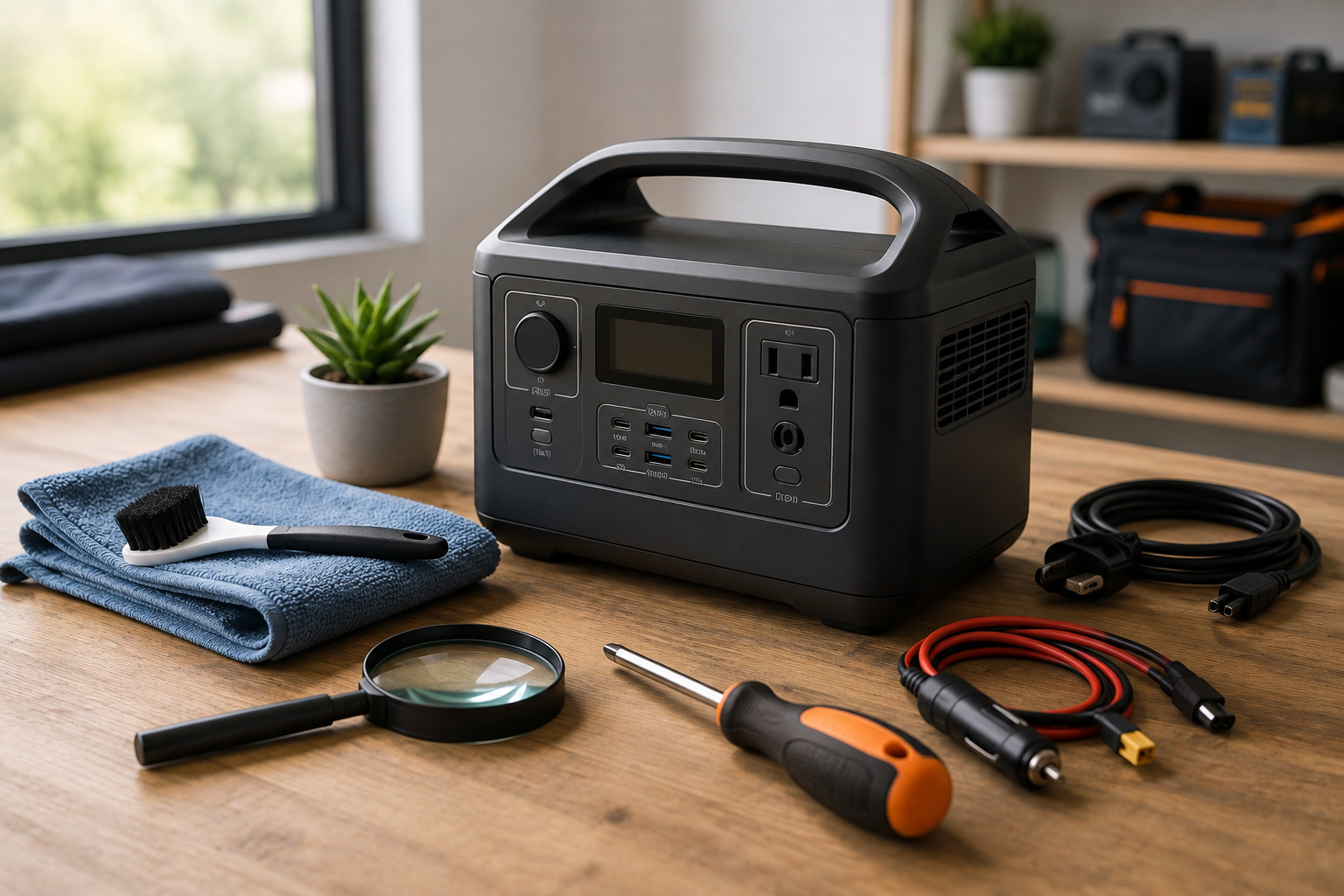
Portable power has become increasingly useful for people who work remotely, travel frequently, enjoy outdoor activities, or want an additional source of electricity during outages. With many models offering different battery capacities, output levels, charging methods, and features, selecting the best portable power station depends largely on how and where the equipment will be used. Understanding the key specifications before purchasing can make it easier to compare options and choose a system that matches real power requirements.
What Is a Portable Power Station?
A portable power station is a rechargeable battery-based device that stores electrical energy and makes it available through multiple output ports.
Depending on the model, users may find AC outlets, USB-A ports, USB-C ports, DC outputs, and other connections. Some systems also support solar charging or vehicle charging.
Unlike conventional fuel-powered generators, battery power stations do not need gasoline or diesel during operation. This makes them useful for locations where quiet operation and simple setup are important.
They can be used at home, during road trips, while camping, at outdoor events, or in temporary workspaces.
Start With Your Power Requirements
Before comparing portable power stations, it is important to identify the devices you actually need to operate.
A person who wants to charge smartphones and a laptop has very different requirements from someone who wants to operate a refrigerator, television, or power tools.
Make a list of your essential devices and check their wattage.
Small electronics generally require relatively little power, while appliances with motors, heating elements, or compressors can require considerably more.
Understanding these requirements can prevent two common problems: purchasing a unit that is too small for your needs or spending extra money on capacity that you will rarely use.
Battery Capacity Explained
Battery capacity is normally measured in watt-hours, abbreviated as Wh.
A higher watt-hour rating means the battery can store more electrical energy. However, capacity alone does not determine whether a power station is suitable for a particular device.
For example, a large battery may store plenty of energy but still be unable to operate an appliance if its output rating is too low.
This is why capacity and output should always be considered together.
When comparing models, look at both the stored energy and the maximum amount of power the unit can deliver.
Understanding Output Ratings
Power output is measured in watts.
A portable power station may have a continuous output rating and a higher temporary or surge rating.
The continuous rating indicates how much power the unit can normally provide, while the surge rating can be important for equipment that requires extra power when starting.
Devices with motors, compressors, or certain electronic components may have higher startup requirements.
Before purchasing a power station for such equipment, check the manufacturer's specifications carefully.
Choosing Between Small and Large Units
Portable power stations come in a wide range of sizes.
Small Power Stations
Smaller units are generally convenient for charging phones, tablets, cameras, laptops, and small electronic devices.
They are easier to carry and may be suitable for short outdoor trips or emergency charging.
Medium Power Stations
Medium-capacity units can support a wider range of devices and may be useful for remote work, camping, travel, and short power interruptions.
They often provide a balance between capacity and portability.
Large Power Stations
Large units are designed for higher energy requirements. Depending on their specifications, they may support appliances and equipment that smaller units cannot handle.
However, increased capacity usually means greater weight, size, and cost.
Battery Chemistry
Battery chemistry can influence lifespan, weight, charging characteristics, and overall performance.
Many modern portable power stations use lithium-based batteries. Lithium iron phosphate, or LiFePO4, is another common technology used in newer systems.
LiFePO4 batteries are known for their long cycle-life characteristics and thermal stability, although specific performance depends on the design and manufacturer.
When comparing models, buyers should look beyond battery chemistry alone and consider the complete system, including the battery-management system and manufacturer's specifications.
Charging Speed
Charging speed can be important for users who need their power station ready again quickly.
Some models can recharge from a wall outlet relatively quickly, while others may take longer depending on battery size and input capability.
Solar charging is another option available on many models.
If you plan to use solar panels, check the maximum solar input supported by the power station. A panel with a high rated output will not necessarily charge faster if the power station cannot accept that amount of input.
Solar Charging Capability
Solar compatibility can make a portable power station more useful for extended outdoor trips and emergency situations.
Solar panels can replenish stored energy when sunlight is available, reducing dependence on grid electricity.
However, solar charging is affected by weather, sunlight intensity, panel positioning, temperature, and the equipment's input limitations.
Users should therefore have realistic expectations about how much energy solar panels can provide in different conditions.
Port Selection
The number and type of ports can significantly affect everyday usability.
Common connections include:
-
AC outlets for household-style devices
-
USB-A ports for smaller electronics
-
USB-C ports for compatible laptops and mobile devices
-
DC outputs for certain equipment
-
Vehicle-style sockets on some models
Think about the devices you regularly use and make sure the power station provides suitable connections.
A system with many ports is not necessarily better if you rarely use them. Practical compatibility is more important than simply counting the number of connections.
Portability and Weight
The word "portable" can mean different things depending on the size of the power station.
A compact unit may be easy to carry with one hand. Larger systems may require handles, wheels, or two people to move safely.
Consider where you will use the unit.
If it will be transported frequently, weight and dimensions are important. If it will mostly remain in a home office or emergency storage area, capacity and output may matter more than compactness.
Safety Features
A quality power station should include appropriate battery and electrical protection systems.
Depending on the model, these may include protection against overcharging, overheating, excessive current, short circuits, and other abnormal conditions.
Users should always follow the manufacturer's instructions regarding charging and operation.
The unit should also be protected from extreme temperatures, moisture, physical damage, and unauthorized modifications.
Safe storage is particularly important when the power station is not being used regularly.
Power Stations for Remote Work
Portable power stations can be useful for people who work from home or travel while working remotely.
A laptop, monitor, router, phone, and small lighting equipment may require considerably less energy than large household appliances.
For remote workers, factors such as USB-C output, quiet operation, portability, and fast recharging may be especially useful.
A power station can help maintain productivity during short outages or while working from locations without reliable electrical access.
Outdoor and Camping Applications
Portable power is also useful for camping and outdoor recreation.
Users may need to charge phones, cameras, GPS devices, lights, speakers, or other equipment.
For these situations, portability and battery efficiency can be particularly important.
A solar-compatible model may also provide additional flexibility for longer trips.
However, users should consider the environmental conditions in which the equipment will be used. Extreme temperatures, moisture, dust, and rough transportation can affect electronic equipment.
Using a Portable Power Station During Outages
A portable power station can provide temporary electricity when the main grid is unavailable.
The most practical approach is to prioritize essential devices.
For example, a household might first use available energy for communication equipment, lighting, networking equipment, and other necessary electronics.
High-power appliances can consume stored energy much more quickly, so users should calculate expected runtime before connecting them.
Having a clear priority list can help extend the available battery capacity during longer interruptions.
Comparing Features and Prices
Price is an important part of any purchasing decision, but comparing only prices can be misleading.
Two models with similar prices may have very different battery capacities, output ratings, charging speeds, battery technologies, warranties, and port selections.
Similarly, the most expensive option may offer features that a particular user does not need.
A better approach is to identify your requirements first and then compare models based on those requirements.
Consider the total value provided by the system rather than focusing on one specification.
Runtime and Efficiency
Actual runtime depends on the connected device and the efficiency of the power station.
A simple watt-hour calculation can provide an estimate, but real-world runtime can be lower because energy is lost during conversion and operation.
For example, using an AC outlet to power a small USB device may involve more conversion than using a direct USB output.
Whenever possible, using an appropriate direct output can improve efficiency.
Manufacturers may provide estimated runtimes for common devices, but these should be treated as approximate.
Maintenance and Battery Care
Portable power stations generally require limited maintenance, but proper care can help preserve battery performance.
Users should follow the manufacturer's recommendations for charging and storage.
Avoid exposing the unit to excessive heat or moisture, and keep ports and ventilation areas clean.
If the power station will be stored for a long period, follow the recommended storage-charge instructions.
It is also useful to inspect the cables and exterior periodically for visible damage.
Portable Power Station Selection
For shoppers comparing the best portable power station, the most important step is to match the equipment to the intended application. Capacity, output, charging speed, battery chemistry, portability, solar compatibility, available ports, safety features, and warranty can all influence the decision.
A camper may prioritize weight and solar charging, while a homeowner may focus on capacity and appliance compatibility. A remote worker may care more about USB-C output and fast charging.
There is therefore no single specification that determines whether a power station is appropriate for every user.
Conclusion
Portable power stations provide a flexible way to store electricity and use it in situations where conventional power is unavailable. They can support home backup, outdoor activities, travel, remote work, and emergency charging.
The right choice depends on actual power requirements rather than a single headline specification. Battery capacity, output, charging speed, battery technology, portability, available ports, safety features, and warranty should all be considered together.
By identifying essential devices and understanding their power requirements before shopping, users can choose a portable power system that fits their lifestyle without paying for unnecessary capacity or discovering that the unit cannot handle their equipment.
FAQs
What should I look for in a portable power station?
Start with battery capacity, continuous output, surge capability, charging speed, battery chemistry, available ports, solar compatibility, portability, safety features, and warranty.
Is a larger portable power station always better?
No. Larger units provide more capacity and output but can also be heavier and more expensive. The appropriate size depends on the devices you need to operate.
Can a portable power station run a laptop?
Yes, many portable power stations can charge or operate laptops. Models with USB-C Power Delivery can be particularly convenient for compatible devices.
Can I charge a power station with solar panels?
Many models support solar charging, but the maximum solar input and connector requirements vary. Always check compatibility before connecting a panel.
How long will a portable power station last?
Runtime depends on battery capacity, connected-device power consumption, conversion efficiency, and operating conditions. A higher-capacity battery generally provides longer runtime for the same device.
Are portable power stations safe for indoor use?
Battery-based units may be suitable for indoor use when the manufacturer specifies indoor operation. Users should follow all safety, charging, temperature, and placement instructions provided with the unit.

 English
 Arabic
 Spanish
 Portuguese
 Deutsch
 Turkish
 Dutch
Dutch
 Italiano
 Russian
 Romaian
 Portuguese (Brazil)
 Greek
Greek