


How Does a Diamond Upgrade Program Actually Work?
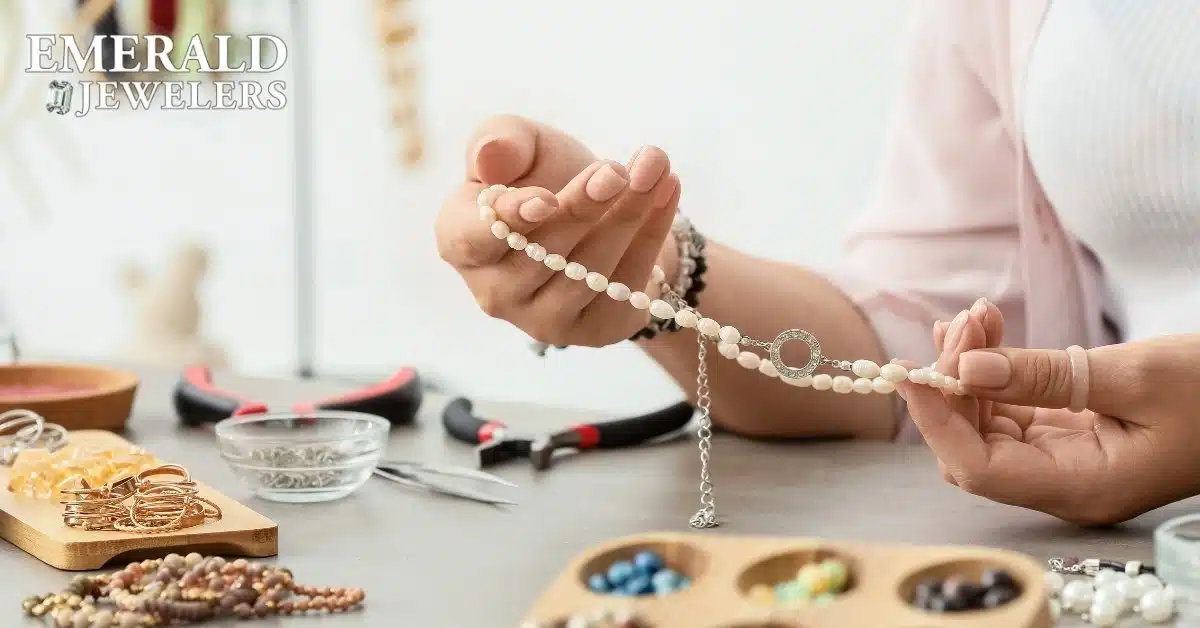
A diamond upgrade program lets you trade in a diamond you already own toward a larger or higher-quality stone, with the value of your original diamond applied as credit toward the new purchase. It's a way to grow into a bigger or better diamond over time without starting from scratch, and it's become a common offering at jewelers who want to support customers through milestones like anniversaries, promotions, or simply changing taste.
The idea sounds simple, but the mechanics behind it matter more than most people expect. At Emerald Jewelers, the diamond upgrade program works alongside other services, and it's worth understanding how trade-in value actually gets calculated before assuming any diamond automatically qualifies for full credit.
Trade-in value is rarely based on what you originally paid for a diamond. Retail prices include markup, setting costs, and brand premiums that don't carry over into a resale or trade context. Instead, jewelers typically reassess a diamond's value using the same core factors used to price it in the first place: carat weight, cut quality, color grade, and clarity, commonly known as the four Cs. A diamond that was purchased years ago at a certain price point may be worth more or less today depending on how diamond pricing in that particular combination of specs has shifted, not simply due to age or wear.
This is where a lot of confusion comes in. Someone might assume their diamond has appreciated simply because diamond jewelry in general has gotten more expensive, or assume it's worth less because it's no longer new. Neither assumption is reliable on its own. The only way to know actual trade-in value is a professional evaluation, ideally one that includes a look at the stone under magnification and, where relevant, a review of any existing grading documentation from a lab like GIA.
Grading documentation matters more than people realize. A diamond with an existing certificate from a recognized gemological lab is generally easier and faster to evaluate, since the grading work has already been done by a neutral third party. A diamond without documentation can still be evaluated, but it typically requires the jeweler to assess it in person, which can add time to the process. If you still have the original paperwork from when a diamond was purchased, it's worth bringing it along.
Setting condition is another factor that often gets overlooked. A diamond upgrade isn't just about the stone itself, it also involves removing it from its current setting, which means the setting gets inspected in the process. Loose prongs, a stretched band, or a worn setting won't necessarily reduce the value of the diamond, but they're worth knowing about regardless, since they affect whether the original piece could be repaired and kept, resold, or repurposed into something new rather than simply traded away.
There's also a common misconception that a diamond upgrade program only benefits the jeweler. In reality, it solves a real problem for the customer. Buying a diamond outright at a larger size or higher grade can be a significant expense, and trading in an existing stone reduces that cost meaningfully compared to starting from zero. It also gives sentimental value a practical outlet. Many people don't want to simply sell an heirloom or an original engagement diamond outright, but they're open to seeing part of its worth carried forward into a new piece they'll actually keep wearing.
Timing tends to matter more than people expect as well. Diamond upgrades are most commonly requested around milestone anniversaries, especially five, ten, or twenty-five year marks, though there's no rule requiring a specific occasion. Some people upgrade simply because their taste or lifestyle changed, or because a stone that felt right in their twenties no longer fits how they want to wear jewelry later in life. Others upgrade to consolidate: taking two smaller stones they own and combining their value toward one larger, more significant piece.
It's worth setting realistic expectations about the process itself. A diamond upgrade typically starts with an in-person evaluation of the original stone, followed by a conversation about what the customer is hoping to move toward, whether that's simply a larger carat weight, a better cut grade, a different stone shape entirely, or a completely custom setting. From there, the jeweler applies the assessed trade-in value toward the new piece, and the customer covers the remaining difference. The exact turnaround time depends on whether the new setting is something in stock or something custom-made, so it's reasonable to ask about timeline expectations upfront rather than assuming a fixed number.
Diamond upgrade programs aren't the right fit for everyone, and that's fine. If a diamond has strong sentimental value tied specifically to its original form, some people prefer to keep it exactly as is and simply purchase a new piece separately rather than trading it in. Others want to explore an upgrade specifically because they're ready for something new and see the trade-in as a practical way to get there. Either approach is reasonable, and a good jeweler should be able to walk through both without pushing one over the other.
How is a diamond's trade-in value determined?
Trade-in value is typically based on the diamond's current carat weight, cut, color, and clarity, evaluated by the jeweler at the time of the upgrade, not on the original purchase price.
Do I need paperwork or a certificate to trade in a diamond?
It isn't strictly required, but having an existing grading certificate from a lab like GIA generally makes the evaluation faster and more straightforward.
Can two smaller diamonds be combined into one upgrade?
In many cases, yes. Some upgrade programs allow the combined value of multiple stones to be applied toward one new piece, though this depends on the specific jeweler's policy.
Is there a specific occasion required to use a diamond upgrade program?
No. While many people use these programs around anniversaries or milestones, there's no requirement tied to a particular occasion.
Does the condition of the original setting affect the trade-in value?
Not typically for the diamond's value itself, but the setting is inspected as part of the process, since it affects what can be done with the original piece afterward.

 English
 Arabic
 French
 Spanish
 Deutsch
 Turkish
 Dutch
Dutch
 Italiano
 Russian
 Romaian
 Portuguese (Brazil)
 Greek
Greek