


Solid Surface, Plastic Laminate or Wood Veneer: Choosing Materials for Commercial Casework
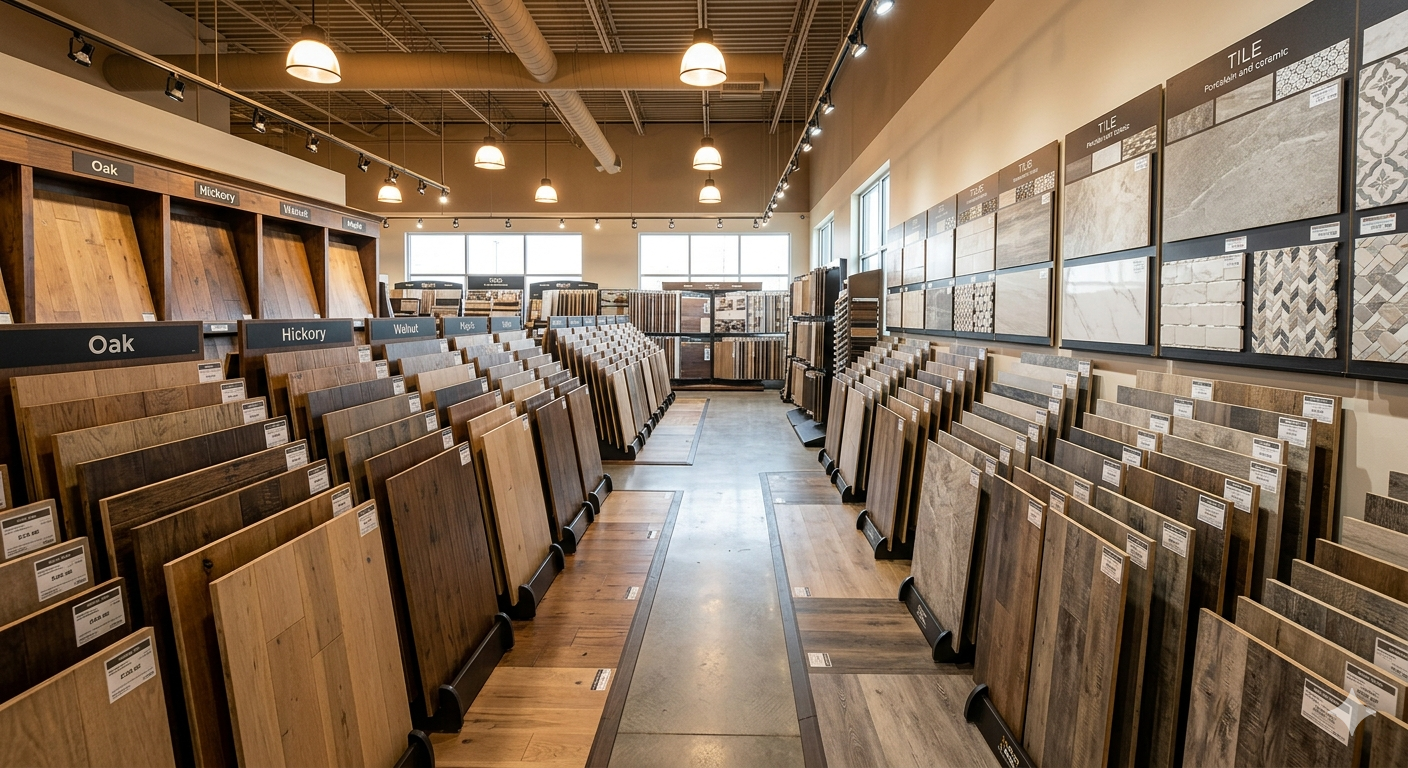
The right material for commercial casework depends on whether the surface needs to be seamless and cleanable, how much abuse it will take, and whether it is meant to be noticed. Solid surface wins where hygiene and continuous surfaces matter, such as nurses stations, lab benches and transaction counters. Plastic laminate wins where durability and budget control lead, which covers most storage casework and office cabinetry. Wood veneer and hardwood win where the piece is part of the architecture rather than the equipment, such as reception desks and library millwork. Most packages use all three, and the interesting decisions sit at the boundaries.
Those boundaries are where specifications get expensive without getting better. An architect may call for solid surface across an entire floor when only the wet and high-touch areas need it, or specify veneer in a corridor that carts will hit daily. A fabricator involved during design development flags both, which is why commercial casework budgets more accurately when the shop sees the drawings early rather than pricing a finished specification it had no hand in shaping.
Plastic laminate: the workhorse
Plastic laminate is the default for commercial casework because it does the largest share of the job at the lowest cost per square foot. It resists scratching and staining, comes in a wide range of patterns and colours, and can be replaced panel by panel rather than as an assembly. For storage units, base and upper cabinets, office casework and anything behind a counter, it is usually the right answer.
Its limits are seams and edges. Laminate cannot produce a continuous surface across a long run without a visible joint, and the edge treatment is where quality shows. A self-edge, a PVC or 3mm band, and a hardwood edge all behave differently under impact. On a healthcare or education project where carts hit cabinet corners daily, the edge specification matters more than the face pattern.
Laminate also does not tolerate standing water at a joint. Wherever a sink, a hand-wash station or a coffee point sits, the specification either changes material or accepts a maintenance problem that will surface within a few years.
Solid surface: where seams cannot exist
Solid surface exists to solve the seam problem. Because sheets can be joined and sanded into a continuous surface, a countertop can run the length of a nurses station and turn a corner without a visible joint, and integrated sinks and coved backsplashes can be formed as part of the same piece. That continuity is why it dominates healthcare and life sciences work, where cleanability is a requirement written into the project.
It is also repairable in a way laminate is not. Scratches and impact damage can be sanded out in place, which matters over a long facility life even though the initial cost is higher. For transaction counters, reception tops, bar tops and die walls, that repairability often justifies the premium on its own.
The trade-off is cost and lead time. Solid surface carries a higher material cost and specialty colours can add meaningfully to procurement time. As a general industry pattern rather than a fixed figure, non-stock colours are a common cause of millwork packages slipping, which is why the decision should be made early enough to release long-lead items ahead of the rest of the scope.
Wood veneer and hardwood: where appearance leads
Wood is specified when the millwork is meant to be seen as architecture. Reception desks, boardroom casework, library millwork, hospitality bars and feature wall panelling draw on hardwood and veneer because no engineered surface reproduces real grain.
The specification questions here are different. Sequencing and matching determine whether a wall of panels reads as one composition or as a collection of pieces, and slip, book and sequence matching each carry a different cost. Species, cut and finish sheen shift the appearance more than most drawings convey, which is why these decisions benefit from physical samples rather than a specification line.
Wood is also the least forgiving of the three in a rough environment. In corridors, service areas and anywhere carts run, a wood face will show its history, which is sometimes acceptable and sometimes a mistake.
Why one package usually needs all three
A single commercial millwork package rarely resolves to one material. A hospital floor might carry solid surface at the nurses station, plastic laminate through the storage casework, and hardwood at the public-facing reception.
Running all three through one shop is what keeps the result coherent. Edge details, hardware, reveal dimensions and finish sheen stay consistent when the same team details and builds every piece. When a package is split between vendors to chase unit price, those details drift, and the drift shows in exactly the places the client looks first.
Factory finishing changes the calculation
Finish is part of the material decision, not a step after it. Applying finish in a controlled shop environment produces a more consistent result than finishing on an active jobsite, where dust, humidity and temperature are uncontrolled. It also removes a wet trade from an already compressed closeout schedule.
For wood in particular, factory finishing is the difference between a panel wall that reads as a single piece and one that varies board to board. It affects the material choice too, because a species that would be risky with a field-applied finish becomes reasonable when the finish is controlled.
How material choice moves schedule and budget
Material selection influences the millwork schedule more than fabrication speed does. Stock laminates and standard solid surface colours are generally available quickly, while specialty colours, specific veneer flitches and sequence-matched panels have to be procured and sometimes waited on.
The practical approach is to settle the material strategy during design development and release long-lead items as soon as the specification is fixed. A fabricator with estimating and engineering in the same building as the shop floor can flag which choices carry procurement risk while the drawings are still easy to change.
Frequently asked questions
Is solid surface always better than plastic laminate? No. Solid surface is better where seamlessness, cleanability and in-place repair matter, such as healthcare counters and high-traffic public surfaces. For storage casework, office cabinetry and back-of-house work, plastic laminate delivers equivalent service at lower cost, and specifying solid surface everywhere adds budget without adding function.
What is the difference between commercial casework and millwork? Casework refers to the cabinet boxes: storage units, countertop bases, uppers and lowers. Millwork is the broader category, taking in casework plus panelling, trim, reception desks, benches and window walls. Most packages include both and share one production schedule.
When should materials be finalised? During design development, and certainly before buyout. Material selection drives procurement, and procurement is where millwork schedules most often slip. Settling the strategy early allows long-lead items to be released ahead of the rest of the package.
Can different materials be mixed in one run of casework? Yes, and it is common. A single counter run might carry a solid surface top over laminate casework with a hardwood edge or apron. Mixing is a normal part of a well-considered specification, provided one shop details and builds it so the transitions are intentional.
Getting the specification right
Material selection affects appearance, durability, maintenance cost, procurement time and installation sequencing all at once, which is why it rewards being decided early and with a fabricator in the room.
Chamberlain Companies fabricates and installs commercial casework, countertops, solid surface, plastic laminate casework and custom architectural millwork from its Salem, New Hampshire shop, serving general contractors and architects across New Hampshire, Massachusetts, southern Maine and northeastern Connecticut.

 English
 Arabic
 French
 Spanish
 Portuguese
 Deutsch
 Turkish
 Dutch
Dutch
 Italiano
 Romaian
 Portuguese (Brazil)
 Greek
Greek