


How Digital Technologies Are Transforming Clinical Trial Efficiency and Compliance
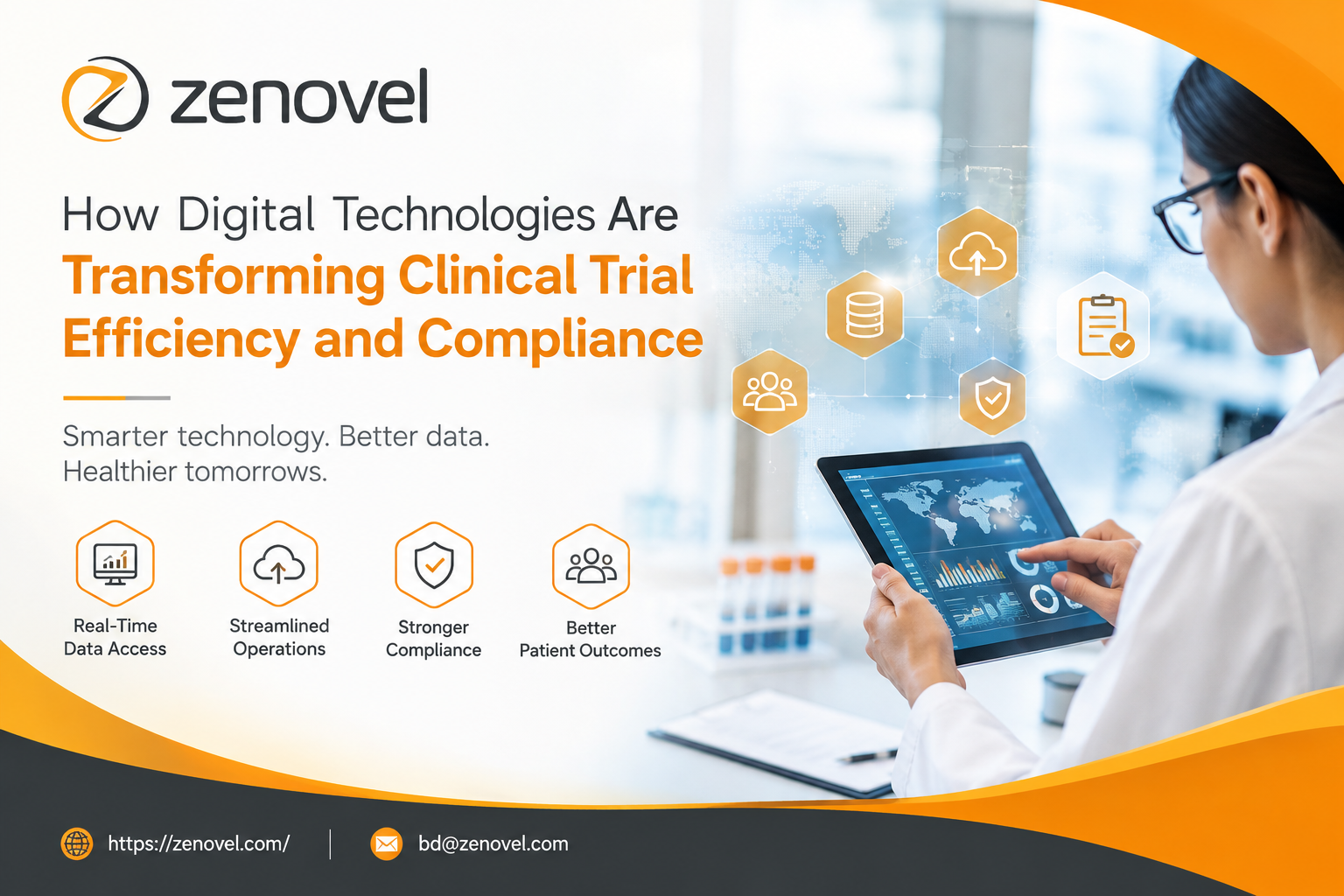
For decades, traditional clinical trials have been hampered by high operational friction: slow patient recruitment, heavy administrative site burdens, static paper-based records, and data reconciliation bottlenecks. Today, the life sciences industry is experiencing a decisive shift. Digital technologies have moved past the initial experimentation phase, transforming into core infrastructure that drives speed, precision, and patient-centricity.
For pharmaceutical and biotechnology sponsors, embracing these digital innovations is no longer just about modernization—it is a strategic requirement for maintaining competitiveness and compliance under global regulatory scrutiny.
Key Digital Drivers Reshaping Modern Clinical Trials
-
AI-Powered Protocol Automation and Site Selection:
Artificial intelligence is redefining how clinical trials are designed and targeted. By evaluating retrospective clinical data, disease prevalence patterns, and historical site performance metrics, predictive models can pinpoint high-performing geographic regions and investigative sites. Furthermore, AI tools streamline protocol creation and database configuration, drastically cutting down the manual timeline required to translate complex scientific requirements into operational execution.
-
Hybrid and Decentralized Clinical Trial (DCT) Models:
Patient retention remains one of the toughest challenges in clinical research. Decentralized elements—such as telemedicine visits, home health logistics, and direct-to-patient supply chains—remove geographic barriers and ease the burden on participants. Modern hybrid models successfully blend site-based clinical oversight with remote data capture, expanding patient diversity and preventing costly dropouts.
-
Advanced eSource and Interoperable Data Layers:
Fragmented software ecosystems have historically caused widespread data duplication and delayed reconciliation. Modern cloud architecture unifies Electronic Data Capture (EDC), Clinical Trial Management Systems (CTMS), and safety reporting into a cohesive operating environment. Capturing data closer to the point of care via structured eSource workflows minimizes transcription errors and maintains continuous audit-readiness.
-
Wearables and Digital Biomarkers for Continuous Monitoring:
Traditional clinic visits only offer isolated snapshots of a patient's health. Wearables and connected biosensors allow continuous, high-frequency capture of objective digital endpoints—such as sleep patterns, mobility metrics, and cardiac rhythms. When properly validated, these tools generate deeper insights that periodic check-ups often miss.
-
Next-Generation eConsent and Risk-Based Monitoring (RBM):
Electronic consent (eConsent) platforms now integrate comprehension tracking, version control, and multi-language support to ensure complete participant transparency. Concurrently, centralized analytics and risk-based monitoring allow clinical monitors to spot true data anomalies early, shifting oversight from reactive checking to proactive risk mitigation.
Balancing Innovation with Regulatory Rigor
While technology introduces unprecedented efficiencies, regulatory authorities—including the US FDA, EMA, and CDSCO—demand strict data integrity, algorithm transparency, and human-in-the-loop validation. Every digital tool deployed in a clinical trial must be thoroughly validated and compliant with global GxP standards.
To successfully integrate digital transformation strategies, optimize clinical trial execution, and ensure complete regulatory alignment, pharmaceutical organizations rely on the specialized clinical research expertise provided by Zenovel.

 English
 Arabic
 French
 Spanish
 Deutsch
 Turkish
 Dutch
Dutch
 Italiano
 Russian
 Romaian
 Portuguese (Brazil)
 Greek
Greek