


Types of IoT Connectivity for Modern Connected Businesses
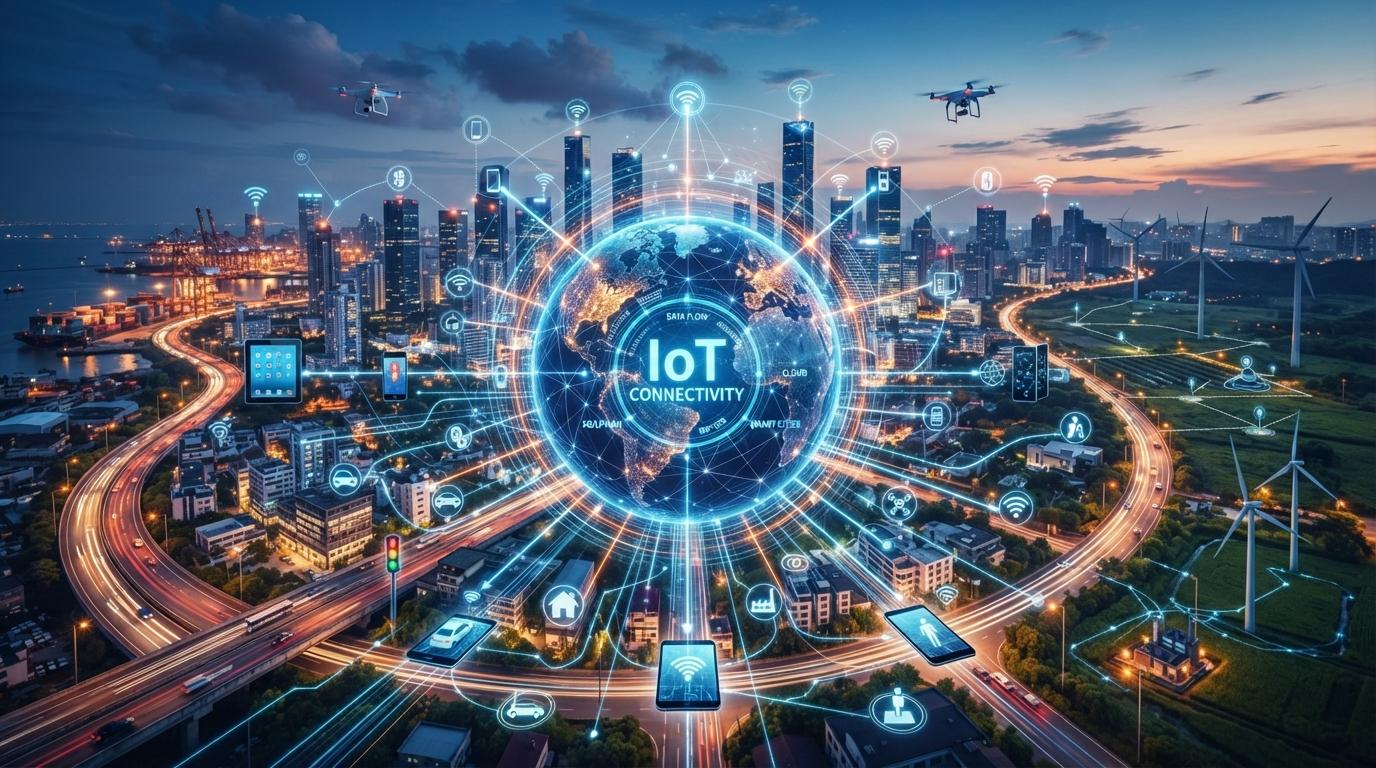
IoT connectivity is the foundation that allows smart devices, sensors, machines, and software systems to communicate with each other. It helps devices collect information, send data, receive instructions, and support automated tasks. From smart homes to large factories, reliable connectivity is needed to keep connected devices working properly.
An IoT network connects different devices and allows them to exchange information. The type of connection used depends on factors such as distance, speed, power use, location, and the amount of data a device needs to send. Choosing the right connectivity method can help businesses build systems that are reliable and easy to manage.
The growth of digital transformation has also increased the use of IoT technology. Businesses are connecting physical equipment with digital platforms to improve operations, collect useful data, and reduce manual work. Different types of IoT connectivity allow organizations to select the right solution for different business needs.
Wi-Fi Connectivity
Wi-Fi is one of the most common types of wireless connectivity. It allows IoT devices to connect to local networks and access the internet without physical cables. Many smart devices use Wi-Fi because it is widely available in homes, offices, stores, and other buildings.
Wi-Fi is useful when devices need to send a reasonable amount of data and are located within a suitable range of a wireless router or access point. Smart cameras, office equipment, appliances, and building systems can use Wi-Fi to communicate with software platforms.
However, Wi-Fi devices may use more power than some other IoT technologies. This makes Wi-Fi more suitable for devices that have access to a power source or can be charged regularly.
Bluetooth Connectivity
Bluetooth is another popular option for short-range IoT connections. It is designed for communication between devices that are relatively close to each other. Bluetooth is often used in wearable devices, smart sensors, healthcare equipment, and personal devices.
Bluetooth Low Energy, also known as BLE, is designed to use less power. This makes it useful for battery-powered devices that need to operate for long periods.
Businesses can use Bluetooth to connect sensors and devices within a limited area. It can also work alongside other network technologies to transfer information from local devices to larger systems.
Cellular Connectivity
Cellular connectivity uses mobile networks to connect IoT devices over large areas. It is useful for devices that operate outside buildings or in locations where Wi-Fi may not be available.
Vehicles, tracking devices, smart meters, and remote equipment can use cellular connections to send information to cloud platforms. Modern cellular technologies can provide faster connections and support a growing number of connected devices.
Cellular connectivity can be especially useful for businesses that need to monitor equipment across cities, regions, or countries. It allows devices to stay connected while moving between different locations.
4G and 5G Connectivity
4G and 5G are important cellular technologies for IoT applications. 4G provides reliable mobile connectivity for many connected devices and is already widely available in many areas.
5G can offer faster data speeds, lower delay, and support for a large number of connected devices. These features can be useful for advanced IoT applications that require quick communication.
Factories, smart cities, healthcare organizations, and transportation companies can use modern cellular networks to support connected systems. As 5G coverage grows, more IoT applications may take advantage of its capabilities.
LPWAN Connectivity
Low Power Wide Area Network, or LPWAN, is designed for IoT devices that need long-range communication while using very little power. These networks are useful for small sensors that may need to operate for months or years on a battery.
LPWAN is often used for smart meters, agriculture sensors, environmental monitoring, and asset tracking. These devices usually send small amounts of data rather than large files.
An IoT network based on LPWAN can connect devices over large areas while keeping power use low. This makes it useful for businesses that need to deploy many sensors in remote or wide locations.
LoRaWAN Connectivity
LoRaWAN is a type of LPWAN technology designed for long-range communication and low power use. It can connect sensors across large areas and is often used for agriculture, smart buildings, environmental monitoring, and industrial applications.
A major benefit of LoRaWAN is its ability to support battery-powered devices that send small amounts of data. It can be useful where devices are placed far from traditional network connections.
Businesses can use LoRaWAN to collect information from remote sensors and send that data to a central platform for monitoring and analysis.
Zigbee Connectivity
Zigbee is a low-power wireless technology often used for connected devices within buildings. It can create networks where multiple devices communicate with each other.
Smart lighting, security sensors, building controls, and home automation systems can use Zigbee. It is useful when many small devices need to communicate while keeping power use low.
Zigbee can support mesh networks, which means devices can help pass information between each other. This can improve coverage within a suitable environment.
Ethernet Connectivity
Ethernet provides a wired connection between devices and networks. It is often used in factories, offices, data centers, and other locations where stable connections are important.
Wired connectivity can provide reliable communication and does not depend on wireless signal strength. It can also support devices that need a steady flow of data.
Industrial machines, security systems, servers, and fixed IoT equipment can use Ethernet. Although cables can make installation less flexible, wired connections can be useful for permanent equipment.
Satellite Connectivity
Satellite connectivity can connect IoT devices in remote locations where cellular or wired networks may not be available. It can be useful for shipping, agriculture, mining, environmental monitoring, and remote infrastructure.
For example, a company can use satellite-connected equipment to track vehicles or monitor machines in areas with limited network coverage.
Satellite solutions can help businesses collect information from distant locations. This makes them valuable for IoT applications that operate far from cities and traditional communication systems.
NFC Connectivity
Near Field Communication, or NFC, is a short-range technology that allows devices to exchange small amounts of information when they are very close together.
NFC is often used for identification, access control, payments, and device pairing. In IoT applications, it can help connect devices or allow users to interact with smart equipment.
Because NFC works over a very short distance, it is generally used for specific actions rather than continuous communication.
Choosing the Right IoT Connectivity
Choosing the right connectivity type depends on the needs of each IoT project. Businesses need to consider how far devices are located from each other, how much data they need to send, how much power they have, and how often they need to communicate.
For example, Wi-Fi may work well inside an office, while cellular connectivity may be better for vehicles. LPWAN can be useful for remote battery-powered sensors, while Ethernet may be suitable for fixed industrial machines.
A well-planned IoT network may also use more than one connectivity method. Different technologies can work together to connect devices in different locations.
IoT Connectivity and Digital Transformation
Digital transformation is helping businesses move toward more connected and automated operations. IoT connectivity plays an important role by linking physical devices with digital systems.
Connected sensors can provide data to cloud platforms, analytics tools, and business applications. Companies can then use this information to monitor operations, automate tasks, and improve decision-making.
The combination of IoT and digital transformation can help organizations create more connected business environments. It allows physical equipment to become part of wider digital processes.
Security in IoT Connectivity
Security should be considered when selecting and using any IoT connectivity technology. Connected devices can exchange important information, so businesses need to protect both devices and networks.
Companies can use strong passwords, secure communication, access controls, software updates, and device monitoring. They should also review connected devices regularly to identify possible security problems.
A secure IoT network can help reduce risks and protect business data as more devices become connected.
Future of IoT Connectivity
IoT connectivity will continue to develop as businesses connect more devices and adopt new digital tools. New network technologies, cloud platforms, edge computing, and artificial intelligence can make connected systems more useful.
Businesses may combine several connectivity methods to create flexible IoT environments. This can allow organizations to connect devices in offices, factories, vehicles, warehouses, and remote locations.
As digital transformation continues, IoT connectivity will remain an important part of modern technology. Businesses can use different connection types to build systems that match their specific needs.
Conclusion
There are many types of IoT connectivity, including Wi-Fi, Bluetooth, cellular, 4G, 5G, LPWAN, LoRaWAN, Zigbee, Ethernet, satellite, and NFC. Each type has different strengths and is suited to different situations.
A reliable IoT network helps connected devices communicate and share information. By choosing the right connectivity technology, businesses can improve monitoring, automation, data collection, and daily operations.
As digital transformation continues to change the way businesses work, IoT connectivity will become an even more important part of connected technology. The right combination of connectivity methods can help organizations create reliable, secure, and scalable IoT solutions.
More Info: Amg Innovative

 English
 Arabic
 French
 Spanish
 Portuguese
 Deutsch
 Turkish
 Dutch
Dutch
 Russian
 Romaian
 Portuguese (Brazil)
 Greek
Greek