


Injection Grouting Contractors for Industrial Projects
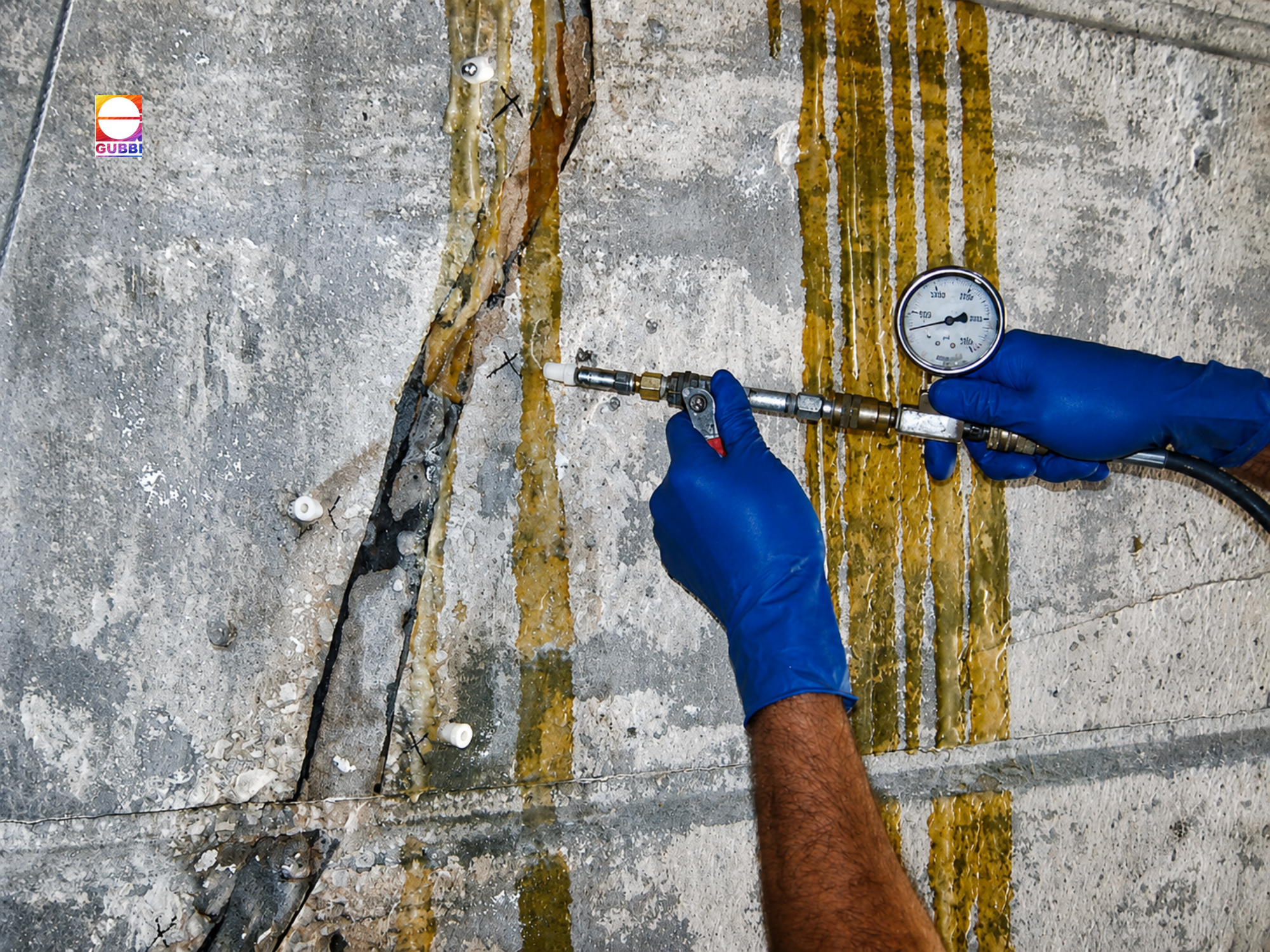
Retrofitting services are increasingly important for industrial buildings, commercial facilities, warehouses, infrastructure assets, and ageing RCC structures that need improved performance without complete reconstruction. Over time, structures may face concrete deterioration, reinforcement corrosion, leakage, changed loading conditions, or functional modifications. A suitable rehabilitation strategy begins with understanding the existing condition and then selecting repair, strengthening, or injection techniques that address the actual problem rather than treating only visible damage. Among the methods used in structural rehabilitation, PU grouting and injection grouting are useful when water enters through cracks, joints, honeycombed concrete, voids, or concealed pathways. Retrofitting is broader than grouting because it can involve strengthening structural members, restoring damaged concrete, improving load capacity, or addressing deficiencies identified during assessment. Understanding this difference helps project owners choose an appropriate solution for industrial and infrastructure repair requirements.
Understanding Structural Retrofitting Services
Structural retrofitting means modifying or strengthening an existing structure so that it can safely meet its intended performance requirements. The need may arise from ageing, deterioration, increased operational loads, changes in usage, construction deficiencies, or updated engineering requirements. Depending on the assessment, solutions can include concrete jacketing, steel strengthening, fibre-reinforced systems, beam or slab strengthening, foundation improvement, crack repair, corrosion treatment, and other rehabilitation measures.
For industrial structures, retrofitting decisions should consider production schedules, access restrictions, equipment loads, vibration, environmental exposure, and the consequences of shutting down operations. A repair method that works for one structure may not suit another. Engineers therefore examine the affected member, surrounding concrete, reinforcement condition, loading, moisture exposure, and accessibility before deciding whether strengthening, concrete repair, grouting, waterproofing, or a combination of techniques is appropriate.
Why Existing Structures Need Rehabilitation
Concrete structures can deteriorate for many reasons, including prolonged moisture exposure, carbonation, reinforcement corrosion, chemical attack, repeated loading, poor drainage, construction defects, and insufficient maintenance. Small cracks or leakage paths can become more serious when water reaches reinforcement or penetrates deeper into concrete. Timely structural repair and rehabilitation can help control deterioration and preserve the functional performance of industrial buildings, commercial structures, and infrastructure assets.
A major advantage of planned rehabilitation is that it can address identified deficiencies while allowing useful portions of an existing asset to remain in service. The objective is not simply to make damaged concrete look new. Effective repair should consider the cause of deterioration, the structural role of the affected area, moisture conditions, expected loading, and future exposure. This approach supports better decisions about repair and strengthening requirements.
What Is PU Grouting?
PU grouting, or polyurethane grouting, is an injection technique commonly used to control water ingress through cracks, joints, voids, and other leakage pathways in concrete structures. Polyurethane materials can be selected according to site conditions and may react with moisture, expand, and form a sealing barrier inside affected areas. The technique is particularly relevant where active leakage makes conventional surface treatment difficult or insufficient.
The performance of PU injection grouting depends on more than simply injecting material into a crack. The leakage path must first be identified, suitable injection points established, and the material selected according to moisture conditions and the required outcome. Injection pressure, packer placement, sequencing, and substrate condition also influence the result. For this reason, experienced injection grouting contractors generally assess the defect before finalising the repair methodology when the defect is suitable.
PU Injection Grouting for Water Leakage
Water leakage in concrete can appear in basements, retaining structures, underground areas, water-retaining structures, joints, slabs, walls, and other locations exposed to moisture. PU injection grouting can be considered when water is travelling through internal cracks or voids that are difficult to seal effectively from the surface. By injecting resin through prepared points, the treatment can target pathways inside the concrete rather than relying only on surface coatings.
Active leakage requires careful observation because the visible wet spot may not represent the actual entry point. Water can travel through interconnected cracks, construction joints, honeycombing, or internal voids before appearing elsewhere. A proper injection grouting procedure therefore involves tracing leakage, identifying suitable injection locations, controlling pressure, and monitoring material movement. This helps reduce unnecessary drilling and improves the chances of treating the relevant leakage pathway.
Injection Grouting Contractors and Site Execution
Injection grouting contractors play an important role in converting a repair design into controlled site execution. Their work may include crack mapping, surface preparation, drilling, packer installation, material preparation, pressure injection, sealing, curing, and finishing. The exact sequence varies with the defect and grout system. Proper equipment handling is also important because excessive pressure or unsuitable injection practices can damage weak concrete or create unintended pathways.
Before starting injection work, the affected area should be inspected for crack width, depth, movement, moisture, leakage intensity, concrete quality, and accessibility. The repair team can then determine whether PU, epoxy, cement-based grout, microfine cement, or another system is appropriate. This distinction is important because PU grouting is not a universal solution for every concrete crack, structural defect, or waterproofing requirement.
PU Grouting vs Epoxy Injection Grouting
PU and epoxy injection grouting serve different repair requirements. PU systems are commonly associated with water-bearing cracks and leakage control because selected formulations can react with moisture and expand. Epoxy injection is generally considered for suitable stable structural cracks where bonding and restoration of concrete continuity are important. The correct choice depends on crack characteristics, moisture conditions, structural significance, movement, and the intended performance of the repair.
Choosing between injection systems should therefore be based on diagnosis rather than the popularity of a particular material. A dry, stable structural crack may require a different treatment from an actively leaking joint or moving crack. In some projects, grouting may also be only one stage of a wider rehabilitation program involving concrete removal, reinforcement treatment, protective coating, waterproofing, or structural strengthening.
How the Injection Grouting Process Works
A typical injection grouting project begins with inspection and identification of the affected area. The surface is cleaned, crack or leakage locations are marked, and suitable injection points are planned. Small holes may then be drilled along the defect and packers installed. The selected grout is injected through these points under controlled pressure, allowing the material to travel through connected cracks, voids, or leakage paths before the points are sealed.
After injection, the treated area is observed for leakage reduction, grout movement, and surface condition. Packers may be removed or cut back after the required treatment, and the surface can be repaired or finished as specified. Quality checks should consider material batch details, injection pressure, quantity used, sequence, site conditions, and visible response. Proper documentation provides useful information for future maintenance and structural rehabilitation decisions.
Applications in Industrial and Infrastructure Structures
PU grouting and injection grouting can be considered for industrial plants, commercial facilities, warehouses, parking structures, basements, foundations, water-retaining structures, tunnels, bridges, and other concrete assets where leakage or internal voids require treatment. In industrial environments, the method can be useful when access is restricted or when repairs need to be planned around operating conditions. The final application should always follow an engineering assessment of the specific defect.
Retrofitting services can also combine injection treatment with broader structural repair work. For example, a deteriorated RCC member may require concrete restoration and reinforcement protection before strengthening, while a leaking joint may require injection followed by suitable surface treatment. Integrating different techniques can create a more complete rehabilitation strategy because the visible symptom, structural condition, and moisture source are considered together instead of being treated as separate problems.
Factors That Affect Grouting Results
Several factors influence the outcome of injection grouting, including concrete condition, crack geometry, moisture level, water pressure, grout viscosity, expansion characteristics, injection pressure, packer spacing, and workmanship. Site temperature and accessibility may also affect material handling and application. A technically suitable grout can still perform poorly if the leakage path is misunderstood or the injection procedure is uncontrolled. Diagnosis and execution are therefore equally important.
The long-term performance of a repair also depends on whether the underlying cause has been addressed. If water enters because of a failed joint, drainage problem, movement, or another recurring condition, injection alone may not resolve every aspect of the issue. Similarly, structural cracks caused by overloading or deterioration may require strengthening after crack treatment. A complete rehabilitation plan should therefore distinguish between symptom control and structural correction.
Selecting Retrofitting and Grouting Contractors
When evaluating retrofitting services, project owners should look beyond a simple quotation and review the proposed methodology, inspection process, material system, execution plan, safety measures, and quality controls. Injection grouting contractors should be able to explain why a particular grout is being recommended and where it will be applied. Experience with industrial and infrastructure environments can also be valuable when projects involve restricted access, active operations, or complex concrete conditions.
Why Assessment Should Come Before Repair
Starting repair work without identifying the cause can lead to repeated maintenance and unnecessary expenditure. A crack may result from shrinkage, movement, corrosion, settlement, overloading, or another mechanism, while leakage may originate from a joint, void, porous concrete, or connected crack network. Assessment helps separate these conditions and supports a repair strategy based on the actual problem. This is especially important for ageing industrial and infrastructure structures.For clients planning structural rehabilitation, Gubbi Civil Engineers Limited can be considered for projects where retrofitting, PU grouting, injection grouting, concrete repair, or related rehabilitation measures need to be evaluated together. A project-specific assessment can help identify the actual defect, determine suitable treatment options, and coordinate different repair activities. This approach is useful when the requirement extends beyond a single crack or leakage point.
A structured assessment may include visual inspection, crack mapping, measurements, concrete condition checks, reinforcement evaluation, moisture observations, and review of available structural information. Depending on the project, additional testing may be required. The findings can then guide decisions about retrofitting, structural repair, waterproofing, PU injection, epoxy injection, or other interventions. The aim is to select a method that matches the defect rather than applying the same treatment everywhere.
Cost Considerations for Retrofitting and PU Grouting
The cost of retrofitting services or PU injection grouting cannot be determined accurately from the service name alone. Project size, defect extent, access, material consumption, injection points, pressure requirements, surface preparation, equipment, working conditions, and additional repairs can all affect the overall budget. A site inspection and defined scope are therefore more useful than comparing isolated per-unit prices without understanding the technical requirements of the project.
For industrial clients, the financial impact can also include access arrangements, shutdown requirements, protection of equipment, cleaning, testing, and restoration of affected areas. A technically appropriate repair may reduce the need for repeated intervention, but the expected value depends on correct diagnosis and execution. Project owners should compare the proposed scope, methodology, quality controls, and maintenance implications rather than evaluating quotations only by the lowest initial price.
Maintenance After Injection and Retrofitting
Repair work should be followed by appropriate observation and maintenance, particularly in areas exposed to continuous moisture, chemicals, vibration, or operational loads. Treated locations can be inspected for renewed leakage, new cracking, surface deterioration, or changes in surrounding concrete. Keeping records of repair locations, materials, injection quantities, and observations can help maintenance teams understand previous interventions and plan future inspections more effectively.
Regular condition monitoring is particularly useful for large industrial and infrastructure assets because deterioration can develop gradually. Maintenance teams can track recurring leakage, concrete spalling, corrosion indicators, joint movement, and other visible changes. When new defects appear, they should be assessed rather than automatically treated with the previous method. Structural rehabilitation is most effective when repair decisions are connected with ongoing inspection and asset maintenance planning.
Retrofitting services, PU grouting, PU injection grouting, and injection grouting contractors address different but often connected requirements in structural rehabilitation. Retrofitting can improve the capacity or performance of an existing structure, while injection systems can target selected cracks, voids, and leakage pathways. The right solution depends on the defect, structural condition, moisture environment, and project objective. Careful assessment and controlled execution remain central to achieving a suitable repair outcome.

 English
 Arabic
 French
 Spanish
 Portuguese
 Deutsch
 Turkish
 Dutch
Dutch
 Italiano
 Russian
 Romaian
 Portuguese (Brazil)