


Y Type Strainer: Working, Types, Benefits and Maintenance
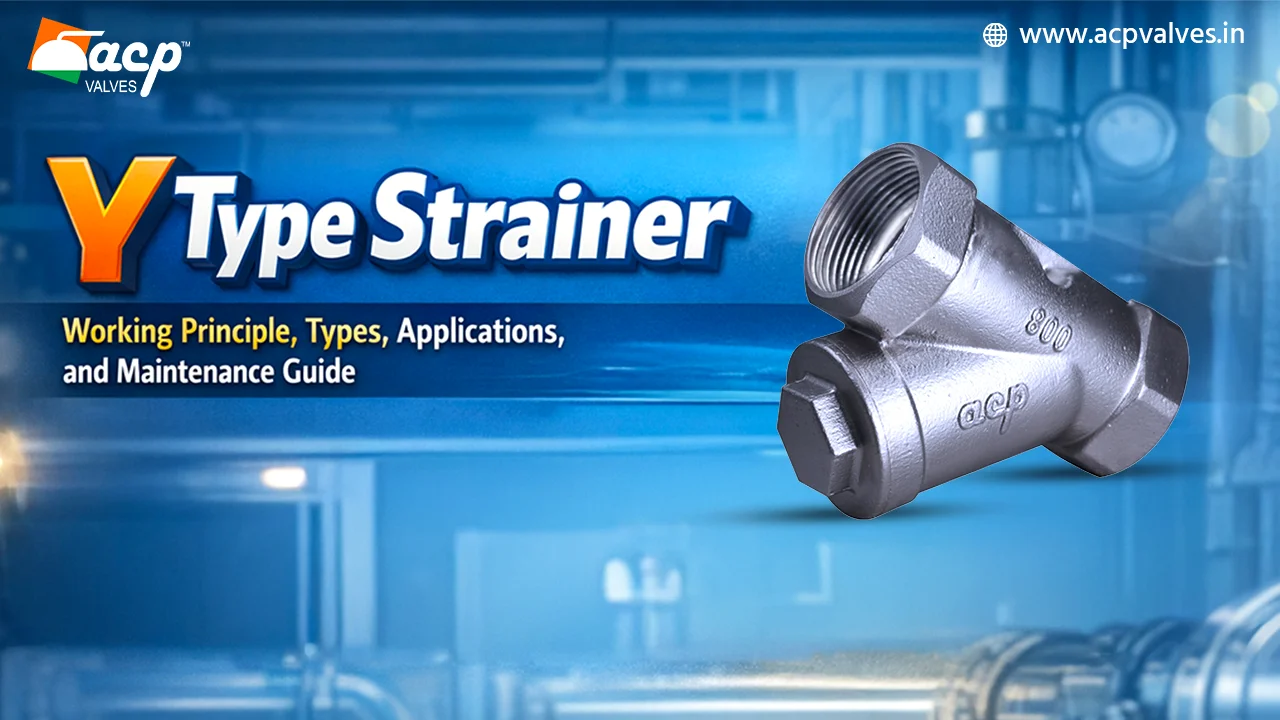
A Y type strainer is a pipeline filtration device used to remove unwanted solid particles such as rust, scale, dirt, sand, and welding debris from flowing liquids, steam, or gases. Its compact design makes it particularly useful for protecting sensitive downstream equipment such as valves, pumps, flow meters, heat exchangers, and control systems.
In simple terms, a Y strainer acts as the first line of protection in a piping system. Instead of allowing contaminants to reach expensive equipment, it captures them inside a removable screen.
For industrial plants, water treatment systems, HVAC installations, chemical processing, oil and gas applications, and steam networks, selecting the right strainer isn't just about filtration. Screen size, pressure rating, material, installation direction, flow rate, and maintenance requirements all matter.
What Is a Y Type Strainer?
A Y type strainer is a mechanical filtration device with a Y-shaped body. Inside the body is a perforated or mesh screening element that traps solid contaminants while allowing the process fluid to continue through the pipeline.
The name comes from the physical shape of the housing. One section provides the main flow path, while the angled branch contains the filter screen and cover.
A typical Y strainer consists of:
-
Strainer body
-
Stainless steel or alloy screen
-
Screen holder
-
Cover or bonnet
-
Gasket
-
Bolted or threaded connections
-
Drain or blowdown connection, where required
The screen can be removed for inspection and cleaning without replacing the complete strainer.
How Does a Y Strainer Work?
The working principle is straightforward.
When fluid enters the strainer, it passes through the internal screening element. Larger particles are unable to pass through the openings and collect inside the screen chamber. The cleaned fluid then continues downstream.
The basic process is:
Dirty fluid → Y strainer → Screen captures particles → Filtered fluid → Protected equipment
For example, consider a water pipeline feeding a control valve. Rust or pipe scale moving through the line could damage the valve seat or interfere with its operation. Installing a Y strainer upstream helps capture those particles before they reach the valve.
Spirax Sarco notes that strainers are commonly installed upstream of equipment such as steam traps, flowmeters, and control valves.
Key Benefits of a Y Strainer
A properly selected Y type strainer offers several practical advantages.
1. Protects downstream equipment
The primary purpose is contamination control. A strainer can help protect:
-
Pumps
-
Valves
-
Flow meters
-
Heat exchangers
-
Steam traps
-
Nozzles
-
Control equipment
2. Compact construction
Compared with some larger filtration arrangements, Y strainers have a relatively compact footprint. This makes them useful where pipeline space is limited.
3. Easy cleaning
The screening element can generally be accessed by removing the cover. Once removed, accumulated debris can be cleaned and the screen inspected for damage.
4. Multiple material options
Depending on the application, Y strainers can be manufactured using materials such as cast iron, ductile iron, carbon steel, stainless steel, bronze, or other alloys.
Material selection should always consider fluid compatibility, pressure, temperature, and corrosion conditions.
5. Suitable for different media
Y strainers are used with various process media, including:
-
Water
-
Steam
-
Air
-
Gas
-
Oil
-
Chemicals
-
Industrial process fluids
The exact design and installation arrangement should match the service conditions.
Types of Y Strainers
Y strainers can be categorized according to construction material, connection type, pressure class, and screen specification.
Stainless Steel Y Strainer
Stainless steel models are commonly selected where corrosion resistance and cleaner process conditions are important. They can be suitable for chemical, food-processing, pharmaceutical, and industrial applications, depending on the specific grade and process requirements.
Carbon Steel Y Strainer
Carbon steel strainers are frequently used in industrial pipelines, including applications involving higher pressure and temperature. Spirax Sarco, for example, provides carbon steel Y-type strainer designs for industrial and steam applications.
Cast Iron or Ductile Iron Y Strainer
These are often considered for general water and utility applications where the operating conditions are compatible with the selected material.
Threaded and Flanged Y Strainers
Threaded models are commonly used for smaller pipelines, while flanged connections are frequently selected for larger industrial piping systems.
The connection should match the piping standard and pressure class rather than being selected solely according to pipe diameter.
Y Strainer vs Basket Strainer
One common question is whether a Y strainer or basket strainer should be used.
A Y strainer is generally compact and well suited to applications where space is limited. Basket strainers can provide greater dirt-holding capacity and may therefore be preferable in applications with a high concentration of contaminants.
Spirax Sarco points out that, size for size, Y-type strainers generally have lower dirt-holding capacity than basket strainers, meaning they may require more frequent cleaning in heavily contaminated systems.
So, the right choice depends on contamination level, available space, maintenance access, pressure drop, and process requirements.
How to Select the Right Y Type Strainer
Choosing a strainer shouldn't be based on size alone. Consider these factors before purchasing:
1. Pipe size
Select a strainer that matches the pipeline connection and required flow capacity.
2. Pressure and temperature
Check the maximum operating pressure and temperature against the manufacturer's rated limits.
3. Screen specification
Screen perforation or mesh size determines the approximate particle size that can be retained. A finer screen isn't automatically better because it can increase pressure drop and require more frequent cleaning.
4. Material
Select the body and screen material based on fluid characteristics and corrosion requirements.
5. Connection type
Common options include:
-
Flanged
-
Threaded
-
Socket weld
-
Butt weld
6. Maintenance requirements
Make sure there's enough clearance to remove the screen safely. This is often overlooked during installation.
Y Strainer and NRV Valve Types: What's the Difference?
A Y strainer and an NRV perform completely different jobs.
A Y strainer removes solid contaminants from the process stream. An NRV (Non Return Valve), on the other hand, is designed to prevent reverse flow.
Common non return valve types include:
-
Swing check valve
-
Lift check valve
-
Wafer check valve
-
Dual plate check valve
-
Piston check valve
-
Ball check valve
Therefore, a Y strainer shouldn't be considered a replacement for an NRV. In many piping systems, both components may be installed because they solve different problems.
For example, a pump discharge line may require an NRV to prevent backflow while a strainer may be used elsewhere to protect equipment from pipeline debris.
FAQs About Y Type Strainer
What is a Y type strainer used for?
A Y type strainer is used to remove solid contaminants such as dirt, rust, scale, and debris from pipelines and protect downstream equipment.
Where should a Y strainer be installed?
It is generally installed upstream of the equipment that needs protection. The exact orientation depends on whether the system carries liquid, steam, or gas and on the manufacturer's instructions.
What is the difference between a Y strainer and an NRV?
A Y strainer filters solid particles, while an NRV prevents reverse flow. They have different functions and may both be required in the same piping system.
How often should a Y strainer be cleaned?
There isn't one universal interval. Cleaning frequency depends on the amount of contamination and the resulting pressure drop across the screen. High-debris systems normally require more frequent inspection.
Can a Y strainer be used for steam?
Yes. Y-type strainers are widely used in steam systems, provided the selected model is rated for the required pressure, temperature, and service conditions.
Conclusion
A Y type strainer is a relatively simple component, but its role in protecting industrial piping equipment is important. By trapping rust, scale, dirt, and other solid particles before they reach sensitive components, it can reduce contamination-related problems and support more reliable system operation.
The best results come from choosing the correct Y strainer based on flow rate, pressure, temperature, material, screen specification, and maintenance requirements. Installation matters just as much. A correctly sized and correctly oriented strainer can provide effective protection without creating unnecessary flow restriction.
Whether you're designing a steam network, water pipeline, HVAC system, or industrial process line, treat the strainer as part of the overall piping design—not simply as an accessory.

 English
 Arabic
 French
 Spanish
 Deutsch
 Turkish
 Dutch
Dutch
 Italiano
 Russian
 Romaian
 Portuguese (Brazil)
 Greek
Greek