


How Water Security and Smart Infrastructure Are Reshaping Pump Demand Across Asia-Pacific
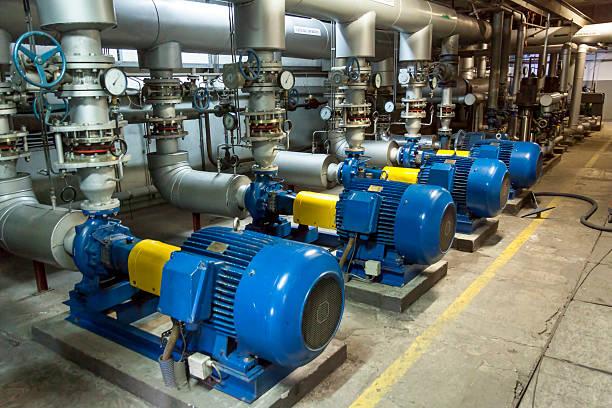
Asia-Pacific’s water infrastructure is undergoing significant change as rapid urbanization, industrialization, agricultural modernization, and climate-related water risks increase the need for reliable pumping systems. Municipalities are expanding water and wastewater networks, while industries require pumps for process water, cooling, and dewatering. At the same time, droughts, flooding, and aging infrastructure are encouraging investment in more resilient and digitally connected pumping solutions.
According to the Asia-Pacific water pump market report, the sector was valued at around USD 21.95 billion in 2025 and is projected to grow from USD 22.80 billion in 2026 to USD 29.27 billion by 2032, expanding at a CAGR of 4.25% during 2026–2032. The study identifies water and wastewater infrastructure expansion, irrigation modernization, industrialization, climate resilience, energy-efficiency requirements, and smart pumping technologies as important factors shaping the sector.
Urbanization Expands Water Infrastructure Requirements
Rapid urban growth is creating substantial requirements for drinking-water distribution, wastewater treatment, stormwater management, and flood-control infrastructure. Pumps are essential throughout these systems because water needs to be abstracted, transferred, treated, distributed, and discharged across interconnected networks.
The Asian Development Bank estimates that Asia and the Pacific will require around USD 4 trillion in water, sanitation, and hygiene investment through 2040. Its Asian Water Development Outlook 2025 also highlights a significant infrastructure financing gap and increasing risks from climate-related hazards. These investment requirements create a long-term foundation for pumping equipment demand across municipal and regional water projects.
Water and Wastewater Remain the Largest End User
Water and wastewater accounted for approximately 26.85% of the Asia-Pacific water pump sector in 2025, according to the study. The segment is supported by large-scale municipal projects, stricter wastewater requirements, water-supply expansion, and rehabilitation of existing networks across China, India, and Southeast Asia.
Wastewater treatment facilities require pumps for collection, transfer, biological treatment, sludge handling, and discharge. As countries strengthen wastewater infrastructure, demand can also increase for equipment capable of handling solids, variable flows, and demanding operating conditions.
The region’s infrastructure needs extend beyond new treatment plants. Existing networks also require rehabilitation, creating opportunities for pump replacement and efficiency upgrades.
Irrigation Modernization Supports Agricultural Demand
Agriculture remains an important source of water consumption across Asia-Pacific. Irrigation systems depend on pumping equipment for groundwater extraction, water transfer, pressurization, and distribution. The study highlights agricultural modernization, particularly pressurized and micro-irrigation, as an important driver of demand in countries such as India, China, and Southeast Asian economies.
Efficient irrigation is becoming more relevant as water availability becomes less predictable. The Asian Development Bank emphasizes the importance of improving water productivity in agriculture, particularly in water-stressed economies, while supporting more efficient irrigation and water-management practices.
Modern irrigation systems can combine pumps with sensors, automated valves, remote controls, and data-based scheduling. Such integration allows water delivery to respond more closely to crop and field requirements.
Climate Risks Increase Demand for Resilient Pumps
Asia-Pacific faces a diverse set of water-related risks, including droughts, floods, extreme rainfall, heat, and coastal hazards. These conditions create demand for pumping systems that can support drainage, emergency water transfer, flood control, groundwater management, and post-disaster rehabilitation.
The Asian Development Bank reports that Asia accounts for 41% of global flood events, while water-related hazards are increasing faster than regional preparedness in several areas. Its latest water-security assessment emphasizes the need for climate-resilient infrastructure and stronger investment in water systems.
This environment creates opportunities for pumps designed for variable operating conditions. Emergency drainage systems, stormwater infrastructure, decentralized water supplies, and flood-control installations can require robust equipment capable of responding to changing hydraulic conditions.
Aging Infrastructure Remains a Constraint
Aging water infrastructure can limit the benefits of modernization. Leak-prone networks, pressure shocks, deteriorating pipelines, and outdated pumping stations can increase equipment failures and reduce operating efficiency.
The study notes that utilities may sometimes prioritize low-cost, like-for-like replacements rather than comprehensive station upgrades. This can limit the adoption of higher-efficiency or intelligent pumps even when newer systems could deliver better lifecycle performance.
The challenge is therefore broader than pump replacement. Coordinated improvements to pipelines, valves, electrical systems, controls, and monitoring infrastructure can help operators obtain greater efficiency from modern pumping equipment.
Smart Pumping Is Gaining Momentum
IoT-enabled and digitally connected pumping systems are becoming an important trend across Asia-Pacific. Utilities and industrial facilities are increasingly combining sensors, supervisory control systems, cloud analytics, and predictive maintenance tools to improve pump performance.
Smart systems can monitor parameters such as pressure, flow, vibration, temperature, and energy consumption. This information can help operators identify unusual operating conditions and schedule maintenance before equipment failures cause extended downtime.
The transition is particularly relevant for large utilities managing geographically dispersed pumping assets. Remote monitoring can reduce dependence on physical inspections while providing operators with a more complete view of network performance.
Energy Efficiency Influences Replacement Cycles
Energy consumption is an important consideration because water and wastewater pumps can operate continuously or for long periods. As electricity costs and efficiency requirements become more important, operators are increasingly evaluating equipment according to lifecycle performance.
The study identifies variable-frequency-drive retrofits, efficient motor standards, and higher-efficiency pumps as factors supporting replacement demand. Variable-speed systems can adjust pump output according to changing flow and pressure requirements, helping reduce unnecessary energy use in suitable applications.
This trend is also connected with digitalization. Smart controls can optimize pump operation while providing data that helps operators assess energy performance over time.
Centrifugal Pumps Maintain a Leading Position
Centrifugal pumps represented approximately 75% of the Asia-Pacific water pump sector in 2025, according to the study. Their broad suitability for water supply, wastewater transfer, irrigation, HVAC circulation, and industrial applications supports their leading position.
Their relatively simple design and adaptability make centrifugal pumps suitable for large infrastructure projects as well as commercial and industrial systems. Increasingly, these pumps are being combined with variable-speed drives, sensors, and digital controls to improve operational flexibility.
Submersible and positive-displacement pumps continue to serve specialized applications where installation conditions, fluid characteristics, pressure requirements, or solids handling require different configurations.
HVAC Is Emerging as a Fast-Growing Application
HVAC is projected to expand at approximately 6.43% CAGR through 2032, making it the fastest-growing end-user segment identified in the study. Commercial buildings, high-rise residential developments, and data centers are increasing demand for chilled-water and heating circulation systems.
Rising temperatures across parts of the region are also increasing cooling requirements. Efficient circulation and booster pumps can therefore become increasingly important as buildings seek to manage cooling demand while limiting energy consumption.
The growth of data-center infrastructure adds another dimension because large facilities require reliable cooling systems capable of operating continuously. This creates additional demand for efficient circulation equipment and digitally monitored pumping systems.
China Remains the Largest National Market
China accounted for approximately 39% of the Asia-Pacific water pump sector in 2025, according to the study. Rapid urbanization, industrialization, water-supply investment, wastewater treatment, flood-control projects, and agricultural irrigation support demand across multiple applications.
India and Southeast Asia also represent important demand centers because of urban infrastructure development, agricultural modernization, industrial expansion, and water-security initiatives. The different development patterns across countries mean that equipment requirements vary from large municipal pumping stations to decentralized agricultural and rural water systems.
Outlook for Asia-Pacific’s Pumping Infrastructure
Asia-Pacific’s water pump sector is increasingly linked with the region’s broader requirements for water security, infrastructure resilience, agricultural productivity, and energy efficiency. Water and wastewater remain the largest application area, while HVAC is emerging as a faster-growing demand center.
Climate-related risks and infrastructure gaps are encouraging investment in resilient pumping systems, while smart controls and connected monitoring are changing maintenance practices. As utilities, industries, agricultural operators, and building owners modernize their systems, future demand is likely to emphasize efficiency, reliability, digital connectivity, and adaptability to changing water and operating conditions.

 English
 Arabic
 French
 Spanish
 Portuguese
 Deutsch
 Turkish
 Dutch
Dutch
 Italiano
 Russian
 Romaian
 Portuguese (Brazil)