


Struggling with Dark Spots? Which Face Serum for Pigmentation Helps?
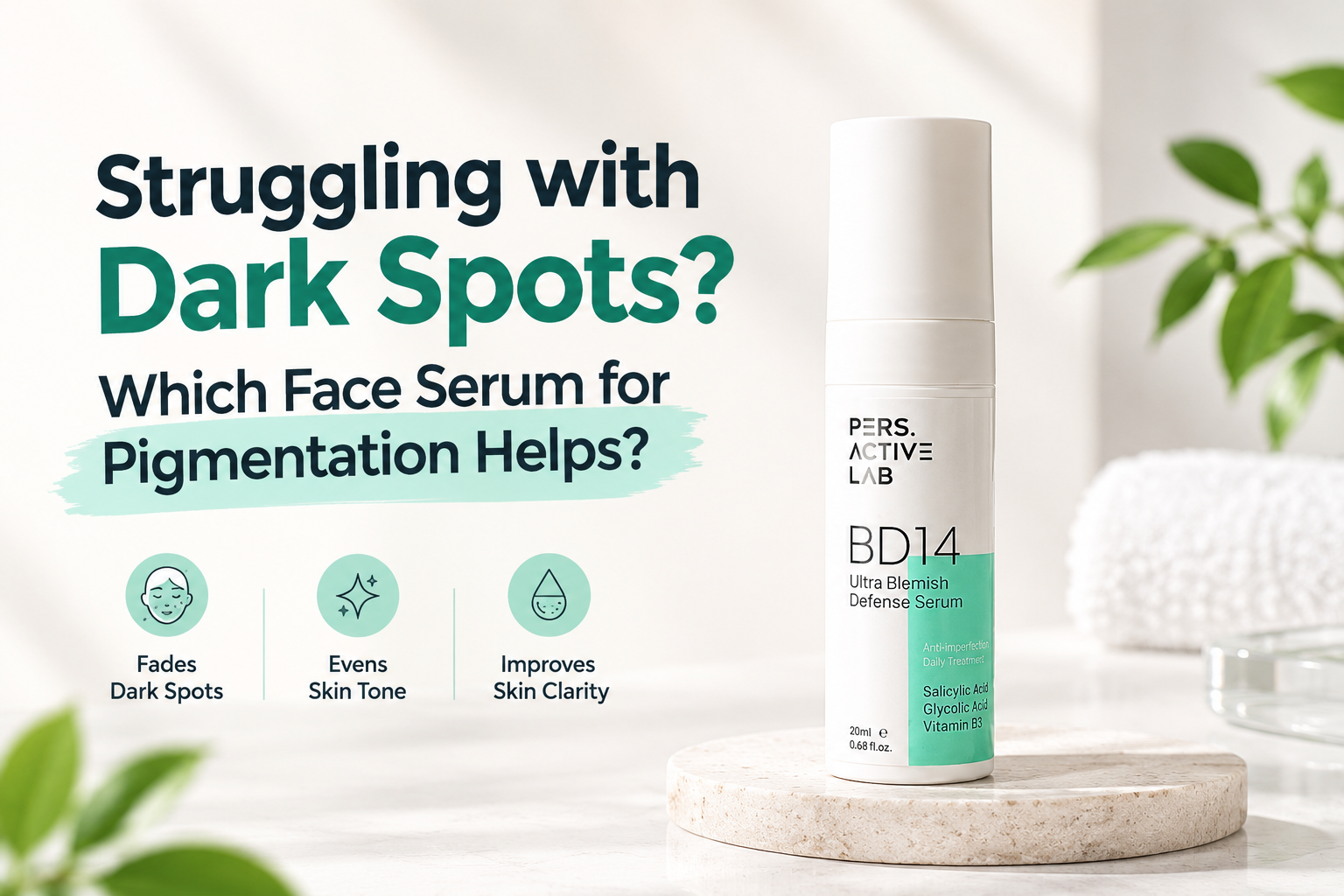
If dark spots aren't fading despite regular skincare, the most effective fix is usually a face serum for pigmentation formulated with exfoliating acids like glycolic and salicylic acid, paired with niacinamide. These ingredients work by clearing dead skin buildup, unclogging pores, and supporting skin renewal, addressing pigmentation at the surface level while also treating the acne or congestion that often causes it in the first place.
The frustrating part about dark spots is that they rarely respond to random product-switching. Understanding why they form and which ingredients actually interrupt that process makes a much bigger difference than trying five different serums in a month.
Why Dark Spots Are So Stubborn in the First Place
Dark spots typically form after some kind of skin trauma, most commonly acne, but also irritation, sun exposure, or inflammation. When skin heals from this, it can overproduce melanin in that specific area, leaving behind a mark that lingers long after the original blemish is gone. This is called post-inflammatory hyperpigmentation, and it's one of the most common reasons people feel like their skin "just won't clear up."
The mistake many people make is treating dark spots as a separate issue from the acne or congestion causing them. In reality, if pores stay clogged and breakouts keep happening, new dark spots keep forming even while old ones are fading. That's the real reason a good face serum for pigmentation doesn't just brighten skin it also has to address pore congestion, because treating one without the other rarely gives lasting results.
The Ingredients That Actually Make a Difference
Not all pigmentation-targeting serums work the same way. Two ingredients consistently show up in formulas with real clinical backing:
- Salicylic Acid — an oil-soluble acid that penetrates pores, clearing out buildup and reducing the blockages that lead to acne and, later, dark spots.
- Glycolic Acid — a surface-level exfoliant that speeds up cell turnover, helping fade the appearance of existing pigmentation and smoothing rough texture.
When combined with niacinamide, which supports a more even tone while strengthening the skin barrier, this trio addresses pigmentation from multiple angles clearing the cause (clogged pores and acne), speeding up renewal, and supporting the skin so it doesn't overreact and create more marks in the process.
Why "More Ingredients" Isn't the Answer
A common instinct when dark spots won't fade is to add more products an extra acid, a stronger brightener, a new spot treatment. This usually backfires. Layering too many actives at once increases irritation, and irritated skin is more likely to overproduce melanin, not less. The result is often more pigmentation, not less.
This is where the idea of using essential actives in precise ratios matters more than people expect. A serum formulated with 1.5% salicylic acid and a smaller percentage of glycolic acid, alongside niacinamide, is designed to be effective without overwhelming the skin barrier. Starting with two to three applications a week rather than daily use right away gives skin time to adjust, which actually leads to better long-term results than an aggressive, all-at-once approach.
Why the Skin Barrier Matters Even When You're Treating Pigmentation
It's easy to think of the skin barrier and pigmentation as unrelated concerns, but they're closely connected. A compromised barrier heals unevenly, which can make existing dark spots look more stubborn and increase the chance of new ones forming. This is why a repair-first approach calming and stabilizing skin before introducing stronger actives tends to produce more consistent results than jumping straight into aggressive exfoliation.
For anyone new to acids, starting slow isn't a lack of commitment to results it's what allows the skin to tolerate treatment long enough to actually see them.
Why Personalized Tracking Makes a Real Difference
One of the biggest reasons people give up on a face serum for pigmentation too early is that results aren't always visible week to week. Skin renewal is gradual, and without a way to track subtle changes, it's easy to assume a product "isn't working" when it actually needs more time.
This is where AI-powered skin analysis tools have become genuinely useful, not just a novelty. Platforms like the SBP-PAL AI skincare app go beyond flagging "you have pigmentation" they explain the likely cause, whether it's acne-related, sun-related, or barrier-related, and build a routine around it, then track your skin's progress over repeated scans instead of offering a one-time snapshot. Seeing measurable change over weeks, rather than guessing, is often what keeps people consistent long enough for a treatment to actually work.
Alongside the serum, daily sun protection plays a critical role. UV exposure directly stimulates melanin production, meaning even the most effective pigmentation serum will struggle to keep up if sunscreen isn't part of the daily routine.
How to Actually Use a Pigmentation Serum Without Irritating Skin
- Cleanse skin and pat dry before application
- Apply the serum at night, starting with two to three uses per week
- Avoid combining with retinol or other exfoliating acids when starting out
- Follow with a moisturizer to support the barrier
- Use broad-spectrum sunscreen every morning without exception
Consistency matters more than intensity here. Most people see initial improvement in texture within a few weeks, with visible pigmentation fading over 8 to 12 weeks of regular use.
When to See a Dermatologist
Most pigmentation from acne or minor irritation responds well to consistent topical treatment over time. However, if dark spots are deep, widespread, or not improving after several months of proper use and sun protection, it's worth consulting a dermatologist. Deeper pigmentation or scarring sometimes requires professional treatment beyond what a serum alone can address.
Frequently Asked Questions
What is the best face serum for pigmentation caused by acne?
A serum combining salicylic acid, glycolic acid, and niacinamide tends to work best for acne-related pigmentation, since it treats both the clogged pores causing new breakouts and the dark marks left behind by old ones.
Can I use a pigmentation serum every day?
Beginners should start with two to three applications per week rather than daily use, especially with acid-based formulas. Frequency can be increased gradually once skin shows good tolerance.
Why do my dark spots keep coming back even after they fade?
This usually means active acne or clogged pores are still present, creating new pigmentation as old spots heal. Treating the underlying cause, not just the visible dark spots, is key to breaking the cycle.
How long before a face serum for pigmentation shows results?
Most people notice smoother texture within a few weeks, while visible pigmentation fading typically takes 8 to 12 weeks of consistent use alongside daily sunscreen.

 English
 Arabic
 French
 Spanish
 Portuguese
 Turkish
 Dutch
Dutch
 Italiano
 Russian
 Romaian
 Portuguese (Brazil)
 Greek
Greek