


Wild Mad Honey: What Makes This Himalayan Honey So Unique?
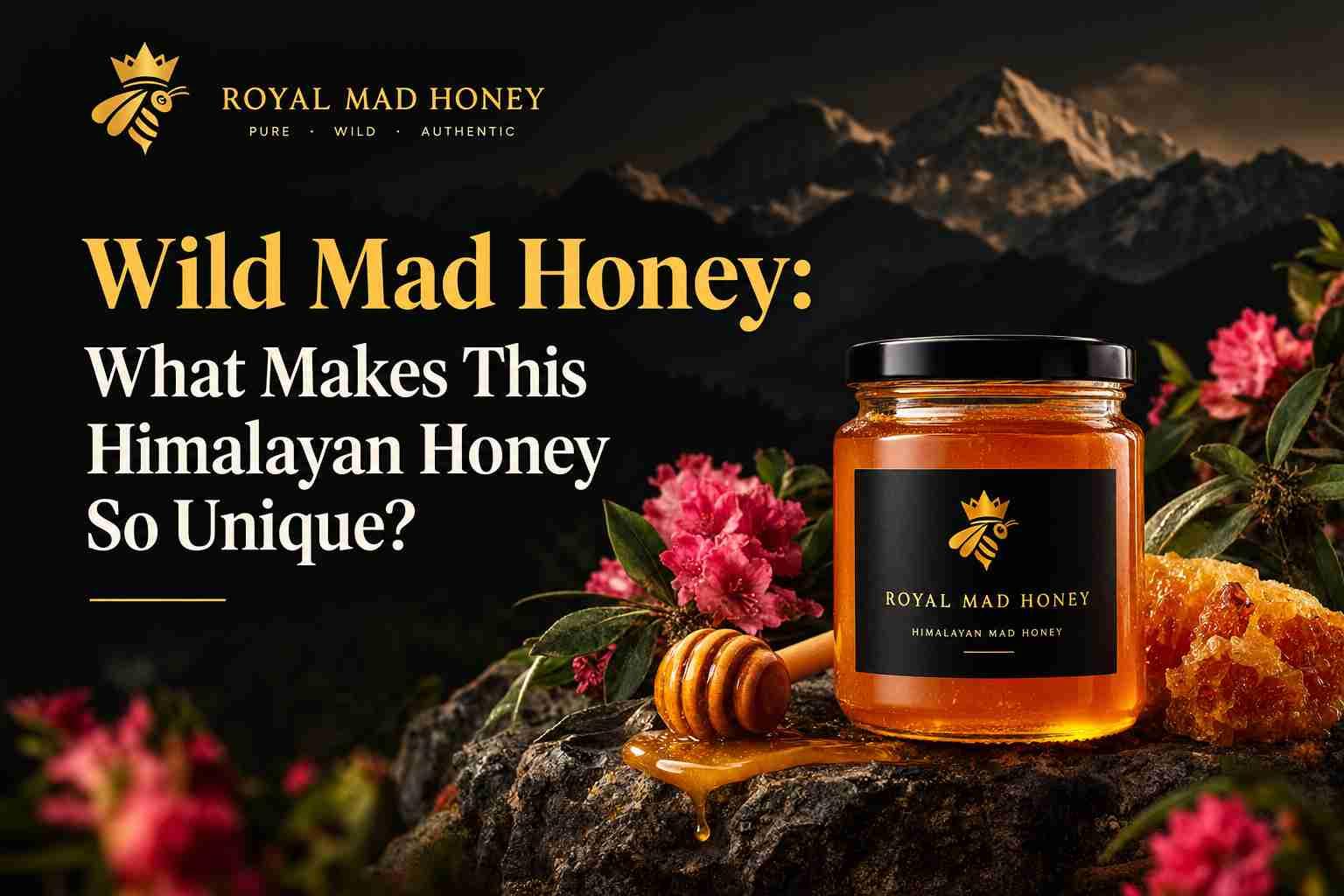
Wild Mad Honey: What Makes This Himalayan Honey So Unique?
Honey is usually associated with familiar flowers, gentle sweetness, and a golden jar on the kitchen shelf. But deep in the Himalayan mountains, some honey comes from a very different environment. Wild mad honey is collected from remote cliffs and forested mountain areas, where bees forage on native flowering plants, including certain species of rhododendron.
The result is a distinctive honey with a fascinating history, unusual characteristics, and a strong connection to traditional harvesting communities. For anyone interested in natural foods, traditional honey, or Himalayan products, understanding where wild mad honey comes from is just as important as understanding what makes it different.
What Is Wild Mad Honey?
Wild mad honey refers to honey collected from naturally occurring bee colonies rather than from conventional managed hives. In the Himalayan region, this tradition is particularly associated with the giant honey bee, which builds large open-comb nests on cliffs and other exposed locations.
The term “mad honey” comes from the unusual effects that can occur when honey contains naturally occurring grayanotoxins. These compounds can be present when bees collect nectar from certain rhododendron flowers.
This does not mean every jar of wild honey contains the same level of these compounds. Concentration can vary considerably depending on factors such as the flowers available to bees, the harvesting season, geography, and the colony itself.
That variation is one reason responsible sourcing and quality testing matter.
Why Is Himalayan Wild Honey Different?
The environment plays a major role in shaping honey.
High-altitude Himalayan regions contain diverse vegetation, changing weather conditions, and isolated ecosystems. Bees may forage across a wide range of flowering plants, creating honey with characteristics that differ from commercially produced honey gathered from controlled agricultural environments.
Traditional Himalayan honey harvesting also tends to take place in difficult terrain. Experienced honey hunters may travel to steep cliffs where wild bee colonies have established nests. Harvesting can require specialist knowledge, careful movement, and an understanding of local environmental conditions.
The process is therefore more than simply collecting honey. It represents a traditional practice that has been passed through generations in some mountain communities.
The Role of Rhododendron Flowers
Rhododendrons are closely associated with mad honey because certain species contain grayanotoxins in their nectar.
When bees forage on these flowers, the compounds can make their way into the resulting honey. However, the presence and concentration of grayanotoxins are not guaranteed to be uniform.
This is important for consumers. A product described as mad honey should not automatically be assumed to have a predictable strength or effect. Natural products can vary, and responsible sellers should be transparent about sourcing and testing.
For this reason, wild mad honey is best approached as a distinctive traditional food product rather than something to consume casually based on exaggerated claims found online.
Traditional Harvesting in the Himalayas
One of the most interesting aspects of wild mad honey is the traditional harvesting culture surrounding it.
In parts of Nepal, honey hunters have historically collected honey from enormous cliffside colonies. The work can involve ropes, ladders, smoke, and specially designed tools. The terrain itself makes the process challenging, while protecting the colony and harvesting responsibly requires experience.
Traditional harvesting also connects the final product to its place of origin. Rather than viewing honey as an anonymous sweetener, consumers can appreciate the landscape, communities, and techniques involved in bringing it from remote mountain environments to the market.
Brands such as Royal Mad Honey focus on Himalayan mad honey from Nepal while highlighting traditional harvesting, seasonal batches, sourcing, and laboratory testing. These details can help consumers understand more about where a product comes from and how its quality is assessed.
How to Identify Quality Wild Mad Honey
Buying wild honey requires more attention than simply choosing the most attractive label. A few practical considerations can help consumers make better-informed decisions.
Check the Source
A trustworthy product should provide meaningful information about its geographical origin. If a seller describes honey as Himalayan or Nepalese, look for clear sourcing information rather than vague references to “mountain honey.”
Specific information generally gives consumers more confidence than dramatic marketing language.
Look for Testing Information
Natural variation is expected in wild honey, particularly when its composition depends on local plants and seasonal conditions.
Laboratory testing can provide useful information about product characteristics and help establish greater transparency. Buyers should be cautious of sellers making precise claims about potency or effects without supporting evidence.
Consider Seasonal Availability
Wild honey harvesting is influenced by flowering cycles, weather, and the availability of suitable bee colonies. This means genuine wild products may not always be available in unlimited quantities.
Limited seasonal batches are not automatically proof of authenticity, but they can make sense when they reflect the realities of traditional harvesting.
Avoid Extreme Health Claims
The internet is full of claims about mad honey and its supposed benefits. Some descriptions go far beyond what reliable evidence can support.
A responsible product description should distinguish traditional use and cultural history from established scientific evidence. Consumers should also understand that grayanotoxin-containing honey can cause adverse effects if consumed in excessive amounts.
Wild Honey vs Regular Honey
The biggest difference between wild mad honey and ordinary table honey is not simply flavour. It is the combination of source, environment, harvesting method, and potentially different natural compounds.
Regular honey may come from managed hives located near agricultural fields, orchards, or specific flowering crops. Wild Himalayan honey, by contrast, can originate from bees living in natural environments where the available flowers are less controlled.
Mad honey is further distinguished by the possibility of grayanotoxins from rhododendron nectar.
For someone exploring specialty honey, these differences make origin and production methods particularly important. A product should be judged on transparent sourcing and quality rather than on an unusual name alone.
Why Responsible Buying Matters
Interest in wild mad honey has grown internationally, but increased demand can create pressure on traditional harvesting communities and natural bee populations.
Consumers can play a role by choosing sellers that provide clear information about sourcing, testing, harvesting practices, and product characteristics.
For those exploring different Himalayan honey products, collections featuring rare mountain honey can provide an opportunity to compare products and learn more about the range of honey associated with mountain environments.
The goal should not simply be to find the strongest or most unusual product. A better approach is to understand what you are buying and choose products from sources that value transparency and responsible practices.
A Honey With a Story Behind It
Wild mad honey stands apart because its story begins long before it reaches a jar. It starts with mountain ecosystems, flowering plants, wild bee colonies, and generations of harvesting knowledge.
Its distinctive character comes from this combination of nature and tradition. At the same time, consumers should approach mad honey with realistic expectations. Natural variation, responsible sourcing, and appropriate testing matter far more than bold marketing claims.
For anyone interested in Himalayan foods, wild mad honey offers an opportunity to explore a product shaped by one of the world's most remarkable mountain environments. Understanding its origin and production makes the experience more meaningful—and helps consumers make smarter, more informed choices.

 English
 Arabic
 Spanish
 Portuguese
 Deutsch
 Turkish
 Dutch
Dutch
 Italiano
 Russian
 Romaian
 Portuguese (Brazil)
 Greek
Greek