


How Search Intent Is Changing the Way Businesses Create Website Content
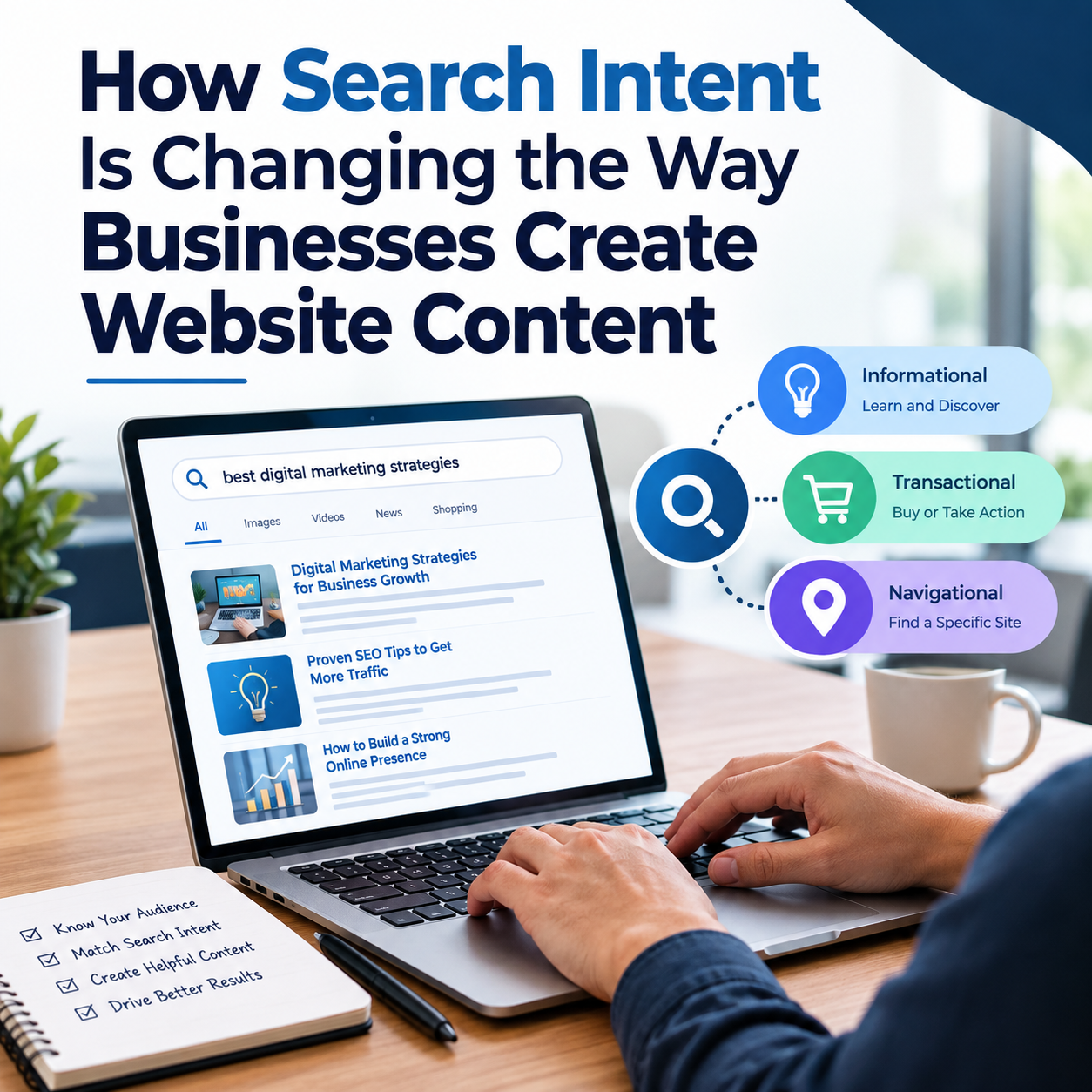
Search engines have changed significantly over the years, and businesses can no longer create website content simply by adding popular keywords to a page. Modern search focuses heavily on understanding what people actually want when they type a query. This is known as search intent, and it has become an important part of creating useful, relevant, and effective website content.
Understanding search intent helps businesses create pages that answer real questions, solve problems, and guide visitors toward the information or service they need. Instead of focusing only on ranking for keywords, businesses are now paying more attention to why someone is searching in the first place.
What Is Search Intent
Search intent refers to the purpose behind a search query. A person may be looking for information, comparing different options, trying to find a specific website, or preparing to make a purchase.
Informational searches usually happen when someone wants to learn something. For example, a person searching for ways to improve website speed may not be ready to purchase a service yet. They are looking for useful information that can help them understand the subject.
Commercial searches happen when users are researching products or services before making a decision. They may compare providers, read reviews, examine features, or investigate pricing.
Transactional searches indicate a stronger intention to take action. Users may be looking for a service, product, booking option, or contact page because they are closer to making a decision.
Navigational searches occur when someone already has a particular website, company, or page in mind.
Recognizing these different intentions allows businesses to create content that matches the users needs at each stage.
Why Search Intent Matters More Than Keyword Volume
Keyword volume has traditionally been an important part of SEO research, but high search volume does not automatically mean a keyword is valuable for every business. A keyword may receive thousands of searches while attracting visitors who have no interest in the companys products or services.
Search intent provides additional context. A smaller keyword with strong commercial intent may bring more relevant visitors than a broad keyword with high search volume.
For example, a general search about website design may indicate that someone is simply researching the subject. A more specific search related to professional website development may indicate that the person is already considering hiring a provider.
This means businesses need to look beyond numbers and understand the type of information users expect to find.
Creating Content Around User Needs
Search intent is changing how businesses approach content planning. Instead of creating articles around isolated keywords, content teams can start with the questions, problems, and goals of their target audience.
A useful approach is to identify what users need before, during, and after making a purchase. Someone who is unfamiliar with a service may need educational content. Someone comparing providers may need a detailed comparison or service guide. A visitor who is ready to buy may need clear information about pricing, processes, benefits, and next steps.
This approach creates a more useful content journey and reduces the need to force unrelated keywords into pages.
Matching Content Format With Intent
Search intent also influences the format of content businesses should create. Different searches can require completely different page structures.
An informational query may be better served by a detailed guide, tutorial, checklist, or educational article. A commercial query may work better with comparison pages, service explanations, case studies, or buying guides. Transactional searches often require focused service pages with clear benefits, supporting information, trust signals, and an obvious next step.
Businesses should therefore consider both the topic and the format when planning content.
For example, someone searching for information about building an online store may need an educational guide first. A person specifically looking for Shopify Website Development may instead expect information about services, features, development processes, integrations, and business benefits.
Search Intent and Website Structure
Understanding intent can also improve website architecture. Important pages should be organized according to the different needs visitors have throughout their decision making process.
A website might include educational blog content for early research, detailed service pages for users evaluating solutions, comparison or case study pages for visitors considering providers, and conversion focused pages for users who are ready to take action.
Internal links can then connect these pages logically. Someone reading an educational article can move toward a relevant service page when they need more specialized help.
This creates a smoother experience while also helping search engines understand the relationship between different areas of the website.
How Intent Improves Content Quality
Content created around search intent tends to be more focused because it starts with the users actual question or objective. Instead of writing a generic article simply to target a keyword, businesses can address the information that matters most to the person searching.
For example, a guide about website development should not simply explain what a website is. It could discuss planning, design, functionality, mobile usability, performance, security, maintenance, and common mistakes if those topics match the audiences needs.
Businesses offering wordpress web design and development can also use search intent to separate educational content from pages designed specifically for people who are actively looking for development services.
The goal is not to include every possible topic on one page. The goal is to provide the right information for the specific purpose behind the search.
Search Intent and Conversion Opportunities
Good content does more than attract visitors. It helps the right visitors move toward the next useful action.
A visitor reading an introductory article may want to explore another educational resource. Someone researching a service may want to view examples of previous work or understand the development process. A visitor who already understands the service may be ready to request a quote or contact the business.
By recognizing these differences, businesses can place relevant calls to action without making every page overly promotional.
This creates a more natural relationship between informational content and commercial pages.
Using Search Data to Refine Content
Search intent should not be treated as a one time research task. Businesses can review their search performance regularly to understand whether their pages are attracting the right audience.
Search Console data, analytics, keyword research platforms, engagement metrics, and conversions can provide useful signals. If a page receives impressions but attracts limited clicks, the title or description may need improvement. If visitors arrive but quickly leave because the page does not answer their question, the content may not match their intent.
Regular analysis allows businesses to update content based on real user behavior rather than assumptions.
The Future of Content Strategy
As search engines become better at understanding language and context, businesses will need to focus increasingly on usefulness and relevance. Content strategies built around genuine user needs can remain valuable even as search features and algorithms change.
This does not mean keywords are no longer important. Keywords still help businesses understand how people search for information. However, they should be treated as signals that help reveal user needs rather than as phrases that must be repeatedly inserted into a page.
Businesses that understand the relationship between keywords, context, intent, and user experience can build websites that serve both visitors and search engines more effectively.
Conclusion
Search intent is changing website content from a keyword focused exercise into a user focused strategy. Businesses now have an opportunity to create content that answers specific questions, supports different stages of research, and provides clear paths toward useful actions.
When content is built around what users genuinely want to accomplish, websites can become more relevant, easier to navigate, and more valuable to their audiences. A strong understanding of search intent therefore gives businesses a practical foundation for creating content that supports both organic visibility and meaningful customer experiences.

 English
 Arabic
 French
 Spanish
 Portuguese
 Deutsch
 Turkish
 Dutch
Dutch
 Italiano
 Romaian
 Portuguese (Brazil)
 Greek
Greek