


How Dimensional Hair Color Changes the Way Extensions Should Be Matched
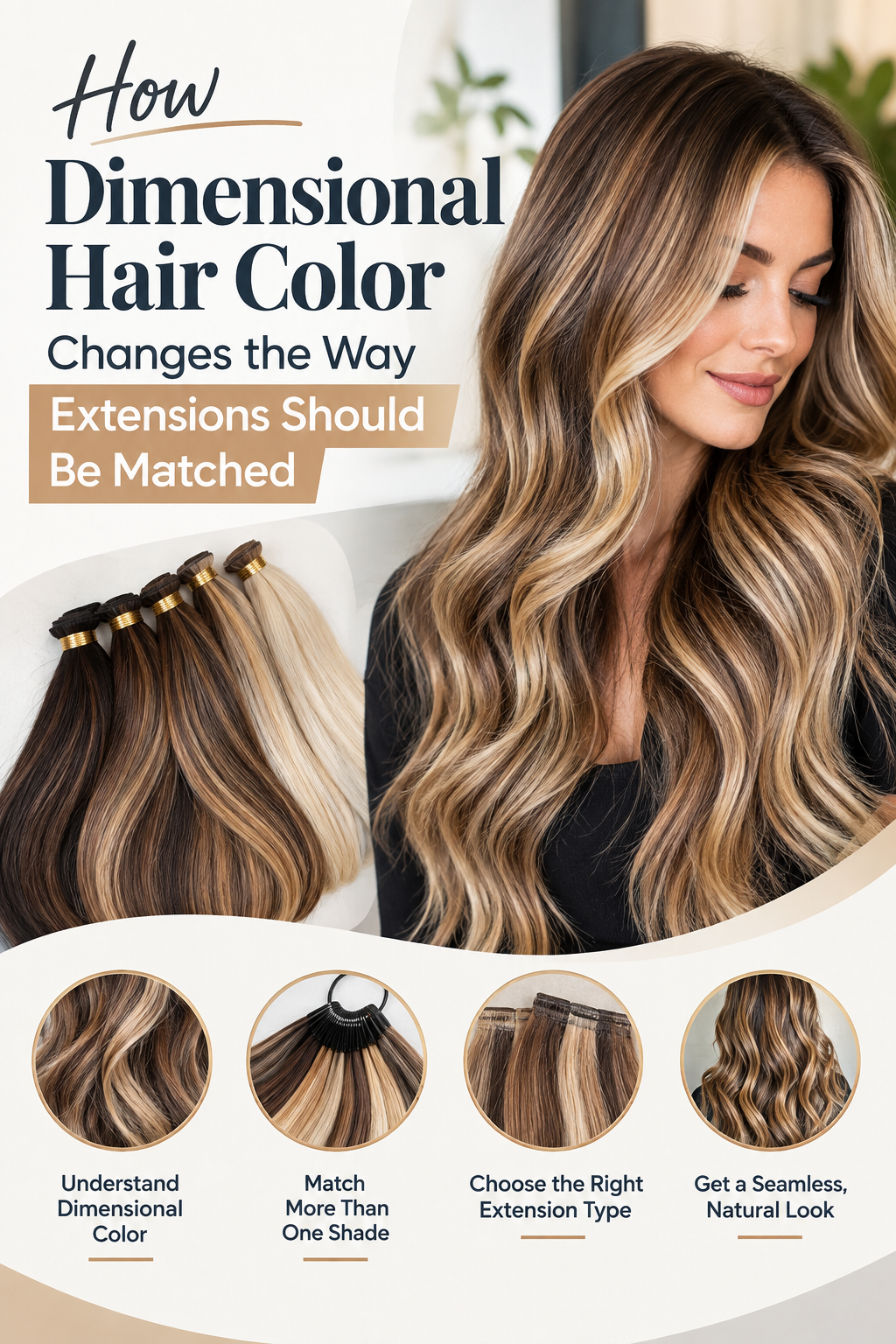
Hair extensions can add length, volume, and fullness, but achieving a natural result depends on much more than choosing a shade that looks similar to the natural hair. Dimensional hair color has become increasingly popular because it creates depth through multiple tones, highlights, lowlights, and subtle transitions. This added dimension also changes how extensions need to be selected and blended.
Matching extensions to dimensional hair requires attention to the overall color pattern rather than focusing on a single shade. Understanding where the lighter and darker tones appear can help create a seamless finish that looks natural from every angle.
Understanding Dimensional Hair Color
Dimensional hair color combines several complementary shades to create visual depth. Instead of one consistent color from roots to ends, the hair may include darker roots, warmer mid lengths, lighter ends, or strategically placed highlights.
Balayage, highlights, lowlights, ombre effects, and blended color techniques can all create dimension. The result often looks different under natural sunlight, indoor lighting, and artificial light. This is why choosing extensions based only on a color chart may not always produce the expected result.
The goal is to identify the dominant tones in the hair while also understanding how those tones transition throughout the length.
Why One Color Match May Not Be Enough
With solid hair color, matching extensions can be relatively straightforward. A single shade that closely resembles the natural hair may blend effectively throughout the hairstyle. Dimensional hair is different because several shades may be visible at the same time.
For example, someone may have a medium brown base with golden highlights around the face and lighter ends. Matching the extensions only to the brown base could make the added hair appear noticeably darker or flatter than the existing lengths.
In these situations, extension matching should consider the color that appears where the extensions will be placed and how their length will interact with the existing highlights and lowlights.
Match the Ends Rather Than Only the Roots
One of the most useful principles when choosing extensions for dimensional hair is to pay close attention to the mid lengths and ends. Extensions are generally added to increase the length of the existing hairstyle, so their visible portion needs to complement the color toward the lower section of the natural hair.
Roots can be darker than the rest of the hairstyle because of natural growth or intentional root shading. Choosing an extension shade based entirely on the root color may therefore create an obvious contrast.
Look at the last several inches of the natural hair and identify the dominant tones. If the ends are significantly lighter than the roots, a lighter extension shade or a blended extension may provide a more natural transition.
Consider Highlight Placement
Highlight placement is another important factor. Dimensional color is often designed around specific areas, such as the front sections, crown, or lower lengths. Extensions should work with this existing pattern rather than hide or compete with it.
If the natural hair has bright face framing pieces, placing extensions with a similar lighter tone near those areas can help maintain the overall color balance. If the highlights are concentrated toward the ends, extensions with multiple tones can help continue that visual effect.
The objective is not always to reproduce every individual highlight. Instead, the extension color should support the same overall movement of light and dark tones.
Choose Extensions Based on the Desired Blend
Different extension methods can affect how color appears once installed. The attachment method, placement, density, and amount of natural hair covering the extensions can all influence the final result.
For clients who want a discreet attachment and a long lasting blend, cold fusion hair extensions can be considered when the method and hair condition are appropriate. The key is still to select extension hair that complements the existing color pattern rather than relying solely on the installation technique.
Fine hair may require a different extension density from thick hair, while heavily highlighted hair may benefit from a carefully blended shade rather than one uniform color.
Think About Warmth and Undertones
Color matching should also include undertones. Two shades can appear similar at first glance but blend differently because one has warm golden undertones while the other has cool or neutral undertones.
Dimensional hair can contain several undertones at once. Blonde highlights may have beige, honey, caramel, or ash qualities, while the base may remain neutral or cool brown.
Before choosing extensions, examine the hair in natural light when possible. This makes it easier to identify whether the dominant tones are warm, cool, neutral, or a combination.
Blended Extensions Can Create Better Dimension
When a hairstyle contains several noticeable shades, blended extension colors can often create a smoother appearance than a single solid shade. Multi toned extensions can imitate the natural variation already present in the hair.
This is particularly useful when the transition between the roots and ends is strong. Instead of creating a visible line between the natural hair and extensions, a combination of complementary tones can help distribute the color more evenly.
Professional color matching can also involve combining different extension shades. This approach gives the stylist greater control over how the extensions transition through the hairstyle.
Extension Type Also Matters
The structure and appearance of the extension hair should be considered alongside its color. Weft extensions, tape extensions, keratin based extensions, and other methods can provide different levels of volume and movement.
For clients looking for a fuller hairstyle, choosing the best machine weft hair extensions may depend on factors such as hair thickness, desired density, weft construction, and how the extensions will be installed. Color should remain part of the decision because the right texture and density will not compensate for a poor color match.
The extension hair should also resemble the natural hair in texture. Straight extensions can look disconnected from naturally wavy hair, even when the shade is accurate. Styling can improve the blend, but selecting a compatible texture from the beginning makes the process easier.
Consider How the Hair Will Be Styled
Extensions should be matched according to the hairstyles the wearer normally creates. Hair that is frequently curled may display highlights differently from straight hair because waves and curls move different tones across the surface.
If the wearer regularly changes between straight, wavy, and curled styles, a versatile color blend may be more practical than a highly specific match designed for one hairstyle.
Stylists should also consider where the extension layers will sit. Strategic placement can help natural highlights remain visible while allowing the extensions to add length and volume without creating an obvious transition.
Maintenance Can Affect the Match
Dimensional hair color can change over time because of washing, heat styling, sun exposure, and color treatments. Extensions may not fade or change in exactly the same way as natural hair.
Regular maintenance is therefore important for keeping the blend consistent. Using suitable hair care products, limiting excessive heat, and following professional maintenance recommendations can help preserve both the natural hair color and the appearance of the extensions.
When the natural hair is recolored, the extension match may also need to be reassessed. A shade that worked perfectly after the initial color service may no longer provide the same blend several weeks later.
Conclusion
Dimensional hair color requires a more thoughtful approach to extension matching because the hairstyle contains multiple tones rather than one uniform shade. Looking at the roots, mid lengths, ends, highlights, lowlights, undertones, texture, and styling habits can provide a much more accurate understanding of what the extensions need to achieve.
The most natural results come from creating continuity between the existing color and the added hair. Instead of searching for one perfect shade, consider how several complementary tones can work together. With careful color analysis, suitable extension selection, strategic placement, and proper maintenance, extensions can enhance dimensional hair while preserving the depth and movement that make the original color look natural.

 English
 Arabic
 French
 Spanish
 Portuguese
 Deutsch
 Turkish
 Dutch
Dutch
 Italiano
 Russian
 Romaian
 Greek
Greek